

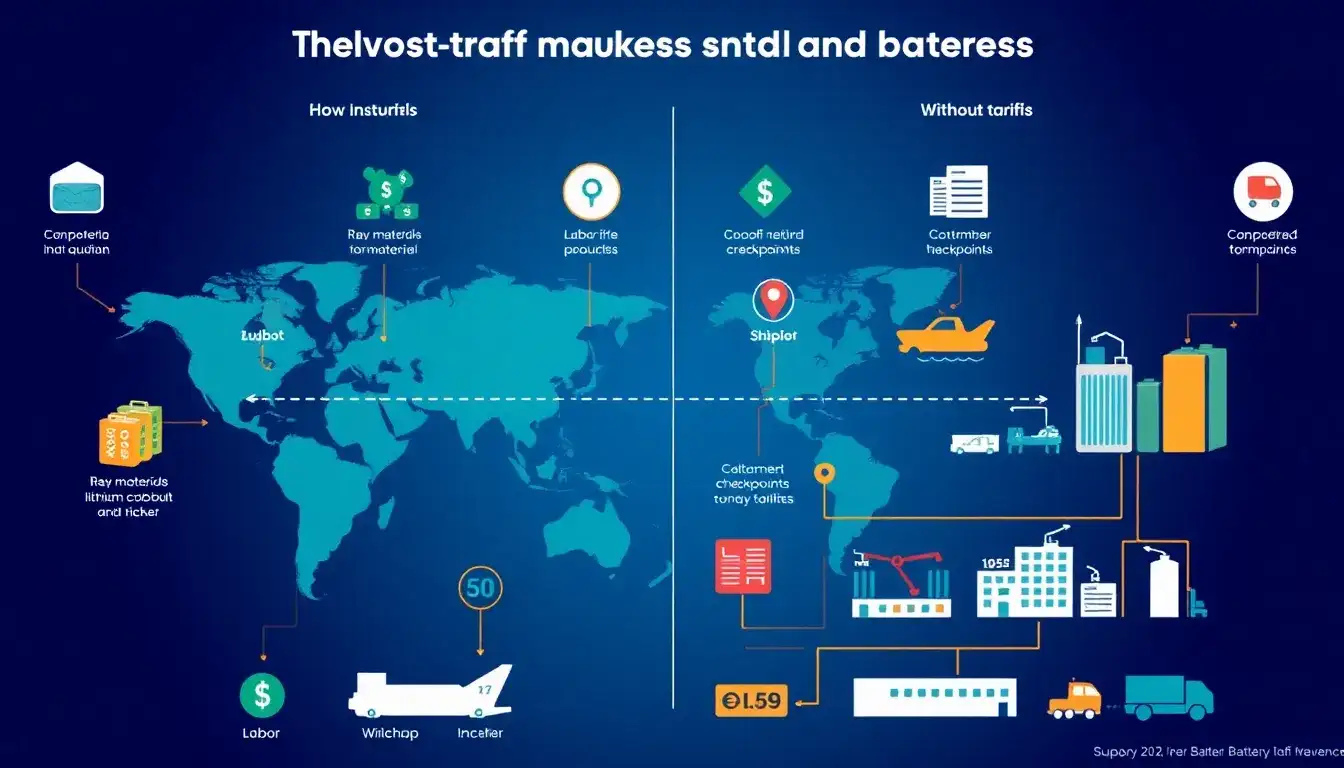
Tariffs specifically impact the cost of lithium-ion batteries by significantly increasing the prices of imported batteries and their essential components, which in turn raises production costs for manufacturers and ultimately leads to higher prices for end consumers.
Key Impacts of Tariffs on Lithium-Ion Battery Costs
- Steep Tariff Rates on Batteries and Components:
The U.S. has imposed very high tariffs on Chinese lithium-ion batteries and battery components, including an 82% tariff on essential inputs such as lithium-ion cells and critical minerals, and a particularly severe 173% tariff on finished lithium-ion batteries. In earlier years, tariffs increased from 7.5% to 25%, and further escalations are planned, amplifying import costs. - Direct Price Increases:
These tariffs have caused sharp price rises for lithium-ion batteries in the U.S. market, making batteries more expensive for various industries like electric vehicles (EVs), renewable energy, and consumer electronics. For example, U.S. prices for 5-MWh lithium-ion battery systems imported from China could rise by around 8% over 2023 to 2028 due to tariffs. - Production Cost Surge and Competitiveness Challenges:
Manufacturers in the U.S. face higher production costs due to tariffs on imported battery cells and raw materials, which undermines cost efficiency and makes competing against non-U.S. producers difficult. This situation pressures companies to either absorb these higher costs or pass them along to customers, often reducing demand. - Supply Chain Disruptions and Sourcing Difficulties:
Since China dominates global lithium-ion battery manufacturing, tariffs have forced U.S. companies to seek alternate suppliers, which are limited. This shift disrupts supply chains, delays production of key technologies like EVs and energy storage systems, and raises operational costs. - Broader Ripple Effects on Related Industries:
Increased lithium-ion battery costs have trickle-down impacts on sectors such as data center construction, wafer fabrication, and optical module production, causing cost increases ranging from mid-single digits to up to 40% in some cases. - Geopolitical and Market Responses:
The tariffs have encouraged investments in domestic sourcing and innovation in next-generation batteries (e.g., solid-state batteries) to reduce reliance on imports, which could eventually mitigate cost impacts but are still evolving.
In sum, tariffs on lithium-ion batteries substantially elevate their cost by increasing import prices, disrupting supply chains, and escalating production expenses. This results in higher prices for industries and consumers dependent on these batteries, particularly in the U.S., constraining market growth and competitiveness in sectors like electric vehicles and renewable energy.
Original article by NenPower, If reposted, please credit the source: https://nenpower.com/blog/how-do-tariffs-specifically-impact-the-cost-of-lithium-ion-batteries/

