

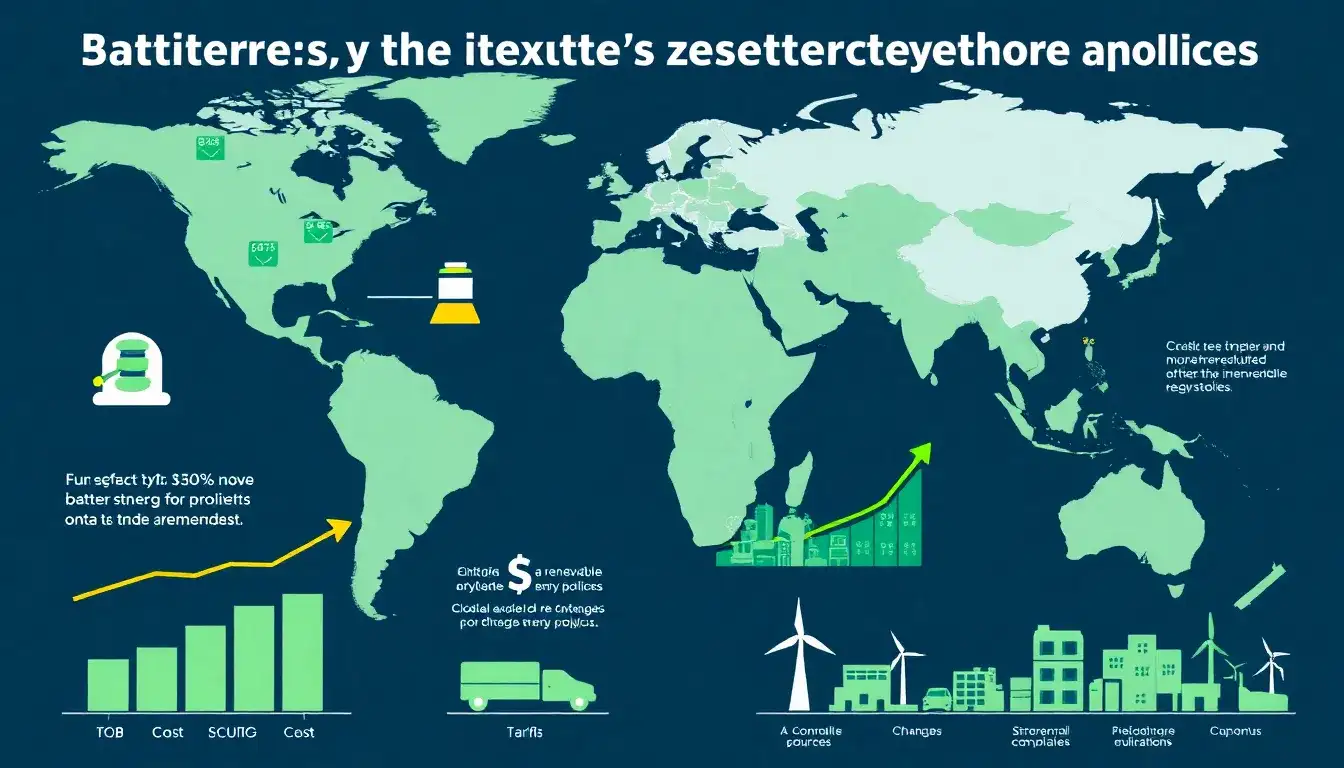
Tariffs and Trade Policies Impact on Battery Energy Storage Projects
Tariffs and trade policies significantly influence the cost of battery energy storage projects by impacting the pricing dynamics of imported battery components and systems, particularly those sourced from countries like China. Here’s how these policies affect the industry:
Impact of Tariffs on Costs
- Increased Import Costs: Tariffs directly increase the cost of imported battery components. For instance, tariffs on Chinese battery imports have risen, which can lead to higher costs for U.S. buyers. The Clean Energy Associates report estimates that U.S. costs could increase by 35% or more due to these tariffs.
- Supply Chain Adjustments: Companies have been preparing for these changes by stockpiling components and negotiating new supply chains. However, supply chains remain heavily dependent on China, which limits options for cost mitigation.
- Margins for Suppliers: While tariffs increase costs, suppliers like those in China have higher profit margins due to declining production costs, which can partially absorb tariff impacts.
Strategic Implications for Battery Storage Projects
- Project Delays: The impact of tariffs is immediate in some cases, causing project delays as companies reassess their financial viability. However, stockpiled components can help maintain momentum in the short term.
- Domestic Manufacturing Growth: Increased tariffs may incentivize domestic manufacturing, as U.S. companies can benefit from tax incentives for using domestic content. Yet, domestic capacity is still limited, and global supply chains are critical for materials like cathode active materials.
- Risk Management Strategies: Companies are adopting strategies like direct procurement and diversifying their supply chains to manage tariff risks. This includes considering Asian alternatives outside China for cost-effective sourcing.
Future Outlook
The long-term strategy involves diversifying the supply chain and investing in domestic manufacturing. While tariffs pose short-term challenges, they could drive innovation and growth in the domestic battery industry. The importance of software and system design in optimizing performance is also highlighted as a way to maintain project viability despite cost fluctuations.
Overall, tariffs introduce uncertainty and increased costs but also drive strategic adaptability and innovation in the battery energy storage sector.
Original article by NenPower, If reposted, please credit the source: https://nenpower.com/blog/how-do-tariffs-and-trade-policies-influence-the-cost-of-battery-energy-storage-projects/

