

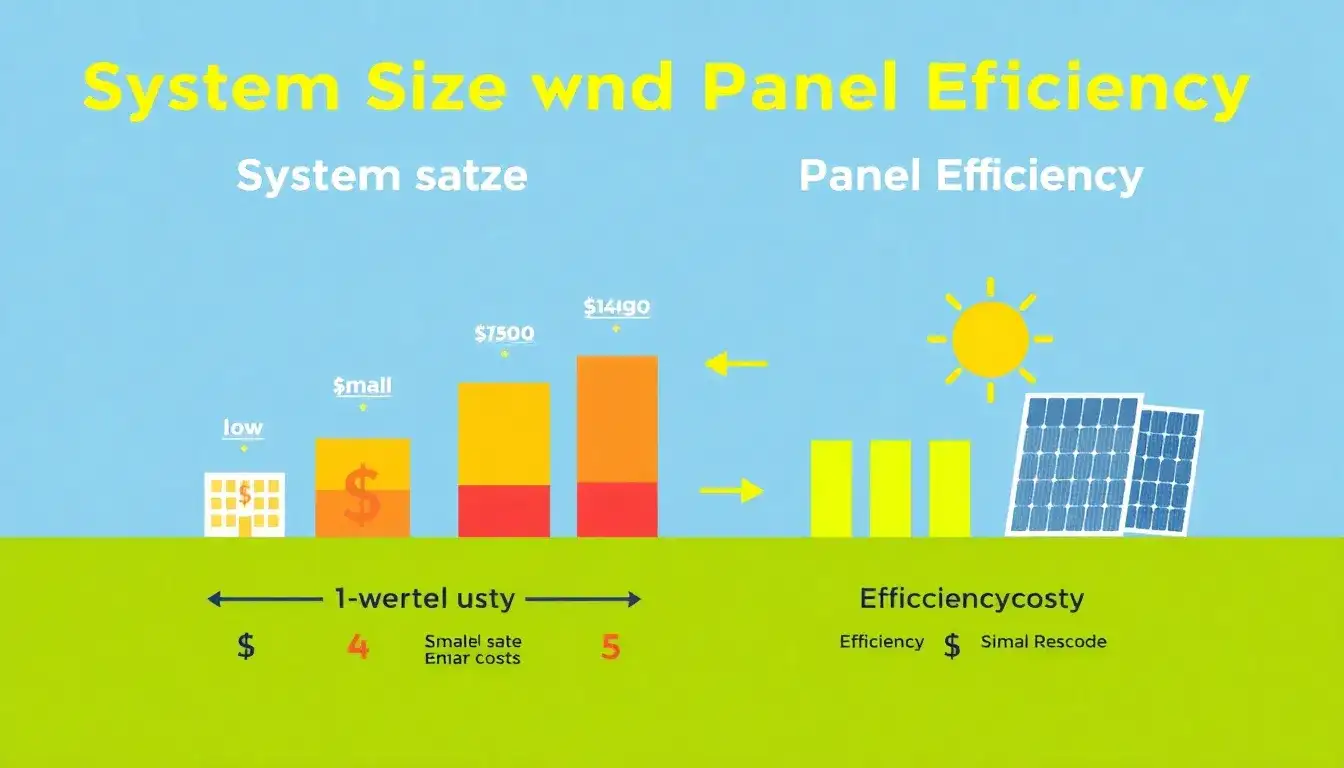
Impact of System Size on Cost
- Larger system size means higher total cost: A bigger solar panel system—meaning more panels or higher total wattage—produces more electricity but costs more upfront. For example, a typical U.S. residential system size is around 11 kW, which costs approximately $20,552 after federal tax credits in 2025. Increasing system size will raise the overall installation cost because you’re purchasing and installing more panels.
- Economies of scale reduce cost per watt: While larger systems have higher total costs, they typically offer a lower average cost per watt. This means the price for each watt of capacity installed decreases as system size increases, much like buying in bulk. For instance, cost per watt for larger solar systems may drop from about $3.10/W in smaller setups to around $2.60-$2.70/W in larger ones.
- Installation cost proportional to system size but with labor savings: Labor costs for installation often scale with the number of panels but can be somewhat reduced with larger panels (which reduce the total panel count). On average, labor is about $0.59 per watt, roughly 10% of the total system cost, and larger panels may reduce labor since fewer panels are needed for the same output.
- Additional factors related to size: Larger commercial systems often use bigger panels and advanced technology like solar tracking to improve efficiency and reduce the number of panels required for the desired output, which can help bring down costs by saving space and installation complexity.
Impact of Panel Efficiency on Cost
- More efficient panels produce more power per square foot: Higher efficiency panels convert a larger percentage of sunlight into electricity. This means fewer panels (and less roof space) are needed to generate the same amount of power, which can reduce overall system size and installation costs.
- Higher efficiency panels tend to be more expensive: For example, monocrystalline panels, which are among the most efficient, also cost more than polycrystalline or thin-film panels. However, they may save money in the long run by requiring less physical space and fewer balance-of-system components.
- Choosing higher efficiency panels can reduce system size: If roof or space is limited, investing in higher efficiency panels might increase panel cost per unit but reduce the total panel count and installation labor, thus potentially lowering overall project cost or at least optimizing it.
- Advanced panel technology impacts cost-effectiveness: Newer technologies like bifacial panels can generate more energy without increasing panel size by capturing sunlight from both sides, potentially improving cost-effectiveness without requiring more physical space.
Summary Table
| Factor | Effect on Overall Cost | Additional Notes |
|---|---|---|
| Larger System Size | Increases total upfront cost but lowers cost per watt | Economies of scale; labor cost per watt slightly reduced; requires more panels or bigger panels |
| Panel Efficiency | Higher efficiency panels cost more per panel but reduce total system size | Fewer panels needed, saving space and potentially lowering installation complexity and costs |
In essence, system size primarily drives the total cost of a solar installation since bigger systems mean more panels and materials, but higher panel efficiency can mitigate some costs by reducing the number of required panels and installation labor. Proper system design balances these factors—choosing efficient panels to minimize size without overspending on high-cost panels—to optimize overall cost-effectiveness.
This balance explains why commercial systems often use larger, higher wattage panels to reduce the number of panels while achieving high output and residential systems choose panel types based on roof space availability and cost considerations.
Original article by NenPower, If reposted, please credit the source: https://nenpower.com/blog/how-do-system-size-and-panel-efficiency-impact-the-overall-cost-of-solar-panels/

