

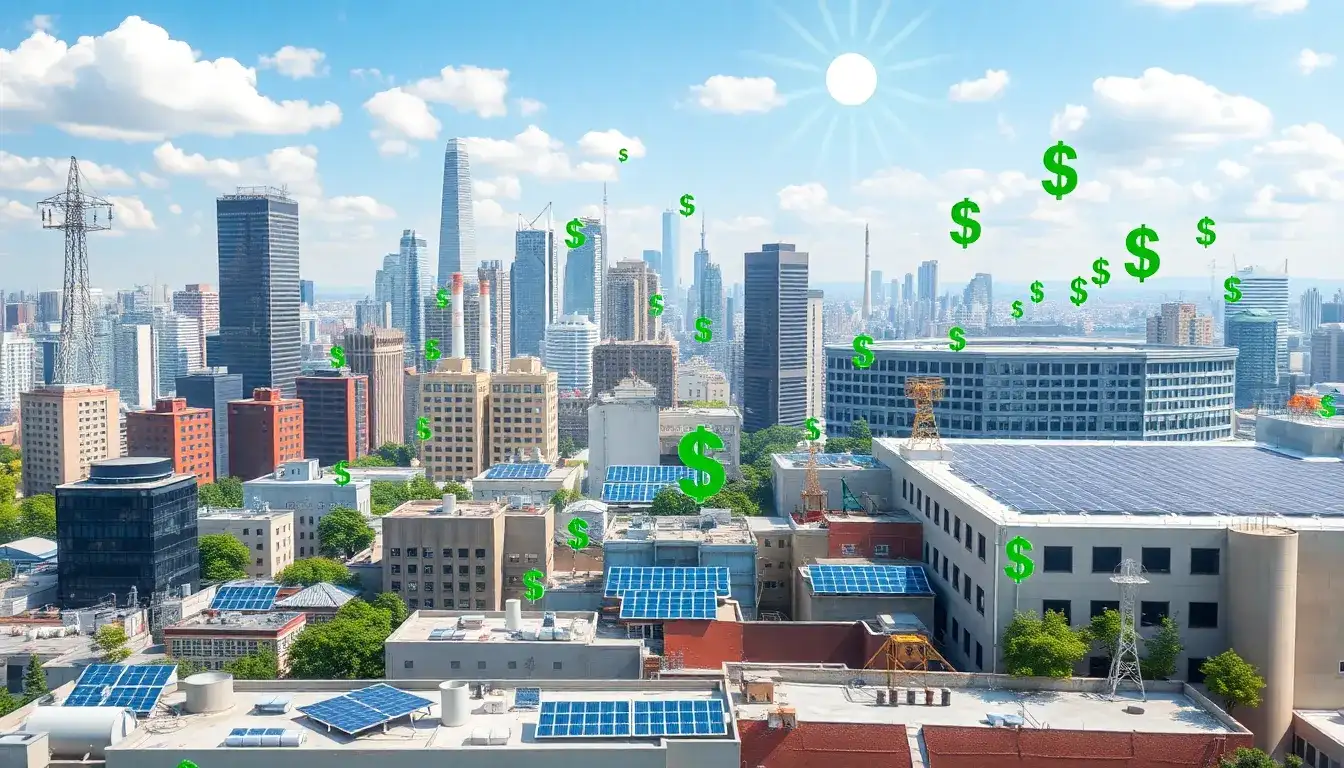
System size and energy requirements are primary determinants of the cost of commercial solar panel installations, influencing both upfront investment and long-term financial considerations.
Influence of System Size on Cost
- Direct Proportionality: The larger the system size, typically measured in kilowatts (kW), the greater the number of solar panels, inverters, and associated equipment required, which directly increases the total cost. For example, commercial solar installations range from small systems costing a few thousand dollars to large systems exceeding $700,000, depending heavily on size.
- Cost per Watt: Commercial solar installations average about $1.44 to $1.46 per watt DC as of 2024-2025, with larger systems benefiting from economies of scale that reduce cost per watt compared to residential systems. For instance, a 100 kW system might cost around $140,000 to $200,000 before incentives, whereas a 500 kW system can scale costs up to $730,000 or more.
- Economies of Scale: Larger commercial and industrial systems benefit from economies of scale, making the per watt cost lower than smaller installations. Utility-scale systems may cost even less per watt (around $1.00), reflecting greater efficiencies in purchasing and installation.
- Installation Complexity & Infrastructure: Larger systems may require more sophisticated mounting infrastructure, cabling, and possibly custom engineering solutions, which can add to the cost. However, efficiencies in design and installation processes for bigger projects can partially offset these costs.
Influence of Energy Requirements on Cost
- Energy Demand Determines Size: The energy needs of the business dictate the required system capacity. Businesses with higher energy consumption require larger solar arrays, increasing the number of panels and associated equipment, thereby raising upfront costs.
- Energy Efficiency Considerations: How energy-efficient a building is can affect the size of the system needed to meet specific energy savings goals. More efficient buildings may need smaller systems, reducing installation costs.
- Partial vs Full Energy Offset: The target percentage of energy offset by solar impacts cost. Businesses that aim for partial offset may install smaller, less expensive systems, whereas those seeking to rely fully on solar power will need larger, costlier systems and potentially battery storage for backup.
Additional Cost Influences Related to Size and Energy Needs
- Labor and Installation: Larger systems increase labor and installation complexity, affecting total costs. However, labor costs grow at a somewhat lower rate than system size due to efficiencies.
- Inverters and Equipment Technology: Higher capacity systems require larger or multiple inverters and possibly advanced inverter technology to optimize energy production, affecting cost.
- Permitting and Regulatory Compliance: Larger systems may face more stringent permitting requirements and inspections, which can raise costs.
- Financial Incentives: Federal tax credits (e.g., 30% Investment Tax Credit) and accelerated depreciation schemes help offset initial costs, making larger systems more financially viable over time.
Summary Table
| Factor | Effect on Cost |
|---|---|
| System Size | Larger system = more panels, equipment, labor, higher total cost but lower $/watt due to economies of scale |
| Energy Requirements | Higher energy needs = larger system size, increasing material and installation costs |
| Installation Complexity | Larger or complex sites may require specialized mounting and wiring, increasing costs |
| Labor & Permitting | Larger systems require more labor and regulatory compliance, adding to costs |
| Technology Choice | Higher efficiency panels and advanced inverters increase upfront cost but improve long-term savings |
| Financial Incentives | Tax credits and rebates reduce net cost significantly, more impactful on larger systems |
In conclusion, commercial solar panel costs scale with system size and energy requirements, where bigger systems raise total expenses but can reduce cost per watt through economies of scale. The specific energy usage of a business dictates necessary system capacity, influencing the number and type of panels and equipment needed. While larger systems demand more upfront investment, available financial incentives and long-term savings on energy bills make them increasingly cost-effective.
Original article by NenPower, If reposted, please credit the source: https://nenpower.com/blog/how-do-system-size-and-energy-requirements-influence-the-cost-of-commercial-solar-panels/

