

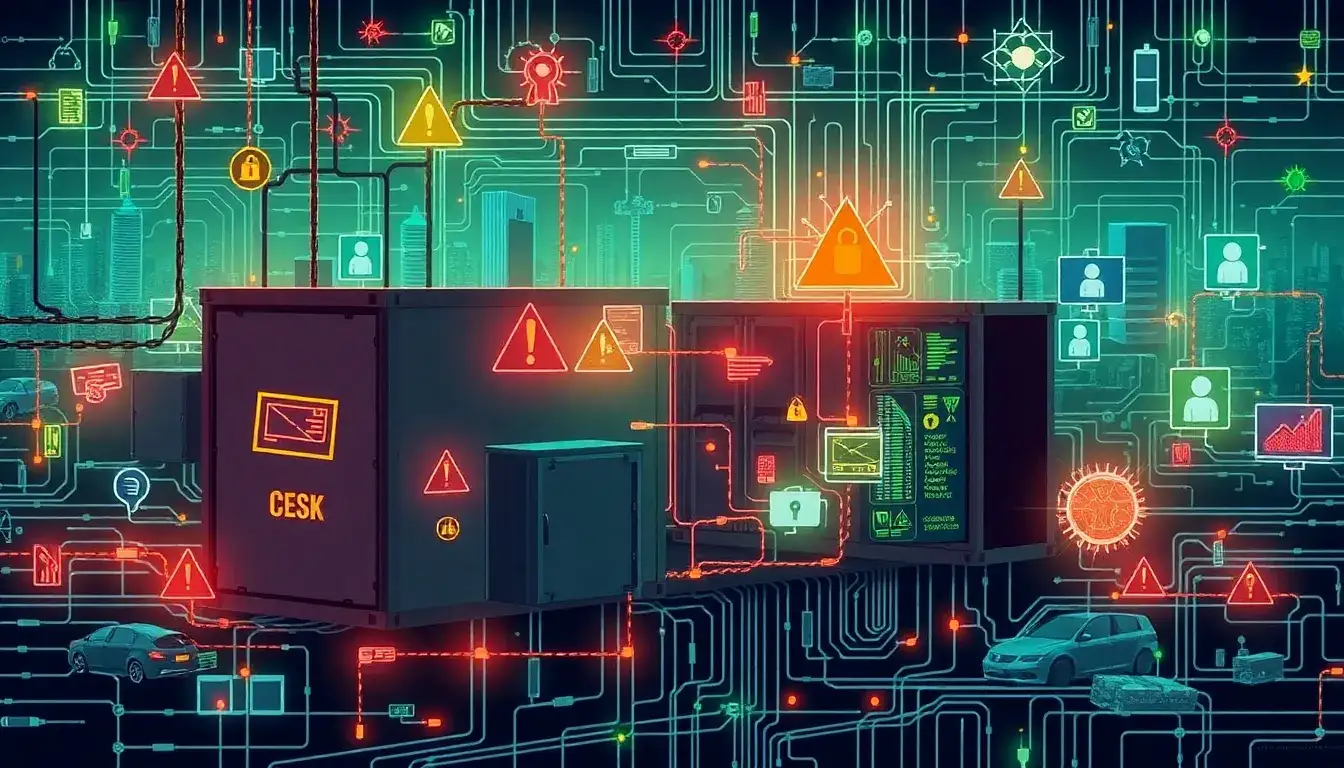
Supply chain vulnerabilities significantly impact the cybersecurity of Battery Energy Storage Systems (BESS) by introducing several risks that can compromise their operational integrity and security. Here are some key ways these vulnerabilities affect BESS cybersecurity:
Impact of Supply Chain Vulnerabilities on BESS Cybersecurity
1. Pre-installed Backdoors and Malicious Firmware
- Risk: BESS units, particularly those manufactured in countries like China, which dominate the global BESS market, can be pre-installed with backdoors or malicious firmware. These vulnerabilities enable potential future exploitation to disable, disrupt, or manipulate energy storage operations.
- Impact: Such vulnerabilities can lead to unauthorized remote access, data exfiltration, or system manipulation, compromising grid stability and plant operations.
2. Cloud Dependencies and Data Exfiltration
- Risk: Many foreign-manufactured BESS solutions come with default cloud integration, often hosted on infrastructure controlled by foreign entities. This poses significant risks of data exfiltration and remote system takeover.
- Impact: Compromised cloud services can override system controls, inject false data, or manipulate energy dispatch settings, leading to process disruptions, equipment damage, or unexpected shutdowns.
3. Coordinated Attacks on Multiple BESS Units
- Risk: If multiple compromised BESS units are triggered simultaneously, they could manipulate grid frequency regulation services, disrupt power supply stability, or induce artificial load fluctuations.
- Impact: This could destabilize the grid, causing electrical fluctuations, interfering with sensitive machinery, or overloading critical systems, potentially leading to cascading failures.
4. Entry Points for Broader Cyber Intrusions
- Risk: A compromised BESS system could serve as a pivot point for broader cyber intrusions, targeting SCADA/DCS systems, plant energy systems, or industrial automation networks.
- Impact: Attackers could move laterally within operational networks, manipulating process controls, disrupting production, compromising safety systems, or enabling further attacks on connected infrastructure.
Mitigation Strategies
To address these risks, strategies such as diversifying supply chains, implementing robust security testing for components, enhancing cybersecurity protocols for remote access, and employing technologies like Cyber-Informed Engineering can be adopted. Additionally, ensuring transparent and secure cloud services and regularly updating firmware can help mitigate risks associated with foreign-manufactured components.
Original article by NenPower, If reposted, please credit the source: https://nenpower.com/blog/how-do-supply-chain-vulnerabilities-specifically-impact-the-cybersecurity-of-bess-systems/

