

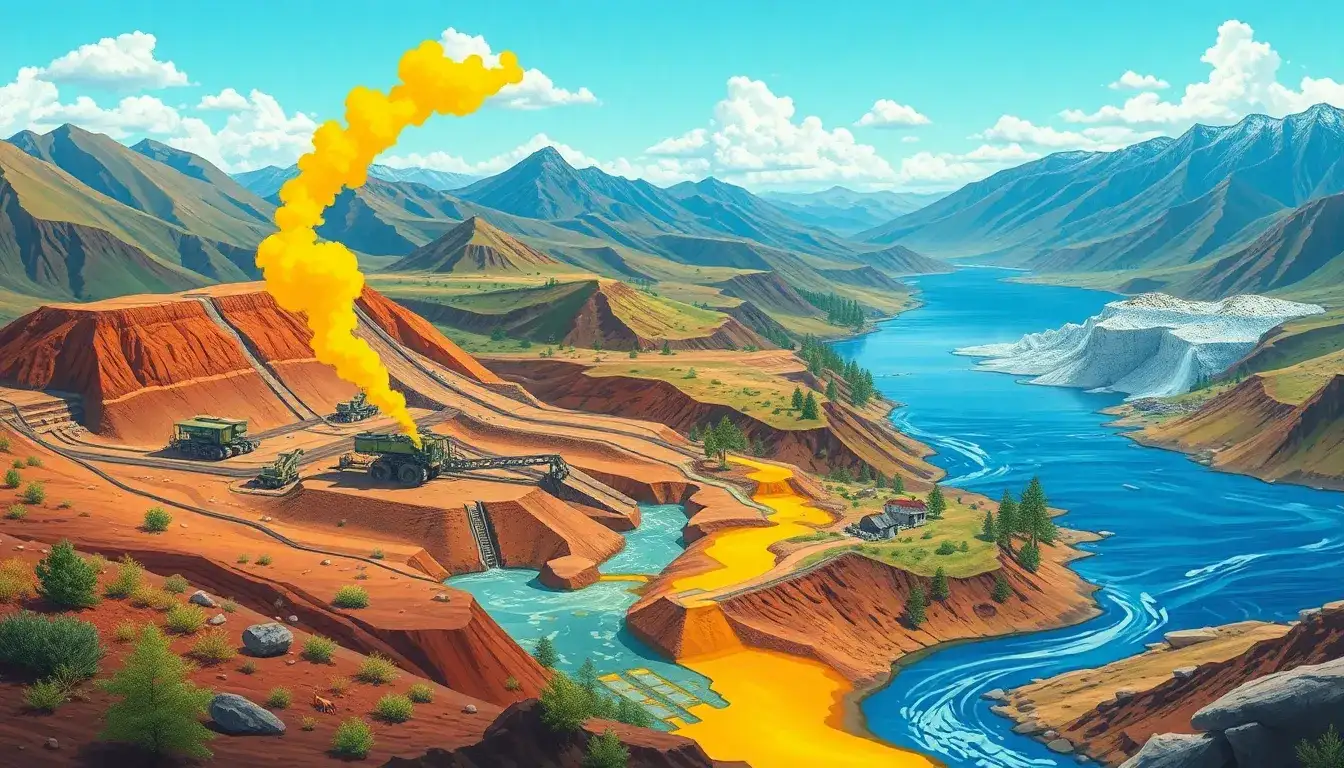
Sulfuric acid and sodium hydroxide, chemicals commonly used in lithium extraction processes, notably impact the environment during lithium mining by contaminating soil and water resources. These substances can penetrate the soil and water systems near mining operations, leading to poisoning of ecosystems and endangering species native to those areas.
Specifically, the use of sulfuric acid and sodium hydroxide in lithium extraction has been documented to cause severe ecological damage, including water pollution that threatens local wildlife populations. For example, research indicates that the chemical pollution associated with lithium mining poses a threat to species like flamingos in Chile, whose habitats are disrupted by contaminated water bodies.
Furthermore, these chemicals contribute to broader environmental degradation alongside other mining impacts such as massive freshwater usage, deforestation, and habitat destruction. The heavy water consumption in lithium extraction harms local aquifers and water availability, compounding the stress on ecosystems already polluted by chemical infiltration.
In summary, sulfuric acid and sodium hydroxide used in lithium mining negatively affect the environment by:
- Poisoning soil and water through chemical infiltration,
- Endangering local wildlife species,
- Exacerbating water scarcity in already arid mining regions,
- Contributing to long-term ecological damage and disruption of natural balances in affected areas.
This environmental toll underscores the complex challenges in balancing lithium mining’s role in clean energy transitions with sustainable ecological stewardship.
Original article by NenPower, If reposted, please credit the source: https://nenpower.com/blog/how-do-sulfuric-acid-and-sodium-hydroxide-impact-the-environment-during-lithium-mining/

