

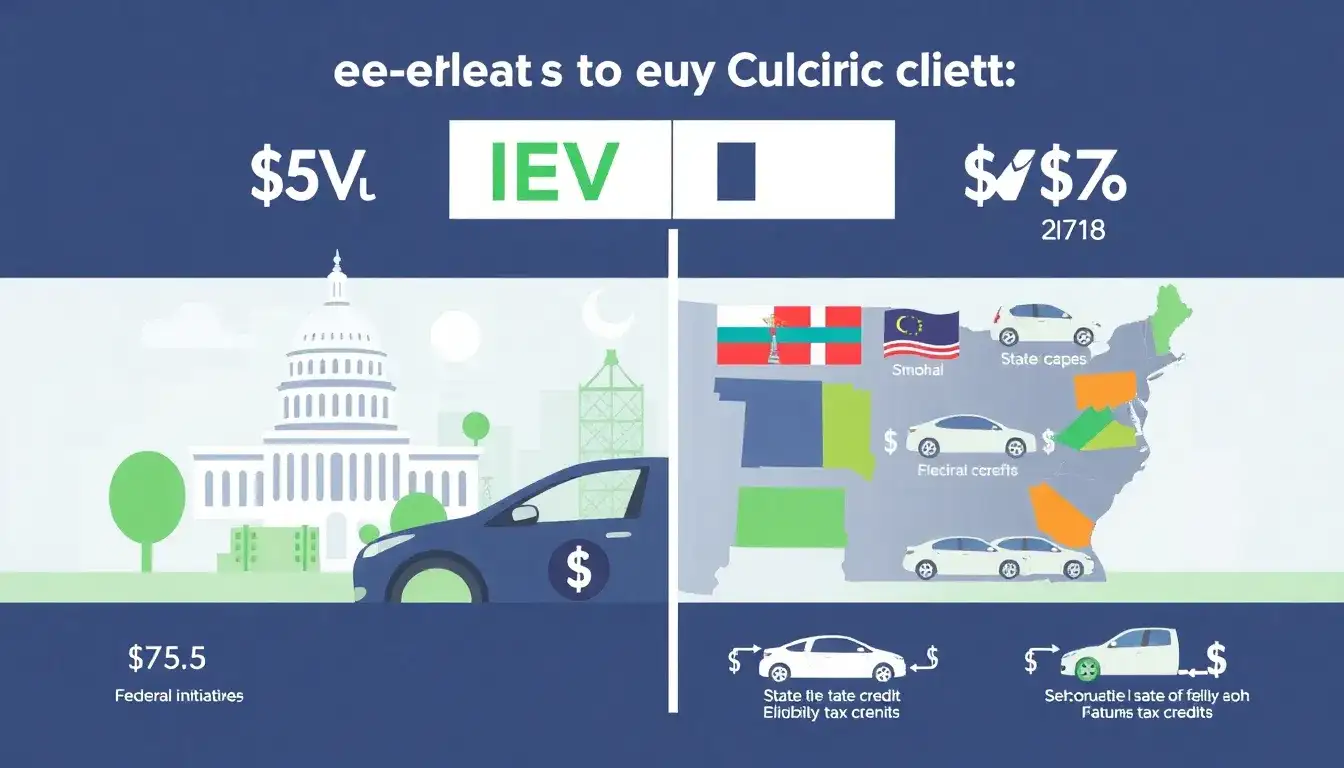
State-specific tax credits for electric vehicles (EVs) differ from federal credits in several key ways:
Federal Tax Credits
- Amount: The federal government offers a tax credit of up to $7,500 for the purchase of new electric and plug-in hybrid vehicles.
- Eligibility: These credits apply to a wide range of vehicles, with specific requirements for battery size and weight to qualify.
- Phaseout: Historically, these credits began phasing out when an automaker sold more than 200,000 qualifying vehicles, but recent changes have adjusted these rules.
State-Specific Tax Credits
- Variability: Different states offer a range of incentives, including tax credits, rebates, and exemptions. For example:
- California: Offers various incentives, including rebates for purchasing EVs and installing charging stations.
- Washington, D.C.: Provides a tax credit of up to $1,000 for residential charging station installations.
- Alaska: Offers rebates and bill credits for EV purchases and charger installations.
- Local Support: Some states, like California and New York, have robust EV support systems, including electricity rate discounts and rebates for vehicles and chargers.
- Specific Incentives: Many states focus on specific aspects, such as home charging infrastructure or low-income buyer assistance.
Key Differences
- Eligibility Criteria: State incentives often have different eligibility criteria than federal credits, such as income limits or specific vehicle requirements.
- Funding Mechanism: While federal credits are applied directly to taxes, state incentives may be rebates, deductions, or other forms of financial assistance.
- Level of Support: The level of support varies significantly from state to state, reflecting local policy priorities and budget commitments.
Overall, state-specific EV incentives complement federal credits by offering tailored support that can encourage more widespread adoption within each state.
Original article by NenPower, If reposted, please credit the source: https://nenpower.com/blog/how-do-state-specific-tax-credits-for-evs-differ-from-federal-credits/

