

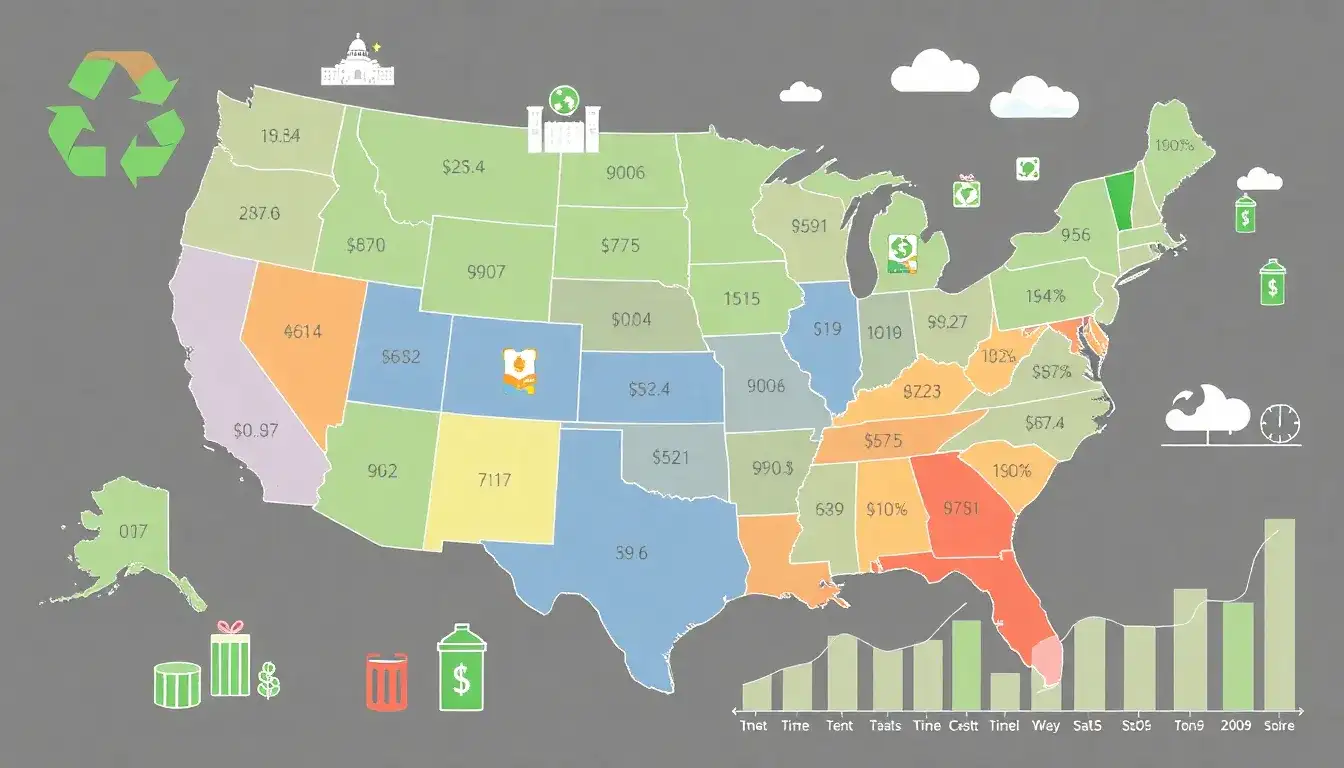
Impact of State Regulations on PV Recycling Costs
1. Recycling Fees and Taxes
Certain states impose explicit fees on solar panels to cover recycling costs. For example, Maine mandates a $125 fee on purchased panels, split into $25 for tracking and $100 for recycling, and additionally places taxes on small-scale home solar panel operations to fund recycling efforts. These fees directly increase the upfront cost for solar panel owners or manufacturers.
2. Disposal and Recycling Mandates
States like Maine prohibit disposal of solar panels in landfills, requiring recycling at designated facilities. This eliminates cheaper disposal options and can increase costs as recycling may be more expensive than landfill disposal. Such mandates can increase operational expenses for recyclers and owners.
3. Bonding and Decommissioning Requirements
West Virginia requires commercial solar facilities over one megawatt to submit bonds to cover future decommissioning and recycling costs, along with application fees directed to a wind and solar decommissioning fund. This bond requirement can raise the financial burden on commercial operators, effectively increasing the lifecycle cost of solar installations.
4. Administrative and Compliance Costs
Some states impose administrative requirements on manufacturers and recyclers. For example, Washington State’s Department of Ecology charges flat fees and annual fees from manufacturers based on sales volume to administer the recycling program. It may also fine non-compliant manufacturers up to $10,000 per PV module sale. These regulatory costs are often passed downstream to consumers or increase manufacturer costs.
5. Variation and Complexity Across States
Because many states regulate solar panel recycling differently, and some defer aspects of recycling to local levels, there is considerable variability in compliance costs. This fragmentation can make nationwide recycling programs more costly and complex to administer, leading to higher costs for recyclers operating in multiple states or national manufacturers.
Summary Table of State Regulatory Impacts on PV Recycling Costs
| Cost Factor | Description | Example States |
|---|---|---|
| Recycling fees | Fixed fees for tracking and recycling new panels | Maine ($125 fee) |
| Additional taxes | Taxes on solar panels to fund recycling programs | Maine |
| Disposal prohibitions | Ban on landfill disposal requiring recycling | Maine |
| Bonding requirements | Bonds to cover end-of-life decommissioning and recycling | West Virginia |
| Administrative fees | Fees for program administration and enforcement penalties | Washington |
| Program management complexity | Varying local/state policies increasing compliance costs | Multiple states |
Overall Effect
State-specific regulations generally increase the cost of PV recycling by:
- Imposing direct recycling and tracking fees on solar panel purchases and disposal.
- Requiring bonds or funds for future panel decommissioning, adding upfront financial burdens.
- Prohibiting landfill disposal, eliminating cheaper waste options.
- Adding administrative and compliance costs through fees and enforcement penalties.
- Creating regulatory complexity due to non-uniform policies across states.
While these regulations increase costs, they also drive environmental benefits by ensuring PV panels are properly recycled, reducing landfill waste, and encouraging industry development in sustainable end-of-life practices. However, the lack of a unified federal mandate means cost disparities will likely persist among states.
In conclusion, state-specific PV recycling regulations have a clear and measurable impact on recycling costs, raising expenses through fees, mandates, and administrative requirements but also fostering more sustainable solar panel end-of-life management.
Original article by NenPower, If reposted, please credit the source: https://nenpower.com/blog/how-do-state-specific-regulations-impact-the-cost-of-pv-recycling/

