

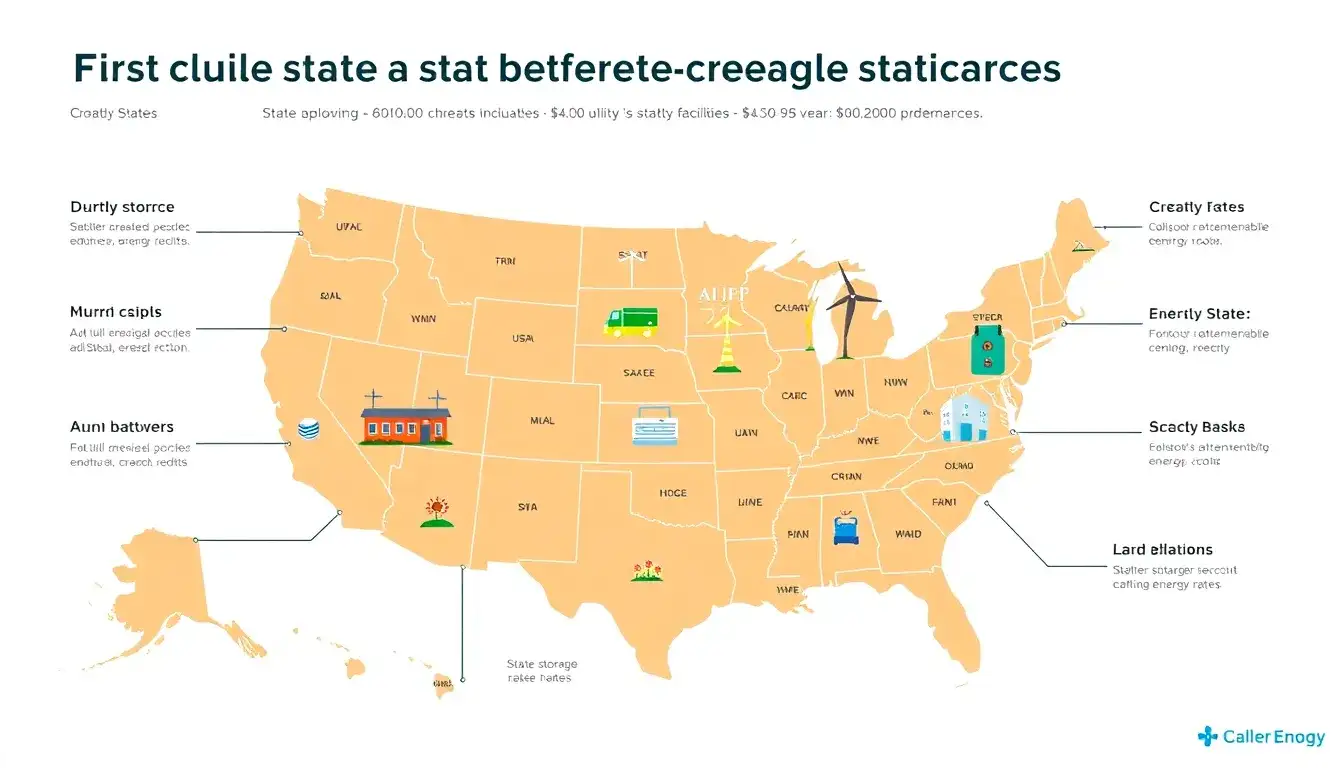
State-specific incentives significantly influence the adoption of utility-scale battery storage by providing financial support that reduces upfront costs and improves project economics. These incentives typically come in the form of upfront rebates, performance-based payments, or tax credits, which vary widely by state and are tailored to address local grid needs, energy policies, and risk factors.
How State Incentives Impact Utility-Scale Battery Adoption
- Lowering Project Costs and Financial Risks: Many states offer upfront rebates or direct payments that reduce the initial capital expenditure for battery storage projects. For example, California’s Self-Generation Incentive Program (SGIP) offers substantial rebates and performance-based incentives especially for projects in wildfire-prone areas, incentivizing large-scale commercial battery installations by lowering the financial burden.
- Encouraging Deployment in High-Need Areas: State programs often prioritize incentives in regions with specific energy challenges, such as high wildfire risk zones in California or grid congestion in New York. New York’s Market Acceleration Bridge Incentive Program provides up to $350 per kWh in some regions, aiming to accelerate deployment where the grid benefits are most needed.
- Enhancing Grid Resilience and Supporting Clean Energy Goals: By incentivizing battery storage, states help utilities balance supply and demand, improve grid reliability during peak events, and integrate renewable energy. These programs complement federal incentives like the Clean Electricity Investment Credit (CEIC), which supports commercial battery storage projects with credits up to 50% of project cost, enhancing overall adoption.
- Promoting Equity and Access: Some incentives prioritize low-income households or underserved communities by offering higher rebates or financing options, as seen in California’s SGIP, which includes additional funds for low-income participants. Public low-interest loans or financing programs also help broaden access to battery storage technologies.
- Stimulating Market Development and Innovation: State incentives create a stable market environment that encourages developers to invest, innovate, and scale storage solutions. They also support the monetization of currently non-monetizable services like demand response and grid stabilization, which are critical for utility-scale storage viability.
Summary Table of Key State Incentives Impacting Utility-Scale Batteries
| State | Incentive Program | Impact on Adoption |
|---|---|---|
| California | Self-Generation Incentive Program (SGIP) | Upfront rebates + performance payments; focus on wildfire risk areas; supports large commercial projects and demand response participation. |
| New York | Market Acceleration Bridge Incentive Program | High per kWh incentives; regional focus enhances grid resilience and adoption in urban and high-demand areas. |
| Connecticut | Energy Storage Solutions | Up to $16,000 for residential; 50% savings for businesses encourage commercial adoption. |
| Massachusetts | Mass Save Connected Solutions | Financial incentives and financing solutions to lower costs and improve grid stability. |
Conclusion
State-specific incentives play a crucial role in driving the adoption of utility-scale batteries by mitigating high upfront costs, targeting installations where they provide the most grid benefit, enhancing resilience especially in vulnerable regions, and complementing federal programs. These tailored incentives create financial and operational conditions conducive to expanding battery storage capacity, supporting a cleaner, more reliable energy grid.
Original article by NenPower, If reposted, please credit the source: https://nenpower.com/blog/how-do-state-specific-incentives-impact-the-adoption-of-utility-scale-batteries/

