

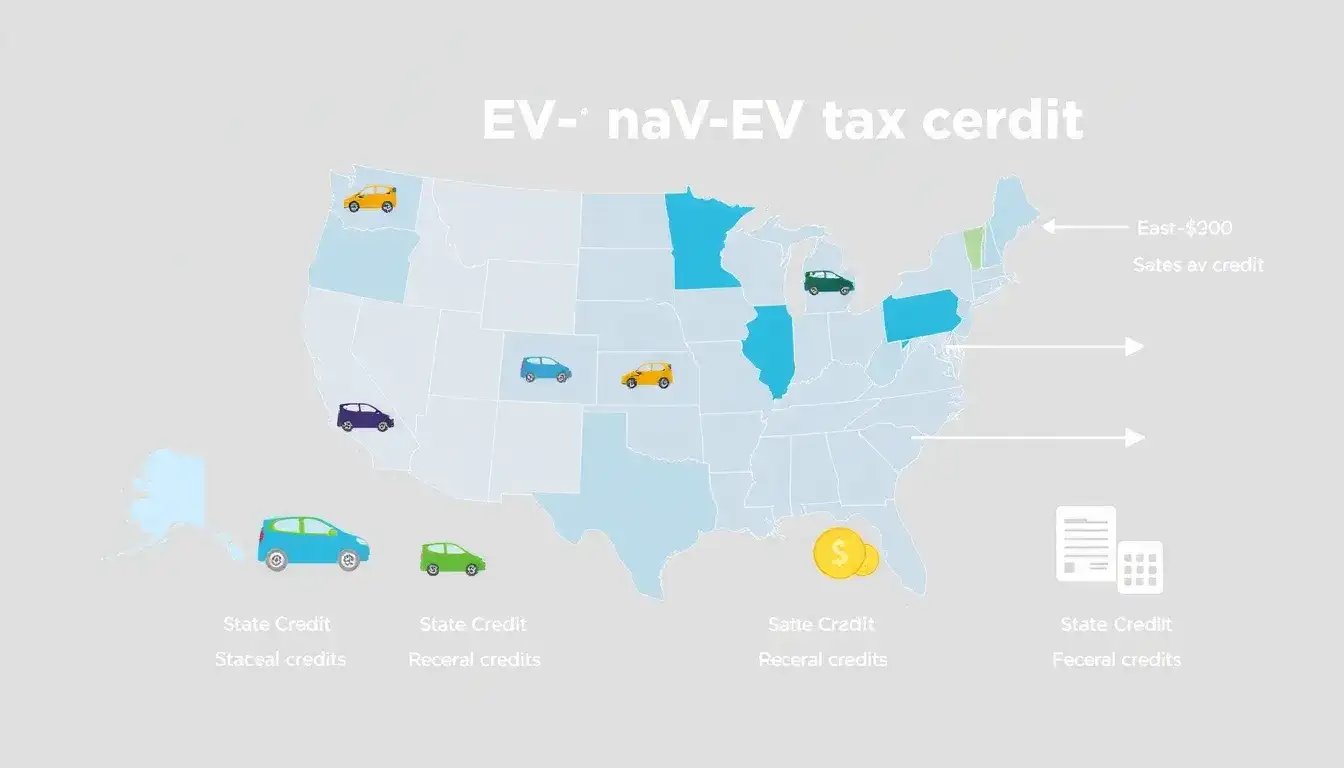
Federal Tax Credit
All states offer the $7,500 federal tax credit for qualifying new EVs, with federal used EV credits up to $4,000. This applies nationwide regardless of state-level policies.
State Tax Credit Ranges
State incentives vary widely, with 19 states offering additional credits or rebates:
- $1,000–$2,500: Alaska, Delaware (for used EVs), and Kansas ($2,400 tax credit)
- $2,000–$5,000: Maine ($2,000–$7,500), Colorado ($5,000), and Louisiana (rebates for chargers)
- $7,500: California, Connecticut, and Maine (enhanced credits for qualifying applicants)
Hybrid Policies
Five states combine incentives with higher EV fees:
| State | EV Credit | Annual EV Fee | Hybrid Fee |
|---|---|---|---|
| California | $750-$7.5k | $108 | $0 |
| Colorado | $5,000 | $51.88 | $0 |
| Georgia | $0 | $213.70 | $0 |
| Alabama | $0 | $200 | $100 |
| Arkansas | $0 | $200 | $50-$100 |
Maine exemplifies layered incentives: $7,500 state credit (stackable with federal credit) plus $2,500 used EV rebates for low-income buyers. Conversely, Kentucky and Florida currently offer no state-level purchase incentives. Check specific eligibility rules, as many credits phase out for higher-income buyers or premium vehicles.
Original article by NenPower, If reposted, please credit the source: https://nenpower.com/blog/how-do-state-specific-ev-tax-credits-compare-to-the-federal-credit/

