

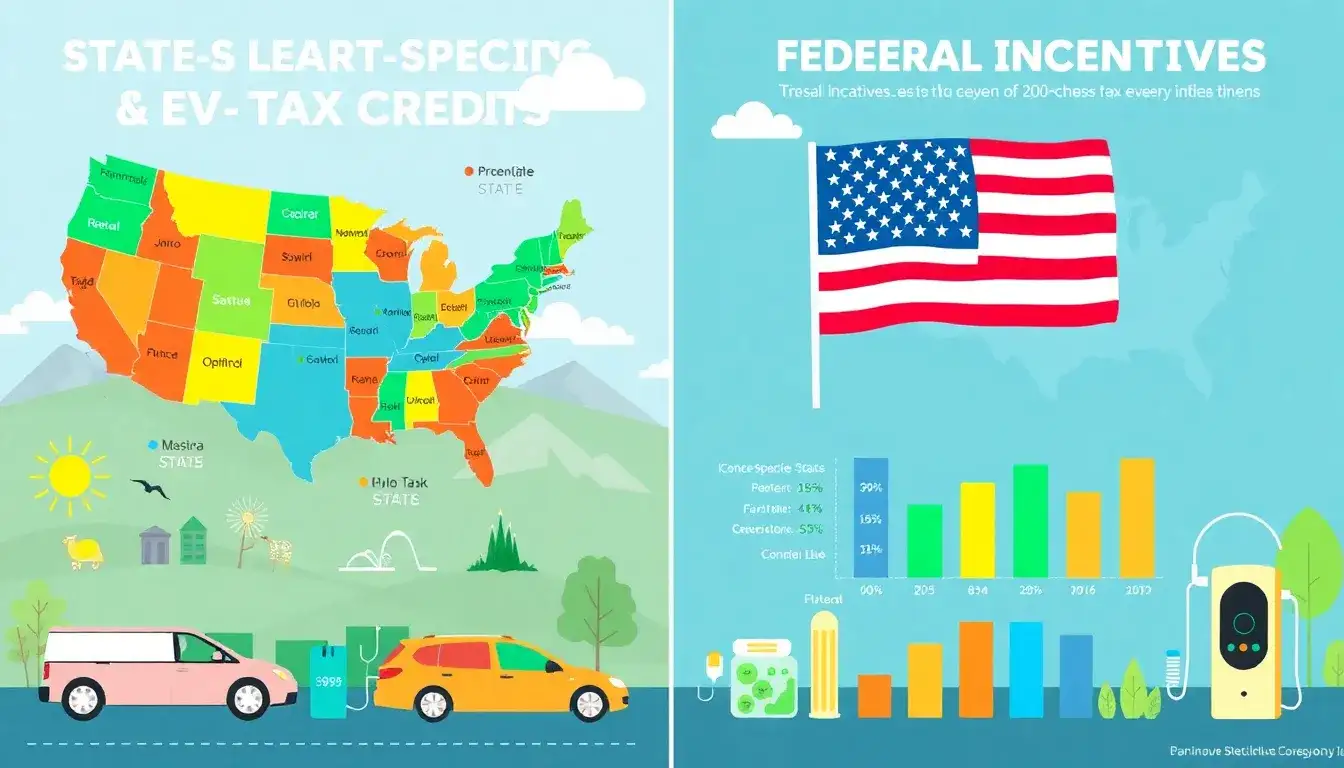
State-specific EV tax credits and incentives vary significantly across the United States, often complementing or differing from federal incentives. Here’s a comparison of state and federal incentives:
Federal Incentives
- Federal Tax Credit: Eligible electric vehicles can qualify for a tax credit of up to $7,500 under the Inflation Reduction Act of 2022.
- Residential Charging Station Credit: Some incentives apply for residential charging stations, though these are more commonly state-specific.
State Incentives
- Additional State Credits/Rebates: Nineteen states offer additional incentives beyond the federal credit. For example, California, Connecticut, and Maine provide up to a $7,500 credit.
- State-Specific Rebates: These vary widely by state. For instance, Alaska and Delaware offer a $1,000 incentive, while Florida offers rebates of up to $2,500 for certain models.
- Sales Tax Exemptions: Some states exempt EV purchases from sales tax to further incentivize their adoption.
- Registration Fees: Despite incentives, 24 states impose higher annual registration fees on EVs to offset lost gas tax revenue.
- Local Credits/Rebates: Beyond state incentives, some cities or regions offer additional local credits or rebates for purchasing electric vehicles.
Example State Incentives
| State | Incentive Type | Amount |
|---|---|---|
| California | Tax Credit | Up to $7,500 |
| Connecticut | Tax Credit | Up to $7,500 |
| Maine | Tax Credit | Up to $7,500 |
| Alaska | Rebate | $1,000 |
| Delaware | Rebate | $1,000 |
Overall, while the federal tax credit provides a uniform incentive across the U.S., state-specific incentives can significantly enhance or vary the attractiveness of purchasing an electric vehicle depending on the location.
Original article by NenPower, If reposted, please credit the source: https://nenpower.com/blog/how-do-state-specific-ev-tax-credits-compare-to-federal-incentives/

