

State-level incentives for solar installations
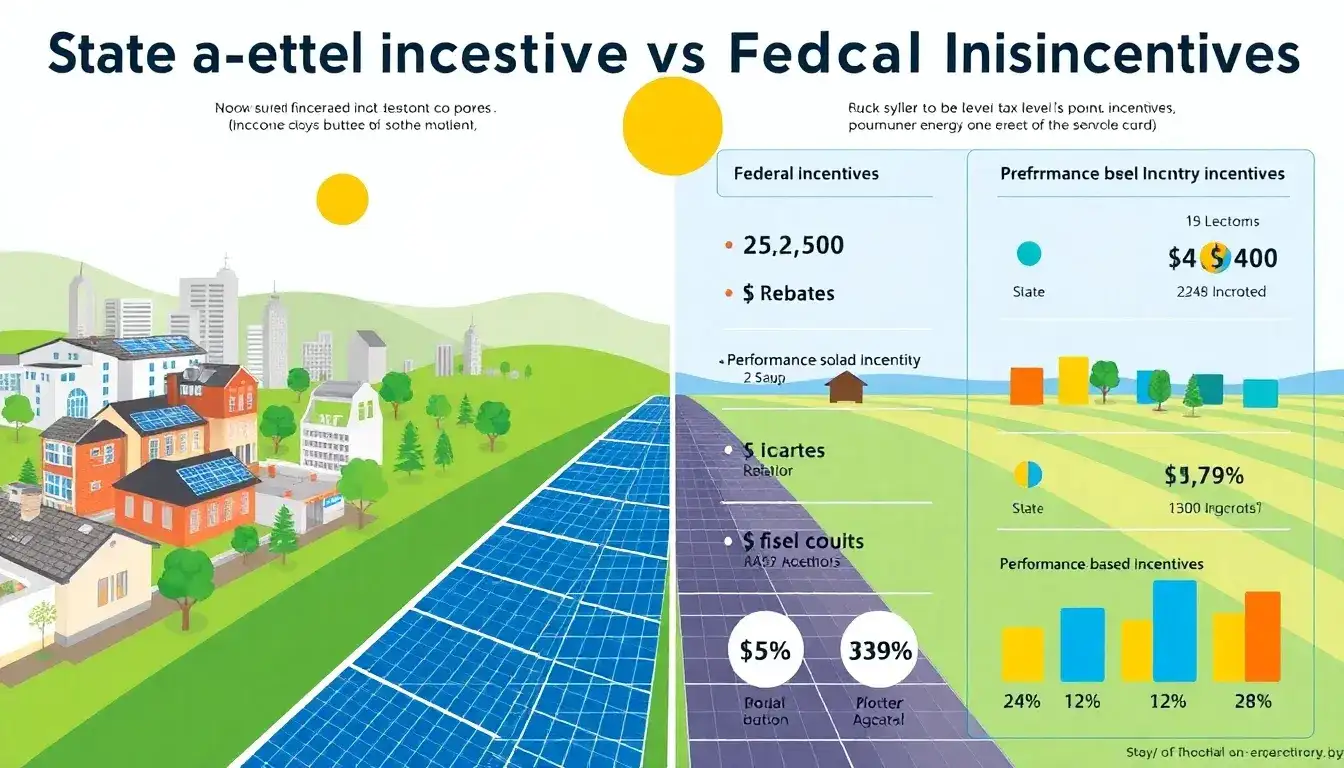
State-level incentives for solar installations can significantly complement federal incentives, offering additional benefits that vary widely by state. Here’s a comparison between state and federal incentives:
Federal Incentives
- Federal Investment Tax Credit (ITC): This is a nationwide incentive providing a 30% tax credit on total solar installation costs, available until 2032. There is no upper limit on the credit amount.
- Eligibility: Homeowners and businesses can claim the credit if they own the solar system and it is installed after 2017 and before 2034.
- Filing: To claim the ITC, homeowners use IRS Form 5695 with their tax return. Any unused credit can be carried forward to future years.
State-Level Incentives
- Variety of Programs: State incentives include additional tax credits, cash rebates, property tax exemptions, net metering policies, and Solar Renewable Energy Certificates (SRECs).
- Examples:
- California: Offers robust programs like the California Solar Initiative, with strong RPS provisions that boost solar adoption.
- New York: Provides a 25% state tax credit up to $5,000, in addition to the federal ITC.
- Oregon: Offers rebates for solar panels and batteries, sales tax exemptions, and net metering.
- South Carolina: Features a significant state tax credit (25% up to $35,000) and robust net metering policies.
- Effectiveness: State incentives are effective in making solar systems financially viable, especially when combined with federal credits.
Comparison
| Incentive Type | Federal | State |
|---|---|---|
| Primary Benefit | 30% tax credit | Additional tax credits, rebates, exemptions |
| Availability | Nationwide | Varies by state |
| End Date | Phases out starting 2033 | Can change frequently |
| Flexibility | Same across U.S. | Different incentives available in each state |
Overall, while federal incentives provide a significant uniform benefit nationwide, state incentives offer additional localized benefits that can further reduce the cost of solar installations. Combining both types of incentives can maximize savings and encourage solar adoption.
Original article by NenPower, If reposted, please credit the source: https://nenpower.com/blog/how-do-state-level-incentives-compare-to-federal-incentives-for-solar-installations/

