

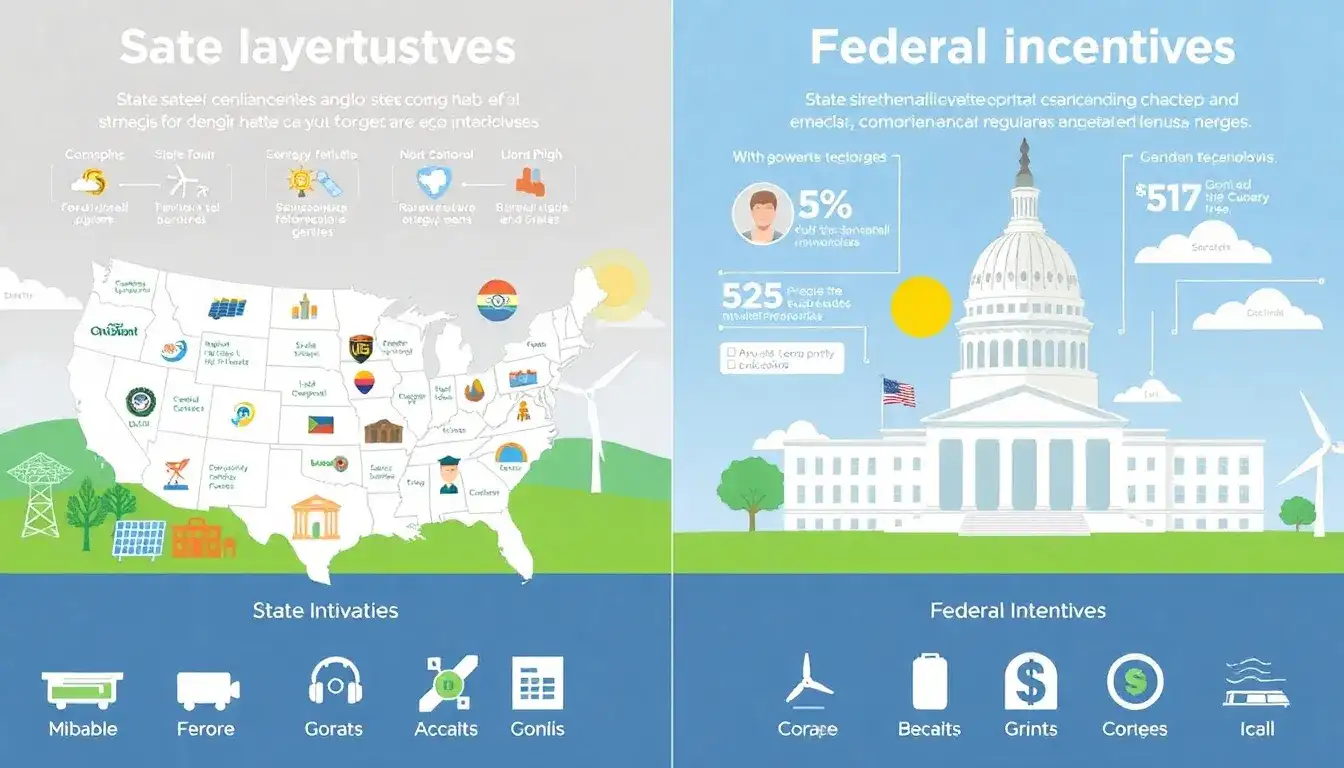
Comparing state-level incentives to federal incentives for energy storage in the U.S. reveals a diverse landscape of programs aimed at encouraging the adoption of energy storage technologies. Here’s a breakdown of both levels of incentives and how they compare:
State-Level Incentives
State-level incentives vary significantly across the U.S. and are typically structured as rebates, performance incentives, or a combination of both. Key aspects of state-level programs include:
- Variety and Scope: Programs differ in structure, rate, and eligibility criteria. For instance, California’s Self-Generation Incentive Program (SGIP) offers substantial upfront rebates with higher incentives for areas prone to power outages, while Connecticut’s Energy Storage Solutions program provides both upfront and performance-based incentives.
- Eligibility and Target Areas: Some states focus on specific regions or demographics, such as low-income households or high-risk wildfire zones, offering additional incentives to these groups.
- Program Uptake: Despite significant variability in incentive rates, successful programs often fill quickly, indicating strong demand for energy storage solutions.
Federal Incentives
Federal incentives have become more comprehensive with recent legislation:
- Investment Tax Credit (ITC): Now extended to standalone battery storage systems thanks to the Inflation Reduction Act (IRA), allowing a tax credit of up to 30% of installation costs. Prior to this, battery systems needed to be paired with solar panels to qualify.
- Clean Electricity Investment Credit (CEIC): For commercial projects, this credit offers up to 50% of the project cost, increasing for projects using U.S.-sourced materials or located in energy communities.
- Direct Pay Provision: Allows tax-exempt entities like nonprofits and municipalities to receive the value of the tax credit as a cash payment, facilitating energy storage investments.
Comparison
- Structural Differences: State incentives focus on specific regions and demographics, often providing targeted support, while federal incentives offer broader applicability across all states.
- Financial Benefits: Federal incentives can provide significant tax credits, potentially reducing costs more substantially, but state incentives might offer immediate rebates or performance payments, which can be more accessible for smaller projects.
- Composite Benefits: Combining state and federal incentives can maximize cost savings and encourage widespread adoption of energy storage technologies.
In summary, while state incentives are more localized and variable, federal incentives offer broader applicability with significant tax benefits, making a combination of both more effective in promoting energy storage deployment across the U.S.
Original article by NenPower, If reposted, please credit the source: https://nenpower.com/blog/how-do-state-level-incentives-compare-to-federal-incentives-for-energy-storage-2/

