

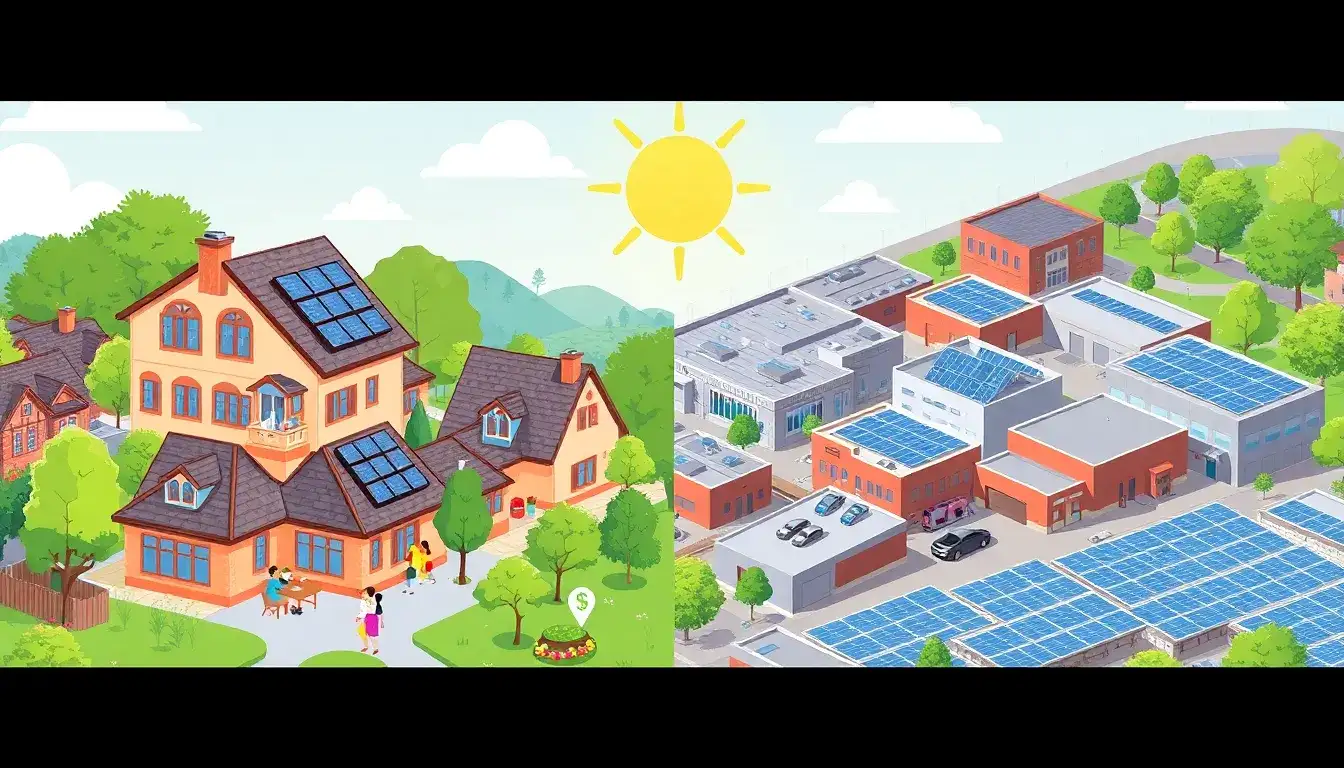
State incentives for residential and commercial solar installations vary significantly across the United States. These incentives include tax credits, rebates, property tax exemptions, and performance-based incentives, which are designed to encourage the adoption of solar energy. Here’s a breakdown of how these incentives differ for residential versus commercial installations:
Types of Incentives
- Tax Credits and Rebates: Many states offer specific tax credits or rebates for both residential and commercial solar installations, though the amounts and conditions may differ. For example, New York offers a 25% income tax credit for residential solar systems but also has programs for small commercial installations.
- Property Tax Exemptions: Several states provide exemptions from property tax assessments for the added value of solar systems installed on residential and commercial properties. For instance, both California and Illinois offer such exemptions to encourage broader adoption of solar energy.
- Performance-Based Incentives (PBIs): Some states, like Massachusetts with the SMART program, offer PBIs that pay based on the electricity generated by the solar system. These can be more commonly associated with commercial installations due to larger energy outputs but are also available for residential systems.
- Low-Interest Loans and Financing Options: States like Florida offer financing options like Property Assessed Clean Energy (PACE) that can be more beneficial for residential installations, while larger commercial projects might opt for more traditional financing methods but can still benefit from state incentives.
State-Specific Programs
Residential Incentives
- Arizona: Offers a tax credit for solar energy devices and a sales tax exemption on solar equipment.
- New York: The NY-Sun program provides rebates for solar installations, along with a state tax credit.
- Illinois: The Illinois Shines program provides financial incentives for solar installations through solar renewable energy credits.
Commercial Incentives
- California: While commercial solar installations benefit from property tax exemptions, they often rely on federal tax credits and larger-scale rebates, such as those from utility companies participating in the SGIP program.
- Illinois: Commercial participants in the Illinois Shines program can receive payments for solar renewable energy credits, similar to residential participants but typically on a larger scale.
Variations Between Residential and Commercial Incentives
- Scale and Eligibility: Commercial incentives often focus on larger-scale installations and may require more complex applications, whereas residential incentives are generally more accessible and straightforward.
- Program Structures: Residential programs might offer simpler rebate structures or fixed tax credits, while commercial programs may involve performance-based incentives or larger rebates per watt of installed capacity.
Overall, while both residential and commercial solar installations benefit from state incentives, the specifics and scale of these incentives can vary significantly depending on the state and the type of solar system being installed.
Original article by NenPower, If reposted, please credit the source: https://nenpower.com/blog/how-do-state-incentives-vary-for-residential-versus-commercial-solar-installations/

