

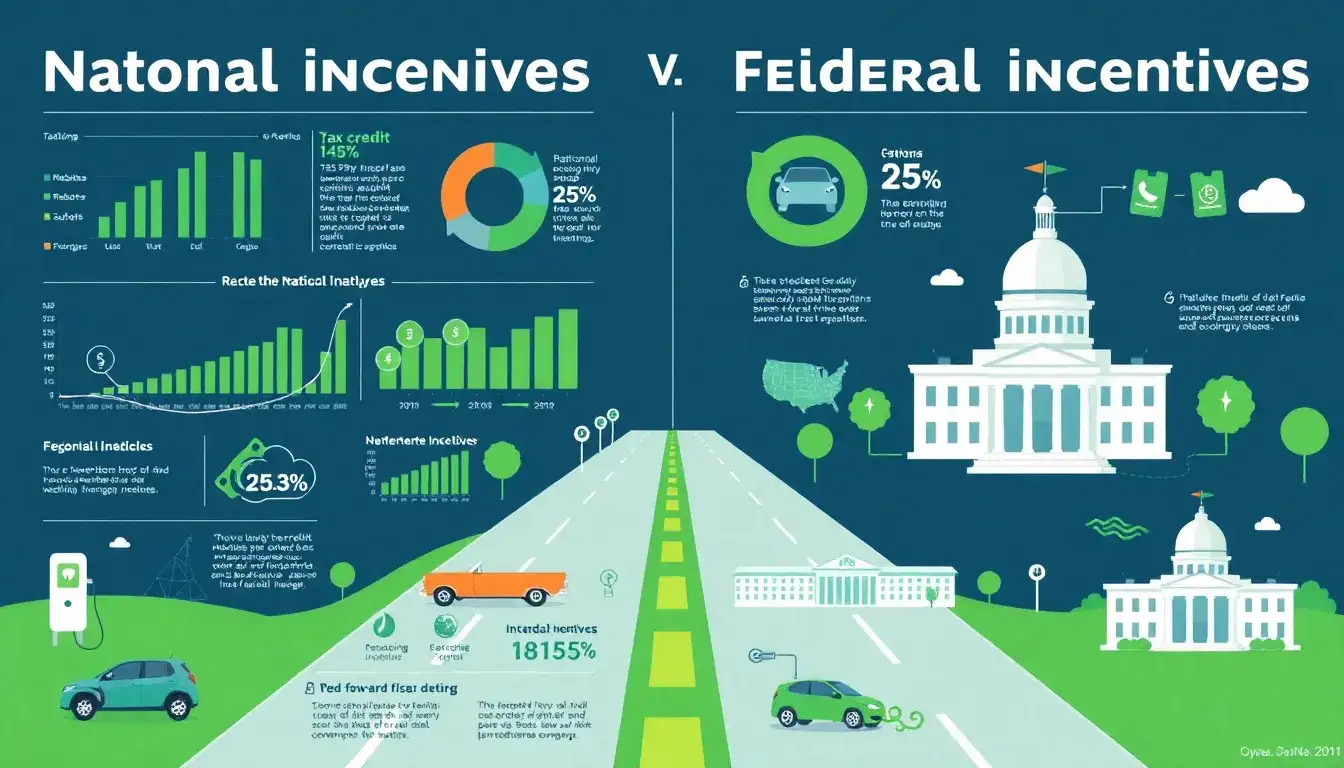
Federal Incentives for EVs
- The federal government offers a tax credit of up to $7,500 for the purchase of new electric vehicles that meet specific requirements, including vehicle type and buyer income limits. This credit directly reduces the buyer’s federal tax liability, effectively lowering the cost of an EV.
- There is also a federal tax credit of up to $4,000 available for certain used EV purchases.
State Incentives for EVs
- State incentives vary significantly and might include rebates, tax credits, grants, sales tax exemptions, or other benefits.
- Some states offer incentives that approach or match the federal incentive amount. For example, Connecticut, Maine, and Oregon each provide up to $7,500 in state incentives through various programs, effectively doubling the potential savings when combined with federal credits.
- California previously offered the Clean Vehicle Rebate Project (CVRP), which provided up to $7,500 in rebates similar to the federal credit, but this program is currently closed to new applications. However, California still offers other grants and incentives through agencies like the California Air Resources Board (CARB), including grants up to $7,500 for EV buyers with qualifying incomes, as well as charging station grants.
- Other states such as Colorado, New Jersey, and Vermont provide notable incentives ranging from $4,000 to $5,000 in tax credits or rebates, helping to further reduce EV purchase costs beyond federal benefits.
- State incentives sometimes also target specific populations, such as low-income residents, to help replace older, high-polluting vehicles with cleaner EVs, exemplified by California’s Clean Cars for All program.
Comparison Summary
| Aspect | Federal Incentives | State Incentives |
|---|---|---|
| Maximum amount | Up to $7,500 for new EVs; up to $4,000 for used EVs | Up to $7,500 or more in select states (e.g., CT, ME, OR) |
| Form | Tax credit (direct reduction of federal tax liability) | Varies: rebates, tax credits, grants, exemptions |
| Eligibility | Vehicle and income-based rules | Varies widely by state; some target income or vehicle types |
| Availability | Nationwide | State-specific; differs significantly by location |
| Additional benefits | Some limited to new vehicles only | Often include charging station incentives and special programs for low-income residents |
In conclusion, federal incentives provide a consistent baseline tax credit of up to $7,500 for qualified EV buyers nationwide. State incentives can either supplement this federal credit with additional rebates or tax credits—sometimes matching the federal amount—or offer other benefits like grants for charging infrastructure or programs targeting disadvantaged groups. The combined impact of both federal and state incentives can substantially lower the cost of purchasing an EV, but the exact benefits depend heavily on the state in which the buyer resides.
Original article by NenPower, If reposted, please credit the source: https://nenpower.com/blog/how-do-state-incentives-compare-to-federal-incentives-for-evs/

