

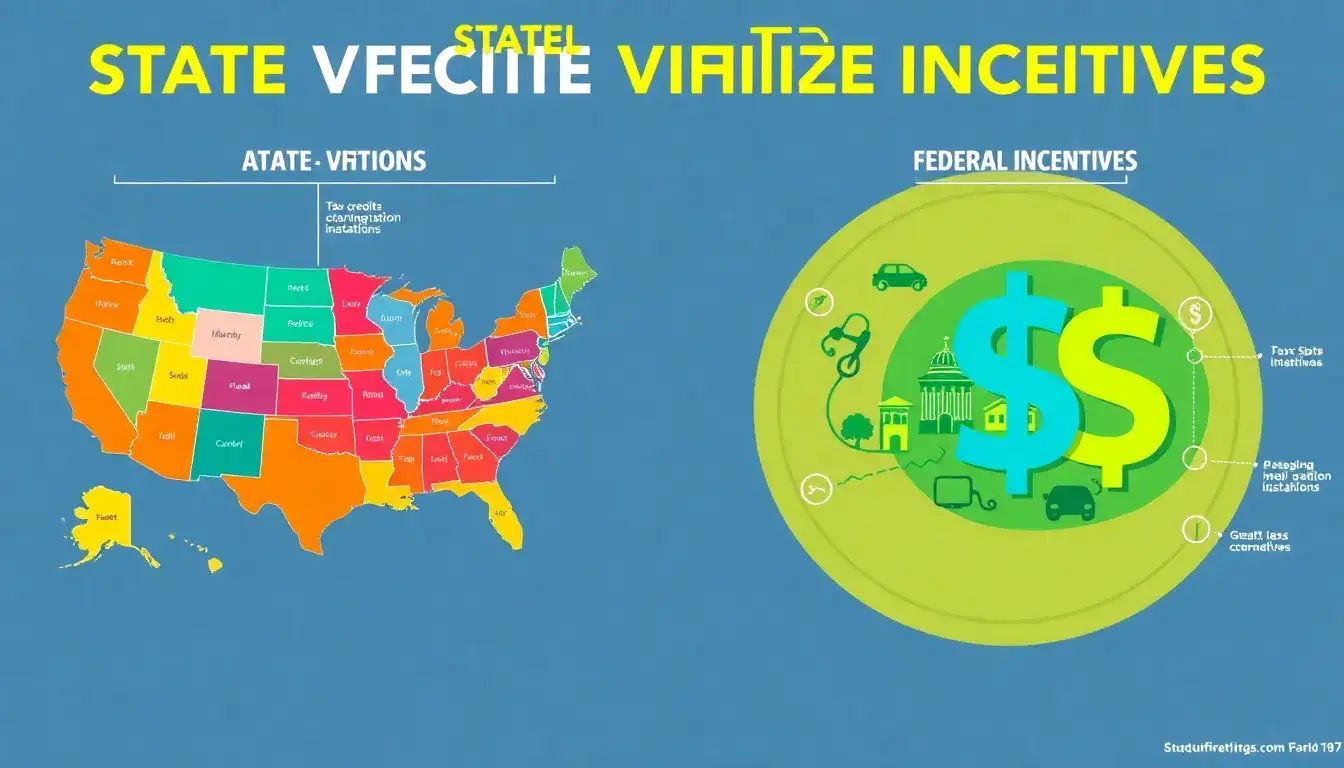
State incentives for electric vehicles (EVs) often complement the federal incentives but can vary widely in generosity, scope, and types of benefits offered.
Federal Incentives for Electric Vehicles
- The federal government offers an income tax credit of up to $7,500 for qualified electric vehicles, including all-electric, plug-in hybrid, and fuel cell electric vehicles. The exact amount depends on the vehicle’s battery capacity and manufacturer sales volume.
State Incentives for Electric Vehicles
- States provide a mix of rebates, tax deductions, discounted electricity rates, bill credits, and other perks such as free parking or charging stations. These incentives vary significantly by state and often apply not only to electric cars but also to plug-in hybrids, electric motorcycles, and fuel-cell vehicles.
Examples of State-Specific Incentives
- California offers some of the most generous incentives:
- Clean Vehicle Rebate Project provides up to $7,500 for battery electric vehicles (BEVs) and fuel cell electric vehicles (FCEVs), and up to $6,500 for plug-in hybrids (PHEVs).
- Additional grants up to $5,000 through the California Air Resources Board based on income.
- Utility companies and local governments may offer additional rebates (e.g., Bay Area Air Quality Management District offers up to $9,500 for income-qualified vehicle replacements), insurance discounts, free parking, and free charging.
- Vermont offers the Drive Electric program providing up to $4,000 for new eligible EVs or up to $5,000 for used high-efficiency vehicles, with eligibility based on income and filing status. Other programs like Replace Your Ride add $3,000 in incentives, plus utility company rebates.
- Other states provide incentives such as discounted time-of-use electricity rates (e.g., Alabama Power, Alaska Electric Light & Power), bill credits for residential chargers (Alaska), or rebates for purchasing new or used EVs with specific battery size minimums.
Comparison Summary
| Aspect | Federal Incentives | State Incentives |
|---|---|---|
| Type of Incentive | Income tax credit (up to $7,500) | Rebates, tax deductions, discounted electricity, bill credits, grants, parking/charging perks |
| Eligibility | Qualifying new EV purchases nationwide | Varies by state; some apply to new and used EVs, income-based eligibility common |
| Value | Up to $7,500 | Varies widely; some states provide incentives comparable to or exceeding federal credit (e.g., California up to $7,500 rebate plus grants) |
| Additional Benefits | None aside from tax credit | May include electricity rate discounts, insurance discounts, free parking, and infrastructure support |
| Impact | National, standardized | Regional/local, tailored to state policy goals and budgets |
In conclusion, federal incentives provide a baseline tax credit that is broadly available but capped at $7,500, whereas state incentives can significantly enhance the financial appeal of EVs through additional rebates, utility savings, and perks. Some states like California and Vermont offer particularly robust programs that can double or even surpass the federal benefit depending on the buyer’s circumstances.
Original article by NenPower, If reposted, please credit the source: https://nenpower.com/blog/how-do-state-incentives-compare-to-federal-incentives-for-electric-vehicles/

