

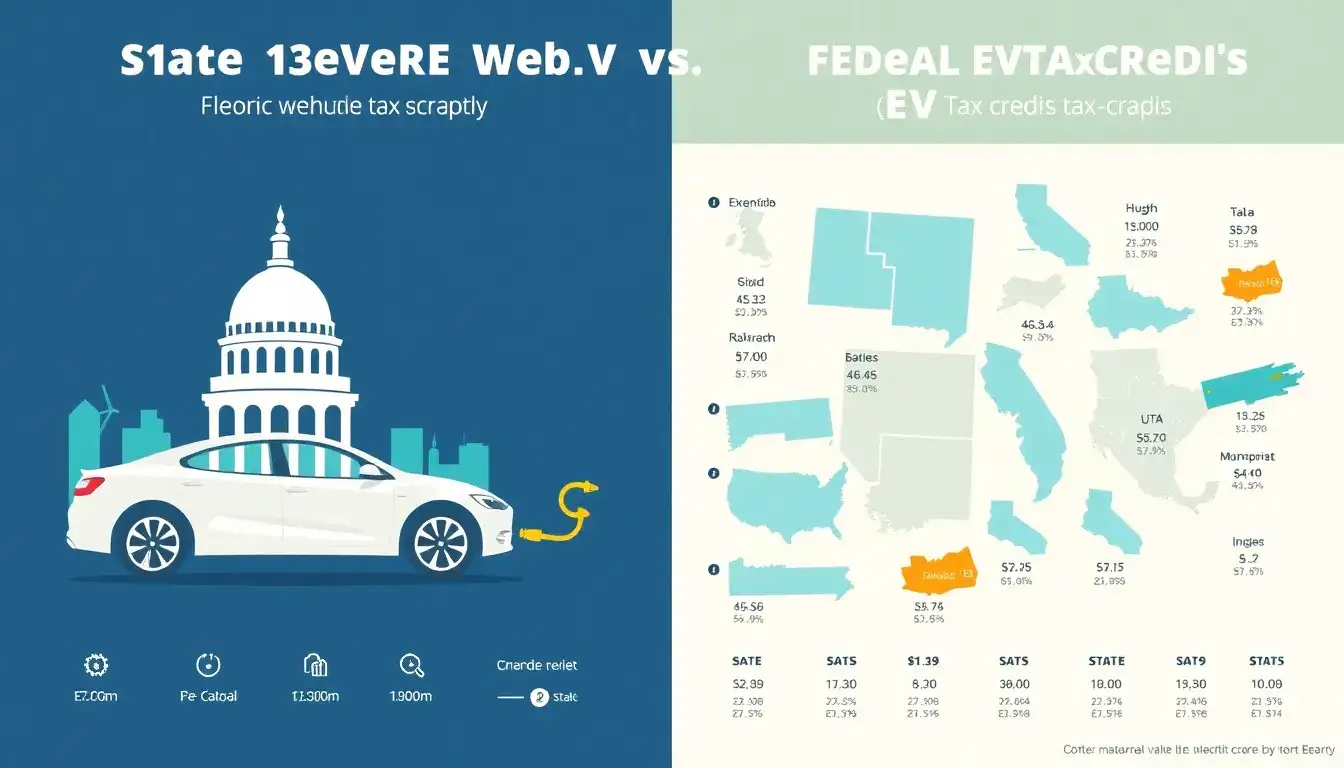
State EV tax credits and incentives vary widely and generally serve as additional benefits on top of the federal tax credit, which currently offers up to $7,500 for new electric vehicle (EV) purchases and $4,000 for used EVs. Here is how state credits compare with the federal credit:
Federal EV Tax Credit
- Provides a tax credit up to $7,500 for the purchase of a new EV, subject to conditions such as North American assembly, battery sourcing, vehicle price, and buyer income limits.
- Used EVs can qualify for a credit up to $4,000.
- From 2024, the credit can be transferred to dealers as an instant discount instead of waiting for tax season.
- Applies nationwide regardless of state residency.
State EV Tax Credits and Incentives
- Nineteen states offer additional EV purchase incentives ranging from about $1,000 (Alaska, Delaware) up to $7,500 (California, Connecticut, Maine), effectively matching or near the federal credit in some cases.
- Some states provide a tiered credit or rebate structure; for example, California offers up to $7,500, which can be combined with the federal credit for a significant total savings.
- Others offer smaller fixed rebates or tax credits, often between $500 and $2,500, supplementing the federal benefit.
- States may also provide non-monetary incentives such as carpool lane access or free parking, which are outside direct tax credits but add value to EV ownership.
- Offsetting these incentives, 24 states impose extra annual registration fees on EVs (ranging from $50 to $200) to compensate for lost gas tax revenue, which somewhat diminishes the overall savings.
Summary Comparison
| Aspect | Federal Credit | State Credits/ Rebates |
|---|---|---|
| Maximum Credit Amount | Up to $7,500 (new EV), $4,000 (used EV) | $1,000 to $7,500 (varies widely by state) |
| Eligibility | Nationwide, new EVs assembled in North America; used EVs have specific rules | Varies by state, some only for new EVs; income and vehicle restrictions vary |
| Form of Benefit | Tax credit or dealer discount | Tax credit, rebate, fee exemption, or other incentives |
| Additional Costs | None specific to federal credit | Many states charge higher EV registration fees |
In conclusion, state EV tax credits typically add on top of the federal $7,500 credit but vary widely in size and form. Some states offer credits that nearly equal the federal amount, while others provide smaller supplementary incentives. However, many states also impose additional fees on EV owners, affecting the net financial benefit of owning an EV at the state level.
Original article by NenPower, If reposted, please credit the source: https://nenpower.com/blog/how-do-state-ev-tax-credits-compare-to-the-federal-credit/

