

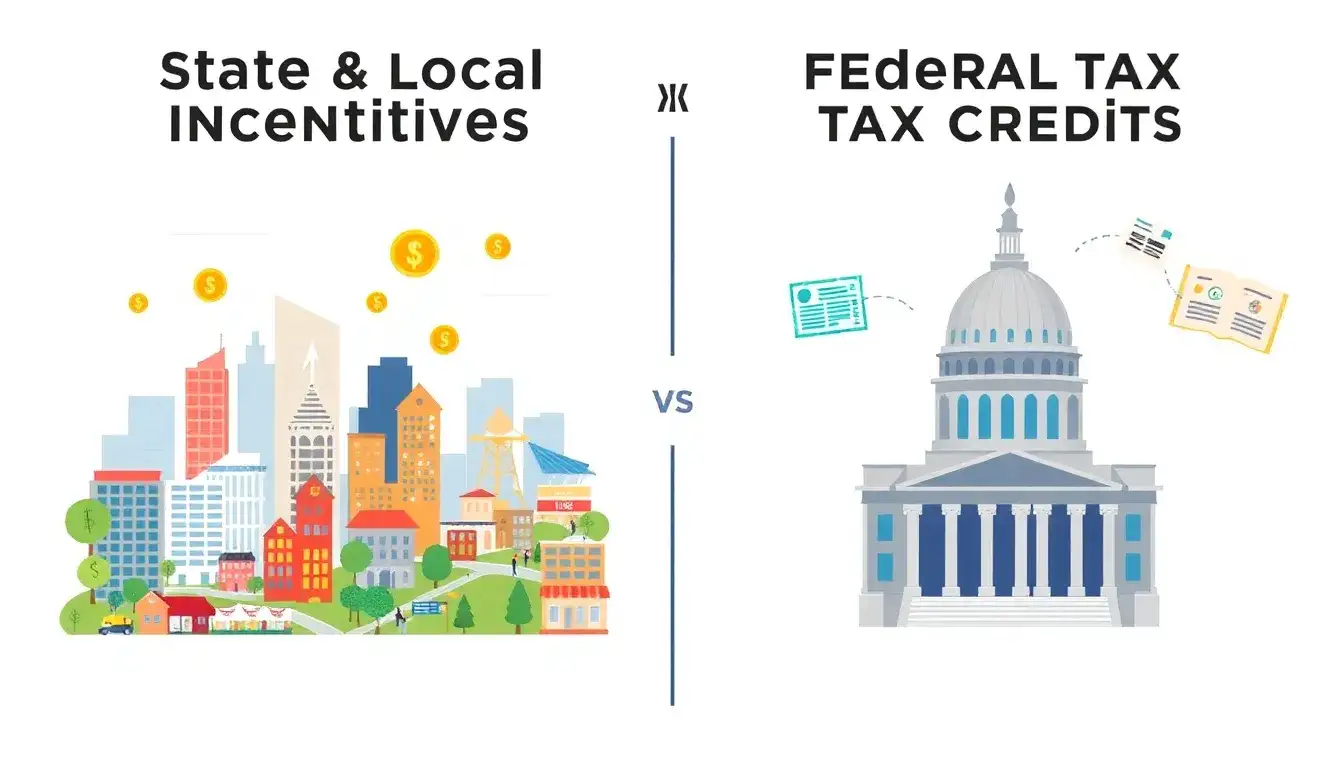
Differences Between State/Local and Federal Incentives
1. Flexibility and Targeting
- State and Local Incentives: These incentives are often more flexible and targeted to specific industries, geographic areas, or demographic groups. They can be tailored to address local needs or attract businesses that align with regional economic development goals. For example, states like Alabama offer job-creation incentives to target job growth in specific counties.
- Federal Tax Credits: Federal incentives tend to be less flexible and are often statutory, meaning they are based on specific laws or regulations. They aim to support broader national goals, such as renewable energy or research activities.
2. Types of Incentives
- State and Local Incentives: These can include a variety of incentives such as tax credits, exemptions, abatements, fee waivers, regulatory exemptions, and grants. They are often used to encourage businesses to locate or expand in specific areas by offering benefits like reduced taxes or upfront grants.
- Federal Tax Credits: Typically involve statutory tax credits like the General Business Credit, Investment Credit, and Research Tax Credit. These credits are generally (though not exclusively) aimed at activities such as energy efficiency, healthcare, and employment.
3. Application Process
- State and Local Incentives: Often require a more direct interaction with local economic development agencies. Businesses may need to negotiate specific terms for incentives, especially if they are project-based.
- Federal Tax Credits: Can be claimed based on statutory criteria without negotiation, although they may require compliance with specific rules or regulations.
4. Geographic Focus
- State and Local Incentives: Are designed to support local economic growth by attracting businesses to specific cities or states. They can focus on specific urban or rural development areas.
- Federal Tax Credits: Are national in scope, applying equally across all regions unless specifically designated to certain areas like Opportunity Zones.
5. Effectiveness and Control
- State and Local Incentives: Allow more local control over how incentives are used and who benefits, enabling targeted support for community development and business attraction strategies.
- Federal Tax Credits: While impactful, provide less regional specificity in their application and benefits.
6. Cumulative Impact
- State and Local Incentives: Can complement federal incentives by filling financing gaps, allowing projects to proceed where federal credits alone are insufficient.
- Federal Tax Credits: Often provide a core financing component but may require supplementation by state or local incentives to achieve project feasibility.
In summary, state and local incentives offer more flexibility and targeted support to specific business sectors or geographic areas, while federal tax credits provide a broader, more standardized framework for incentives across the country.
Original article by NenPower, If reposted, please credit the source: https://nenpower.com/blog/how-do-state-and-local-incentives-differ-from-federal-tax-credits/

