

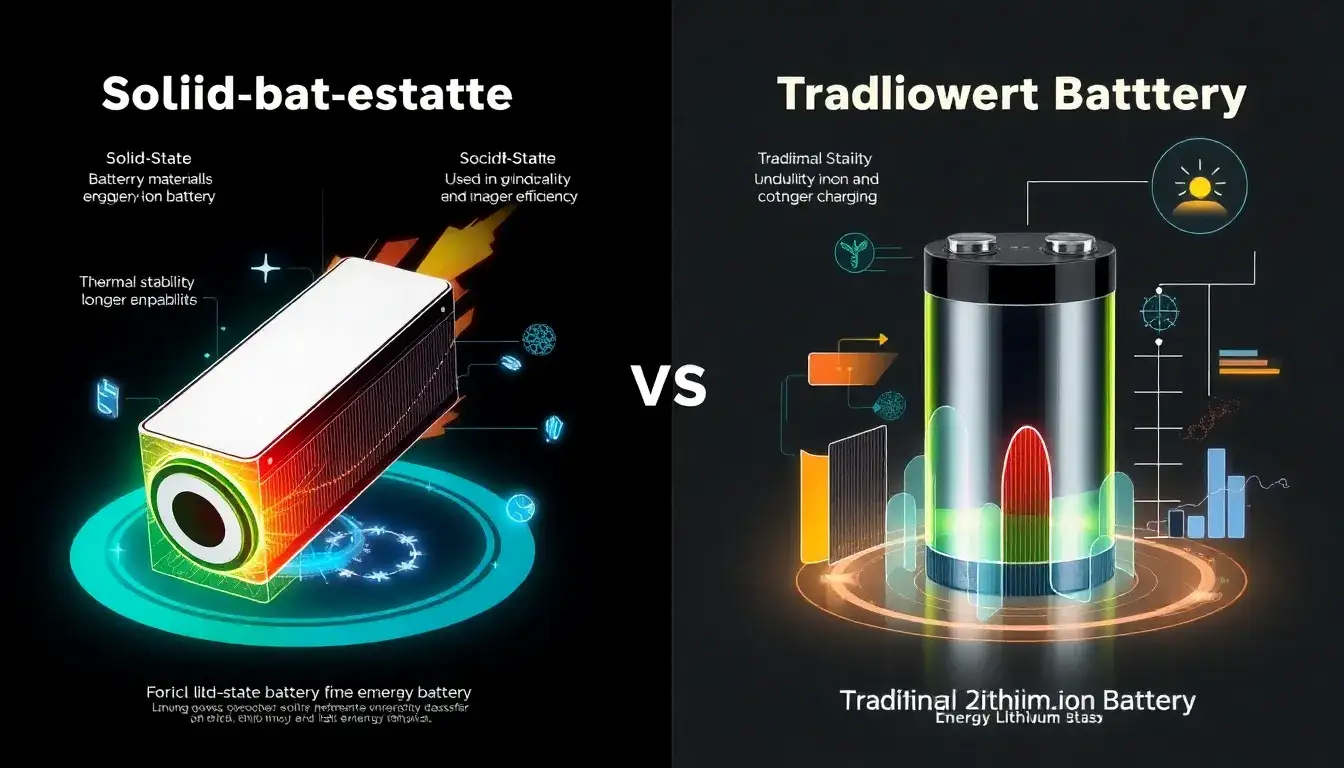
Solid-state batteries demonstrate superior energy efficiency compared to traditional lithium-ion batteries through multiple metrics:
Energy Density
Solid-state batteries achieve 250–800 Wh/kg, doubing the capacity of lithium-ion batteries (160–250 Wh/kg). For example, Mercedes and Factorial’s prototypes reach 450 Wh/kg, enabling 33% smaller, 40% lighter designs. This directly translates to longer range per charge and compact energy storage.
Energy Efficiency in Charging
Solid-state batteries enable ultra-fast charging (12–15 minutes for 0–80%), outperforming lithium-ion’s 30–45 minutes. Their solid electrolytes allow more efficient ion transfer, reducing energy loss during charging.
Lifespan and Sustainability
With 8,000–10,000 charge cycles (vs. 1,500–2,000 for lithium-ion), solid-state batteries retain efficiency longer. They use 40% less cobalt and reduce carbon footprint by 39%, addressing lifecycle waste and resource constraints.
Safety and Thermal Management
Eliminating flammable liquid electrolytes reduces cooling system dependencies, allowing energy to be used more efficiently for power delivery rather than thermal management.
Direct Comparison Table
| Feature | Solid-State Batteries | Lithium-Ion Batteries |
|---|---|---|
| Energy Density | 250–800 Wh/kg | 160–250 Wh/kg |
| Fast Charging | 12–15 minutes (0–80%) | 30–45 minutes (0–80%) |
| Lifespan | 8,000–10,000 cycles | 1,500–2,000 cycles |
| Safety | Non-flammable electrolyte | Flammable liquid |
| Production Maturity | Prototype phase | Mass-produced |
While solid-state batteries are not yet widely available, their efficiency gains position them as the leading successor to lithium-ion technology.
Original article by NenPower, If reposted, please credit the source: https://nenpower.com/blog/how-do-solid-state-batteries-compare-to-traditional-lithium-ion-batteries-in-terms-of-energy-efficiency/

