

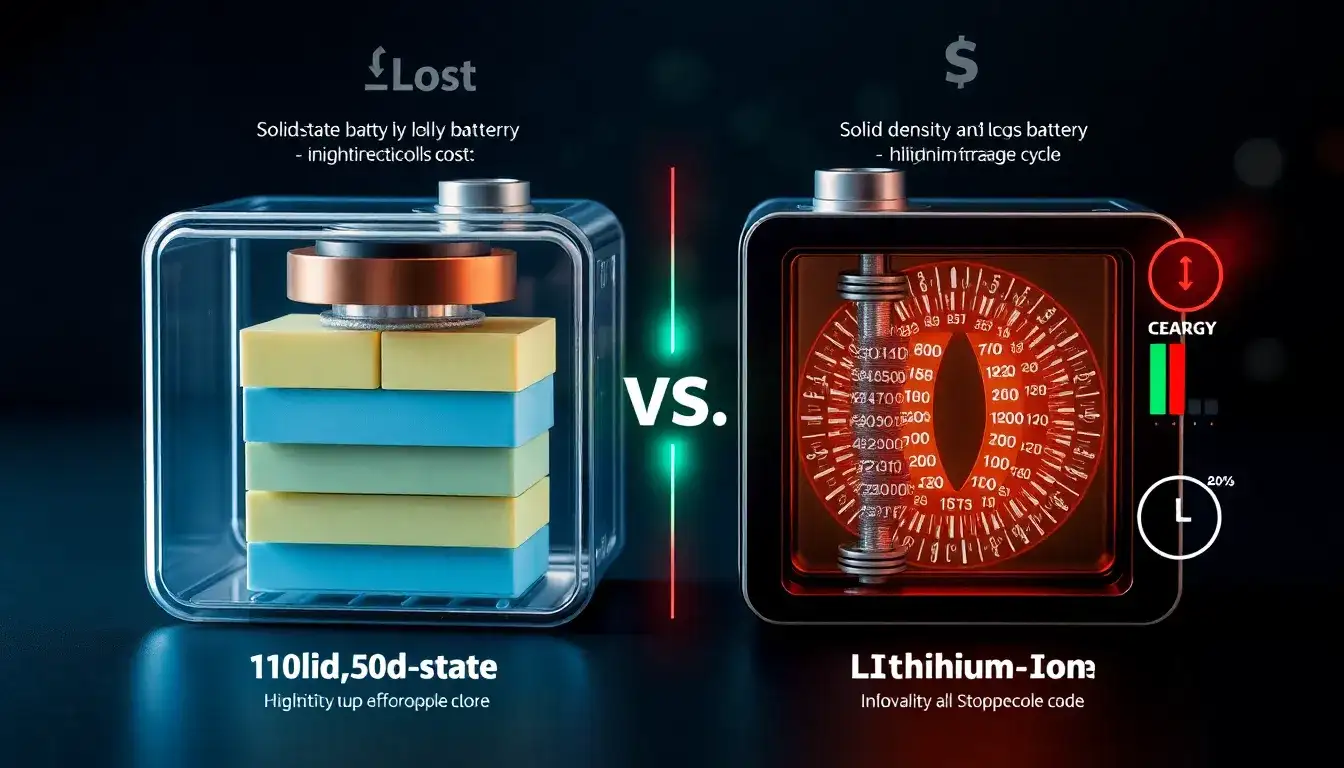
Solid-state batteries and lithium-ion batteries have distinct advantages and disadvantages when it comes to efficiency and cost.
Efficiency Comparison
- Energy Density: Solid-state batteries have a higher energy density, ranging from 500-700 Wh/kg, compared to lithium-ion batteries which range from 250-300 Wh/kg. This means solid-state batteries can store more energy in the same volume or weight.
- Charging Speed: Solid-state batteries can charge faster, typically taking 12-15 minutes to reach 80% charge, whereas lithium-ion batteries often take 30-45 minutes.
- Safety: Solid-state batteries are safer as they use a solid electrolyte, which reduces the risk of thermal runaway and fires associated with the liquid electrolyte in lithium-ion batteries.
- Cycle Life: While lithium-ion batteries typically offer more charge cycles (up to 2,000), solid-state batteries may require further development to match this number (currently around 1,000 cycles).
Cost Comparison
- Current Cost: Solid-state batteries are more expensive to produce, with a cost per kWh ranging from $800 to $1,200, compared to lithium-ion batteries which cost between $100 and $150 per kWh.
- Future Cost Potential: Ongoing research aims to reduce the production costs of solid-state batteries. Projections suggest that their cost could become competitive with lithium-ion batteries by around 2035.
Overall Assessment
Solid-state batteries offer superior efficiency in terms of energy density and charging speed, along with enhanced safety features. However, their high production costs and lower commercial availability currently limit their widespread adoption compared to lithium-ion batteries. As technology advances and manufacturing improves, solid-state batteries have the potential to become a more viable and cost-effective alternative in the future.
Original article by NenPower, If reposted, please credit the source: https://nenpower.com/blog/how-do-solid-state-batteries-compare-to-traditional-lithium-ion-batteries-in-terms-of-efficiency-and-cost/

