

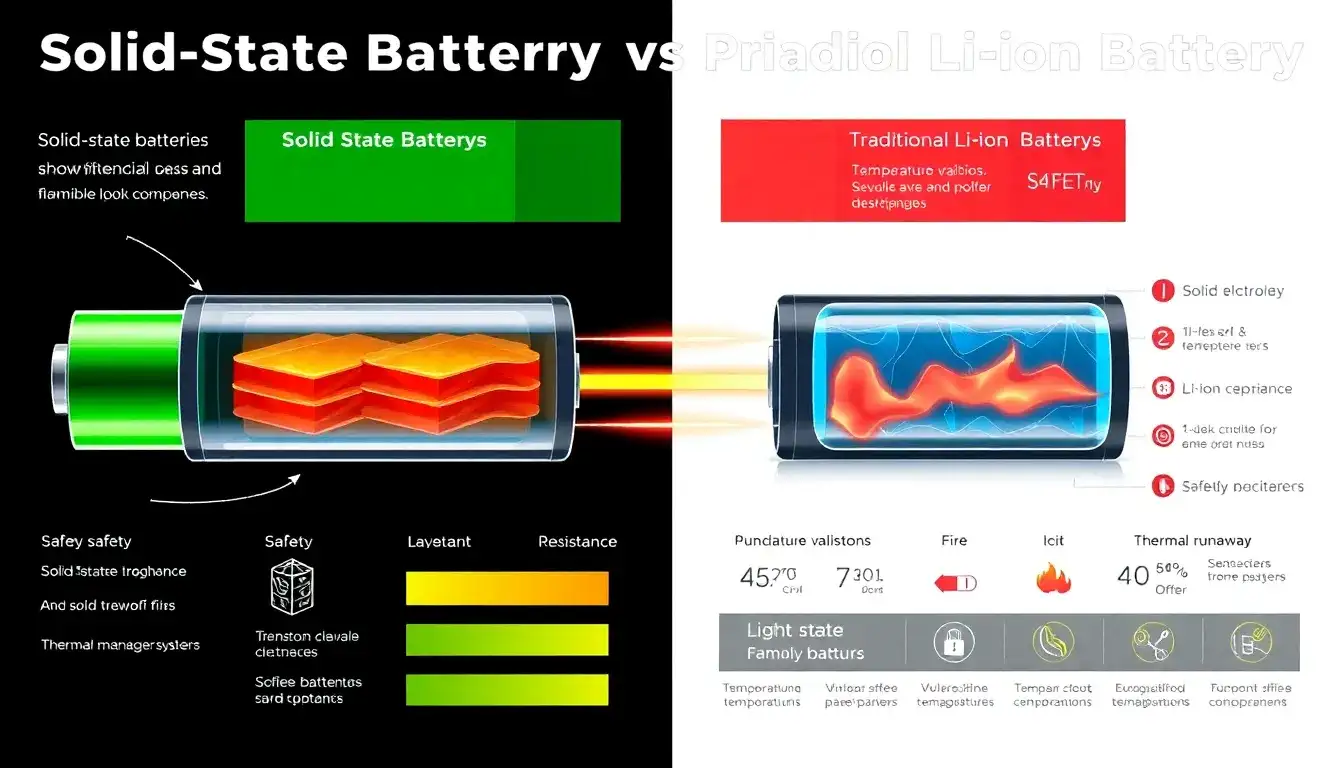
Solid-state batteries are significantly safer than traditional lithium-ion (Li-ion) batteries primarily due to the different electrolyte materials they use. While Li-ion batteries rely on flammable liquid or gel electrolytes, solid-state batteries use solid electrolytes, typically ceramic or polymer-based, which greatly reduce the risk of thermal runaway, short circuits, and fires.
Key safety advantages of solid-state batteries over traditional Li-ion batteries include:
- Reduced Fire Hazard and Thermal Runaway Risk: The solid electrolyte in solid-state batteries is non-flammable, which eliminates the primary cause of fires and explosions seen in liquid-electrolyte Li-ion batteries. This means solid-state batteries are inherently less prone to overheating and catastrophic failure.
- Higher Thermal Stability: Solid-state batteries can tolerate higher temperatures without degradation, making them safer in demanding environmental conditions or during rapid charging cycles.
- Lower Risk of Swelling and Overheating: Li-ion batteries can experience swelling and overheating during misuse or aging, leading to safety hazards; solid-state batteries do not have these issues due to their stable electrolyte.
In summary, solid-state batteries offer a marked safety advantage compared to lithium-ion batteries because their solid electrolytes substantially mitigate the common safety risks linked with liquid electrolytes, such as flammability, thermal runaway, and fire hazards. However, despite these safety benefits, challenges remain in terms of cost, manufacturing complexity, and large-scale production, which have so far limited the widespread adoption of solid-state batteries.
Original article by NenPower, If reposted, please credit the source: https://nenpower.com/blog/how-do-solid-state-batteries-compare-to-traditional-li-ion-batteries-in-terms-of-safety/

