

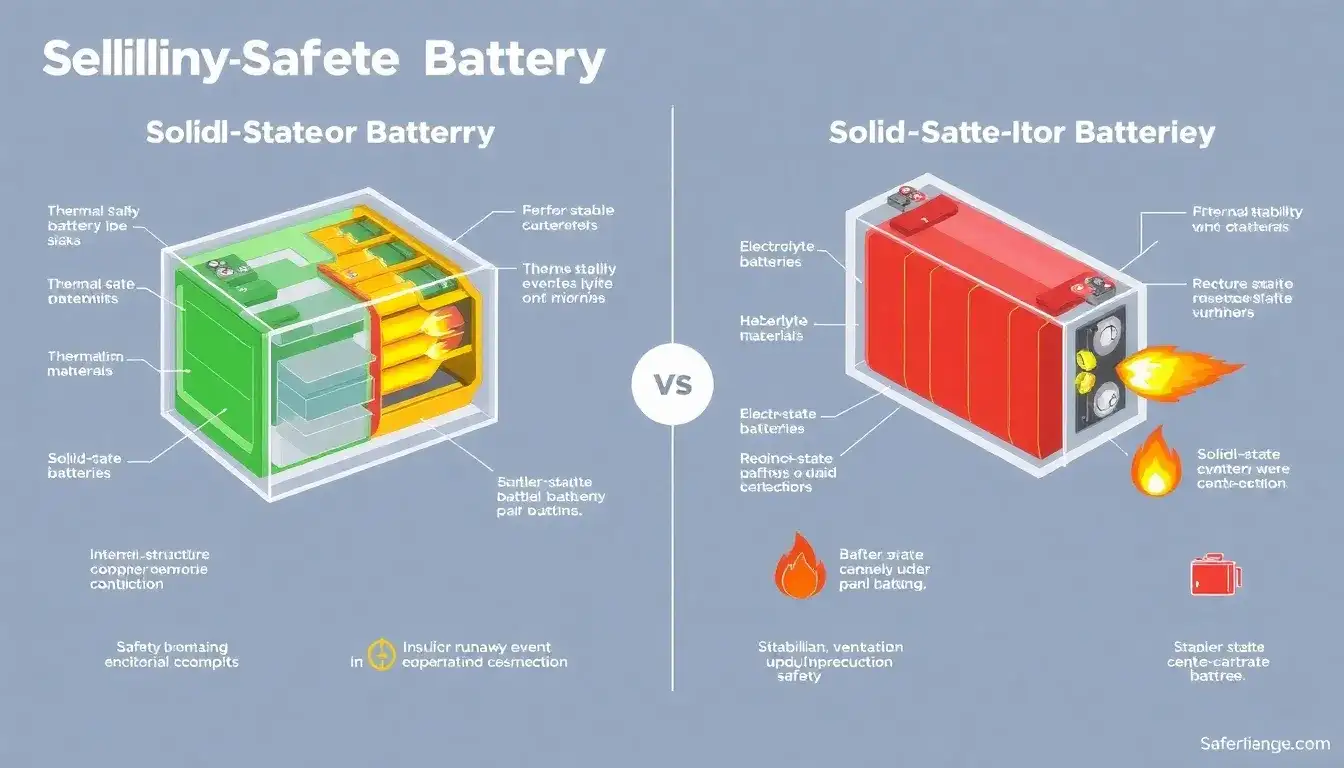
Safety Comparison
- Thermal Stability and Fire Risk:
- Lithium-ion Batteries: These contain a volatile, flammable liquid electrolyte, which can lead to fires or explosions if overheated. The risk of thermal runaway is higher, making them less safe in extreme conditions.
- Solid-State Batteries: They use a solid electrolyte, which greatly reduces the risk of overheating and fire. This makes them more stable and less likely to cause thermal incidents.
- Material Composition:
- Lithium-ion Batteries: The presence of liquid electrolytes increases the risk of leakage and electrical shorts, leading to further safety issues.
- Solid-State Batteries: The solid material used in these batteries minimizes the risk of leakage and electrical shorts, enhancing safety.
- Operating Temperature:
- Lithium-ion Batteries: Generally operate between 0°C to 45°C, limiting their use in extreme environments.
- Solid-State Batteries: Can operate across a broader temperature range (-30°C to 100°C), making them suitable for a wider range of applications.
- Risk of Dendrite Formation:
- Lithium-ion Batteries: The liquid electrolyte can lead to dendrite formation, which can cause short circuits and fires.
- Solid-State Batteries: Dendrite formation risk is mitigated due to the solid electrolyte.
In summary, solid-state batteries offer enhanced safety compared to lithium-ion batteries due to their reduced thermal runaway risk, absence of flammable liquids, and stability across a broader range of operating conditions.
Original article by NenPower, If reposted, please credit the source: https://nenpower.com/blog/how-do-solid-state-batteries-compare-to-lithium-ion-batteries-in-terms-of-safety/

