

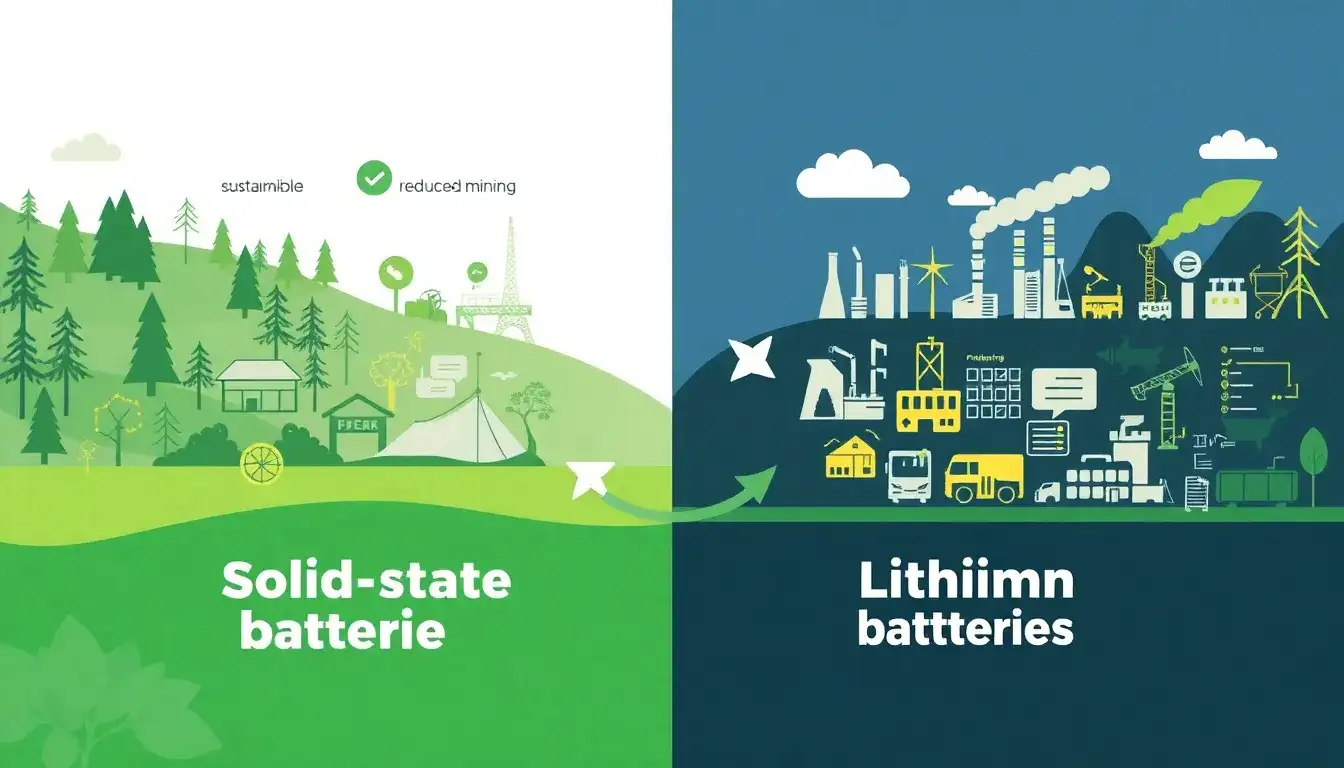
Solid-state batteries demonstrate significant environmental advantages over lithium-ion batteries, primarily through reduced carbon footprints and resource efficiency:
Carbon Emissions
Solid-state batteries can lower the carbon footprint of EV batteries by 24–39% compared to current lithium-ion technology. This stems from their higher energy density, which requires fewer raw materials and reduces emissions during production.
Material and Resource Efficiency
- Reduced mining demands: Fewer materials are needed due to higher energy density, decreasing reliance on lithium and other rare-earth elements.
- Longer lifespan: They offer up to 10 years of charge cycles, compared to ~2 years for current lithium-ion batteries, reducing the frequency of battery replacement and associated waste.
Recycling Challenges
While both battery types require recycling to mitigate hazardous waste, lithium-ion recycling remains energy-intensive (e.g., pyrometallurgical methods emit greenhouse gases). Solid-state batteries may alleviate some pressures due to their extended lifespan and material efficiency, but recycling infrastructure for this newer technology is still developing.
Future Developments
Companies like Toyota are investing heavily (>$13.5B by 2030) to commercialize solid-state batteries, which could further optimize environmental benefits through cleaner production methods and improved recyclability.
Original article by NenPower, If reposted, please credit the source: https://nenpower.com/blog/how-do-solid-state-batteries-compare-to-lithium-ion-batteries-in-terms-of-environmental-impact/

