

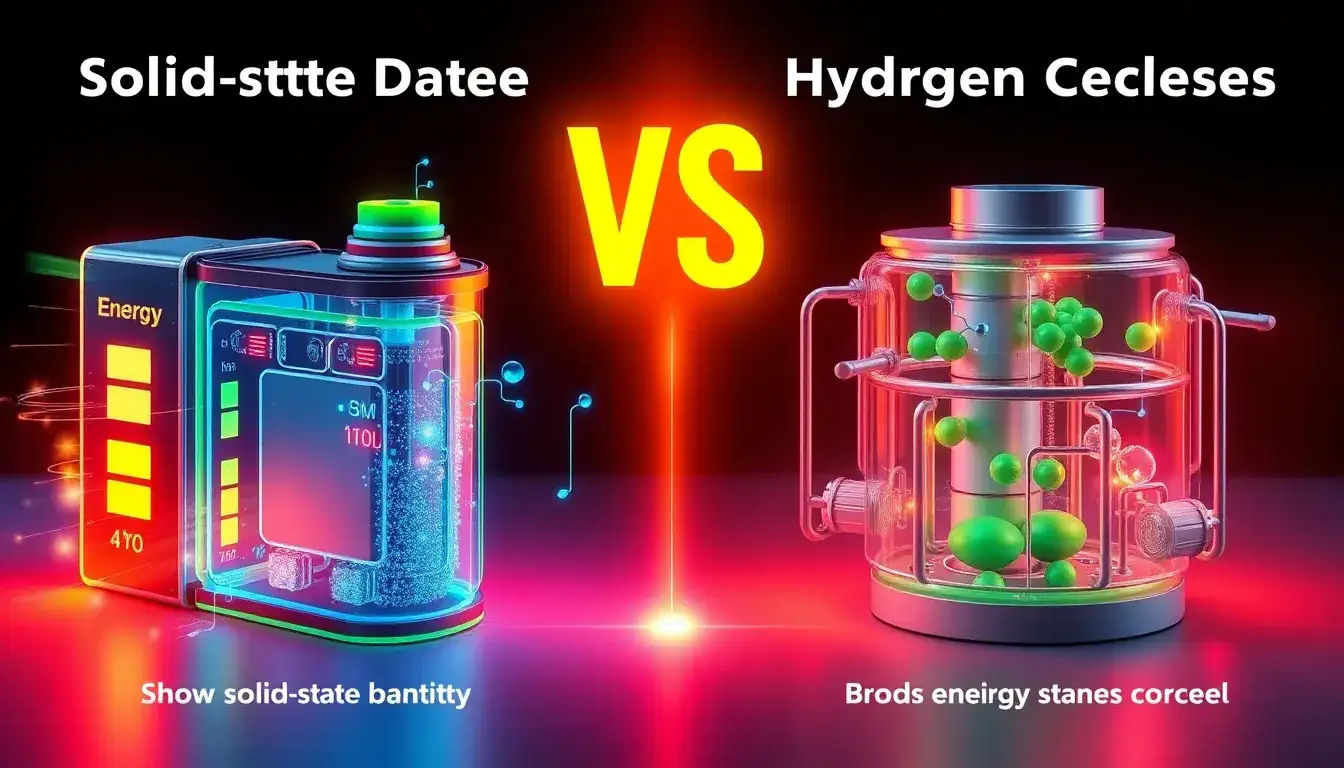
Solid-state batteries and hydrogen fuel cells are both promising technologies for energy storage and powering vehicles, but they differ significantly in terms of efficiency, complexity, energy density, and practical use cases.
Energy Storage and Efficiency
Solid-State Batteries:
- Use solid electrolytes instead of liquid ones, allowing for smaller, more energy-dense batteries that can store more energy in a compact space.
- Offer significantly higher energy density compared to traditional lithium-ion batteries, potentially doubling the range for electric vehicles.
- Have the capability to recharge rapidly in minutes and support up to 5,000 charge cycles, enabling vehicles to run over a million miles without battery replacement.
- Are safer due to the solid electrolyte, reducing risks of overheating and fire, and eliminating issues like leaks common with liquid electrolytes.
- Are more energy-efficient overall; vehicles powered by solid-state batteries have higher power-to-wheel efficiency compared to hydrogen fuel cells, with hydrogen systems being roughly half as efficient in energy conversion from power production to vehicle propulsion.
Hydrogen Fuel Cells:
- Generate electricity by passing hydrogen through a fuel cell membrane where it reacts chemically to produce electric power.
- While hydrogen is a clean fuel with zero emissions at the point of use, the overall energy efficiency from hydrogen production, storage, and conversion to electricity is much lower than for batteries.
- Hydrogen fuel cells involve complex systems, including the need for hydrated membranes that add complexity, maintenance, and cost.
- Recent advances have developed solid electrolytes for hydrogen-based fuel cells that transport hydride ions at room temperature, which could improve safety, efficiency, and reduce cost and complexity, potentially making the hydrogen-based systems more practical for energy storage and use.
Practical Considerations and Future Outlook
- Solid-state batteries are seen as a more straightforward and efficient technology for electric vehicles and portable electronics due to their compact size, higher efficiency, and longer lifespan.
- Hydrogen fuel cells remain relevant primarily for applications needing quick refueling and longer-range capabilities, such as heavy transport, but suffer from lower overall energy efficiency and system complexity.
- Researchers are actively working on improving both technologies, with solid-state batteries approaching readiness for mainstream EV adoption, while hydrogen fuel cell innovations target overcoming current practical limitations.
| Feature | Solid-State Batteries | Hydrogen Fuel Cells |
|---|---|---|
| Energy Density | High, compact, allows longer range in smaller space | Moderate, dependent on hydrogen storage and fuel cell design |
| Charging/Refueling | Rechargeable in minutes, long cycle life | Quick refueling but complex hydration requirements |
| Efficiency (Power-to-Drive) | Higher efficiency (~2x fuel cells) | Lower efficiency due to energy losses in hydrogen production and conversion |
| Safety | Safer due to solid electrolytes, less fire risk | Generally safe but complex handling of hydrogen gas |
| Complexity | Less complex system | More complex system, requires hydration and gas handling |
| Commercial Readiness | Near mainstream adoption with ongoing research | Emerging improvements but still limited by infrastructure and cost |
In summary, solid-state batteries currently offer superior energy storage efficiency, longer lifespan, and simpler system integration compared to hydrogen fuel cells, which have lower efficiency and more complex operational requirements but offer advantages in fuel refueling speed and hydrogen’s clean emission potential. Continued advances in both fields might eventually see them complement each other in various energy storage and transportation applications.
Original article by NenPower, If reposted, please credit the source: https://nenpower.com/blog/how-do-solid-state-batteries-compare-to-hydrogen-fuel-cells-in-terms-of-energy-storage/

