

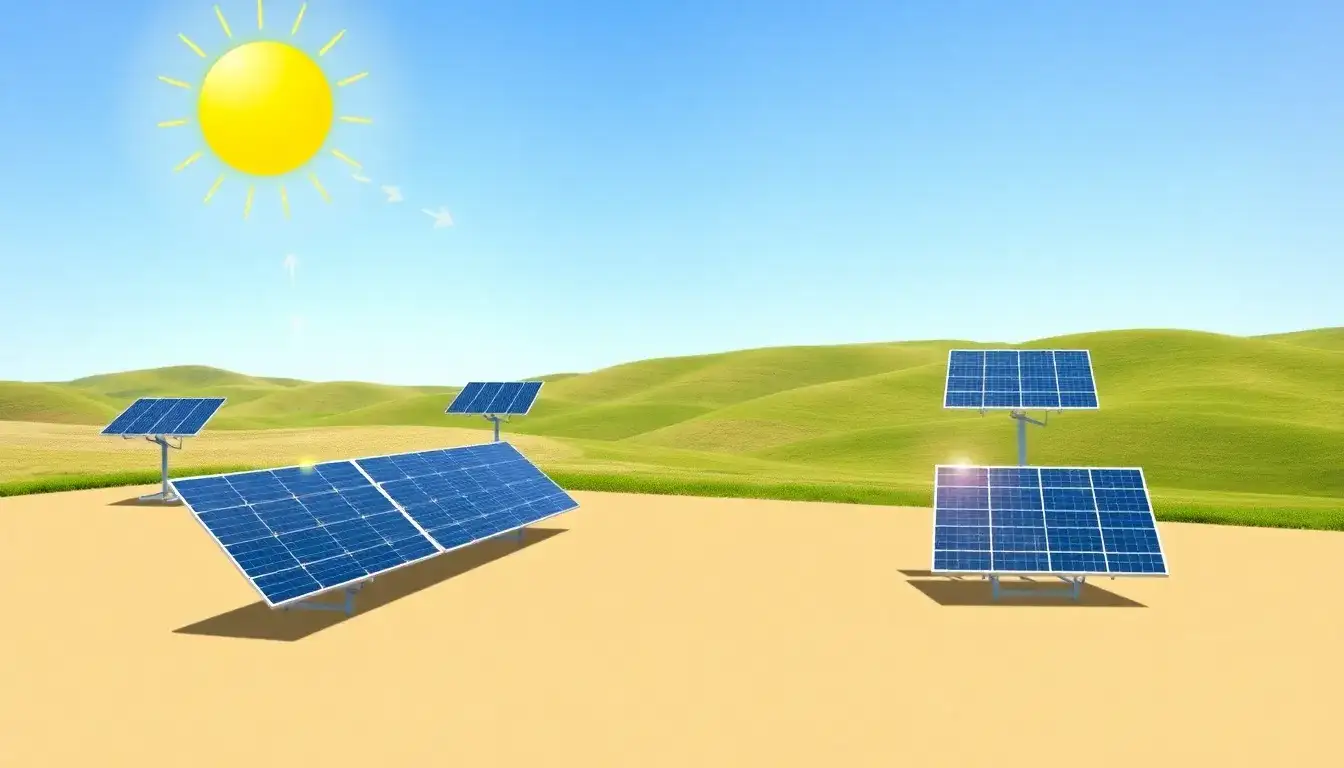
How Solar Tracking Systems Improve the Efficiency of Solar Panels
Solar tracking systems are designed to enhance the efficiency of solar panels by dynamically adjusting their orientation to follow the sun’s path throughout the day. This ensures that solar panels capture more sunlight and produce more electricity. Here’s how these systems improve efficiency:
Key Benefits of Solar Tracking Systems
- Increased Power Output: By continuously aligning solar panels with the sun, tracking systems can increase energy production by 20-40% compared to fixed systems, depending on the latitude and type of tracker used.
- Optimized Sunlight Capture: Solar trackers minimize the angle of incidence losses, allowing solar panels to operate at or near maximum efficiency for longer periods.
- Enhanced Energy Efficiency: The accurate tracking of the sun’s position helps reduce energy losses and increases the overall efficiency of the solar energy system.
Types of Solar Tracking Systems
- Single-Axis Trackers: These trackers rotate on either an east-west or north-south axis. They are simpler, more cost-effective, and commonly used in large-scale installations, offering a performance gain of about 25-35%.
- Dual-Axis Trackers: These trackers rotate on both axes, providing precise alignment with the sun throughout the day. They offer up to 40% increase in energy production but require more maintenance due to their complexity.
- AI-Driven Solar Tracking Systems: These advanced systems use AI to optimize panel angles based on real-time weather and solar radiation data. They adapt to environmental changes, improving efficiency and reducing operational costs.
Operational Components
- Mounting System: Provides a stable base for the solar panels and tracking mechanism.
- Tracking Mechanism: Uses GPS and actuators to adjust the panel angles based on the sun’s position.
- Solar Panels: Convert sunlight into electricity using photovoltaic cells.
Challenges and Considerations
- Higher Cost: The initial installation cost is higher than fixed systems, though long-term benefits offset this cost.
- Maintenance: Requires regular maintenance to ensure proper functioning.
In summary, solar tracking systems boost solar panel efficiency by maximizing sunlight exposure throughout the day, enhancing energy production, and improving the overall return on investment.
Original article by NenPower, If reposted, please credit the source: https://nenpower.com/blog/how-do-solar-tracking-systems-improve-the-efficiency-of-solar-panels/

