

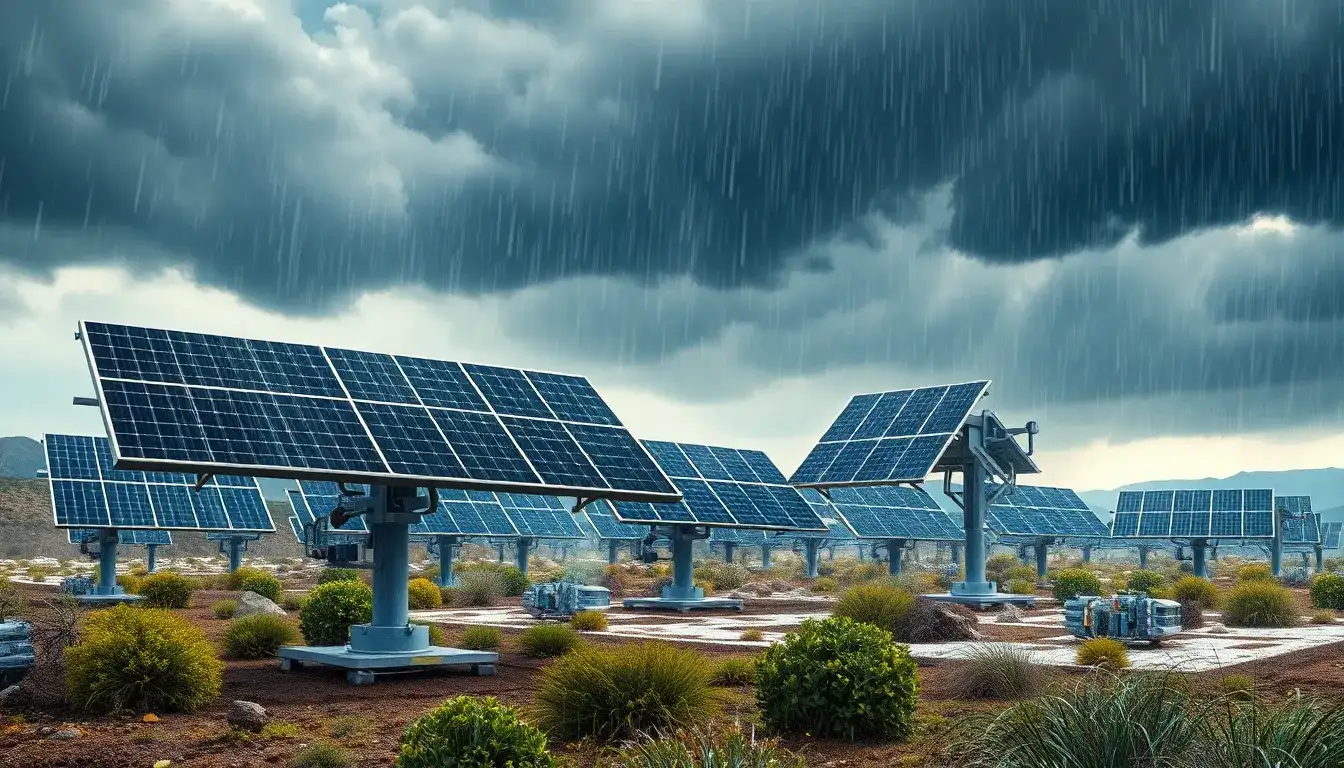
Solar trackers can face significant challenges in extreme weather conditions, but advancements in technology have improved their resilience. Here’s how they perform and the strategies used to mitigate risks:
Extreme Weather Conditions and Mitigation Strategies
Rain and Flooding
- Issue: Heavy rainfall can cause water to pool beneath solar trackers, potentially damaging motors and modules if they continue to track into obstructions.
- Solution: Implementing flood sensors and ensuring overcurrent protection can help prevent damage.
Temperature Variations
- Issue: In cold or warm climates, trackers must accommodate physical expansion and contraction to maintain functionality and prevent damage.
- Solution: Building in tolerances for thermal expansion is crucial.
Hail
- Issue: Hail can damage solar panels, although priority is often given to preventing wind damage, which can cause more extensive system failure.
- Solution: Systems like Nextracker’s NX Horizon Hail Pro offer specific hail protection solutions. Array Technologies’ SkyLink system includes SmarTrack Automated Snow Response and Hail Alert Response to ensure trackers stow safely during hailstorms.
Wind
- Issue: High winds can bend or dislodge trackers, leading to potential harm and system damage.
- Solution: Technologies like Array’s passive wind stow technology help secure trackers in windy conditions. Advanced weather forecasting can also aid in preparing systems for high winds.
Snow
- Issue: Snow accumulation can weigh down trackers or obstruct their movement.
- Solution: PVH and Array Technologies offer solutions that include robust design and stow mechanisms to handle snow loads effectively.
Key Technologies for Resilience
- Advanced Materials and Design: Trackers are designed with robust materials to resist harsh weather conditions.
- AI and Monitoring: AI-enabled sensors and remote control systems monitor and respond to weather changes, ensuring trackers adjust accordingly.
- Emergency Response Plans: Having comprehensive risk assessments and emergency plans in place can minimize downtime during extreme weather.
Overall, solar trackers have evolved to better withstand extreme weather conditions through innovative design, advanced materials, and smart technology that predicts and responds to weather changes.
Original article by NenPower, If reposted, please credit the source: https://nenpower.com/blog/how-do-solar-trackers-perform-in-extreme-weather-conditions/

