

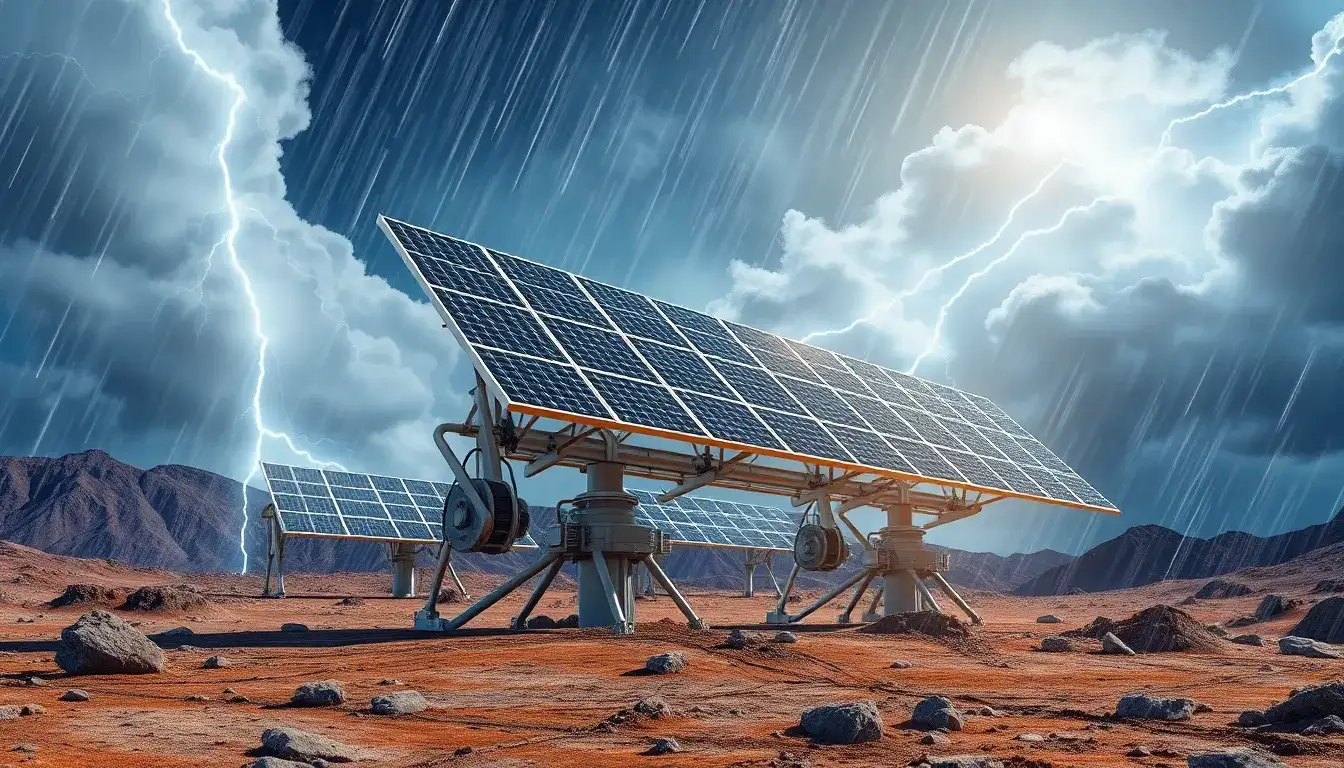
Design and Stowing Strategies
- Angle Adjustment: During severe weather, solar trackers can change their angle to reduce wind impact. Tilting modules so the leading edge is lower can make wind flow above or below, minimizing tracker movement and damage.
- Hail Protection: Trackers can stow at an angle away from the wind to ensure hail strikes at an oblique angle, reducing module damage. This orientation can protect against larger hail sizes compared to stowing into the wind.
- Selective Stowing: Some trackers allow only threatened rows to stow while others continue to operate, maximizing energy production even during storms.
Advanced Technology Integration
- Safety Algorithms and Sensors: Modern trackers use sophisticated operating systems with safety algorithms and atmospheric sensors. These systems can detect changes in weather conditions like wind speed and automatically adjust the tracker’s position to protect the system.
- Automated Response Systems: Transitioning from manual to automated hail response systems enhances protection by quickly stowing trackers during severe weather. Automated systems streamline the response time, reducing exposure to extreme conditions.
Temperature Resilience
- Thermal Expansion: Trackers in colder regions must account for thermal expansion and contraction due to temperature fluctuations. This ensures stability and functionality even in frigid conditions.
- Cold Weather Operations: Some trackers are designed to operate in very low temperatures, often as low as -48°C, making them suitable for harsh climates.
Additional Protections
- Flood Sensors: Certain trackers come equipped with flood sensors, which lift panels above floodwaters to prevent damage. This feature has proven effective in minimizing damage during significant flooding events.
Original article by NenPower, If reposted, please credit the source: https://nenpower.com/blog/how-do-solar-trackers-handle-extreme-weather-conditions/

