

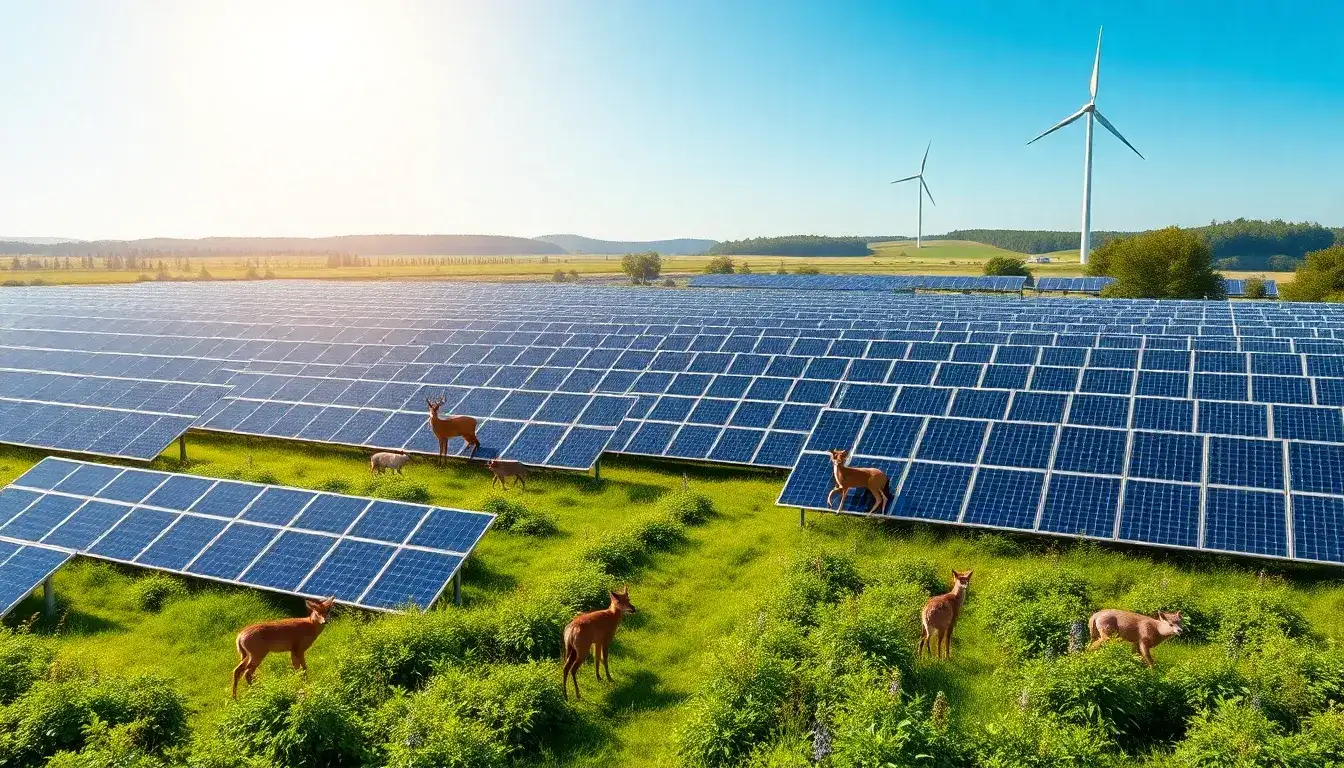
Solar projects balance energy production with wildlife conservation through careful planning, design, mitigation measures, and collaboration with experts to minimize negative impacts on habitats while promoting renewable energy goals.
Key Strategies for Balancing Solar Energy and Wildlife Conservation
1. Strategic Site Selection and Planning
Developers prioritize locating solar installations away from critical wildlife habitats, migration routes, and ecologically sensitive areas to reduce habitat disturbance and fragmentation. This early consideration in the planning phase helps avoid potential conflicts between solar infrastructure and local fauna.
2. Collaboration with Environmental and Wildlife Experts
Engaging wildlife biologists, ecologists, and conservation organizations provides vital insights into local ecosystems. Such collaboration informs environmental assessments, guiding developers in designing projects that respect biodiversity and identifying risks to wildlife.
3. Wildlife-Friendly Design and Mitigation Measures
Implementing design features that consider wildlife needs can significantly reduce harm. Examples include:
- Building wildlife corridors or safe passageways for small animals to move around solar arrays
- Installing bird-friendly measures to prevent collisions and disturbances
- Employing protective fencing to safeguard vulnerable species while allowing movement, as seen in the Desert Tortoise Conservation efforts at California’s SEGS solar project
- Using permeable fencing and wildlife corridors to maintain habitat connectivity and reduce habitat isolation.
4. Habitat Restoration and Monitoring
Projects often incorporate habitat restoration efforts near or within solar sites to improve ecosystem quality and support wildlife populations. Continuous monitoring of wildlife movement and health around the facility helps adapt management strategies and assess effectiveness, demonstrated by real-time tracking in the SEGS project.
5. Scalable Solutions and Knowledge Sharing
Sharing best practices and lessons learned across the industry encourages the adoption of wildlife-friendly solar development on a broader scale. Collaboration between researchers, policymakers, and industry stakeholders supports continuous improvement and refinement of coexistence strategies.
6. Supportive Policy Frameworks
Effective policies and regulatory incentives encourage responsible solar development that integrates wildlife conservation goals. Partnerships between conservation groups and policymakers help align environmental preservation with renewable energy expansion.
Illustrative Examples of Wildlife-Conscious Solar Projects
- Desert Tortoise Conservation, California SEGS Project: Use of fencing, crossings, habitat restoration, and wildlife tracking to protect threatened tortoise populations.
- Topaz Solar Farm, California: Implementation of avian protection measures to reduce bird fatalities and disturbance.
- Arizona Case Study: Wildlife tracking and solar design optimizations to lessen habitat disruption and promote coexistence.
Conclusion
Balancing solar energy production with wildlife conservation involves integrating environmental considerations early in project development, employing wildlife-sensitive designs and mitigation, continuous monitoring, and fostering multi-stakeholder collaboration. Through these combined efforts, solar energy can advance as a sustainable solution that supports both climate goals and biodiversity preservation.
Original article by NenPower, If reposted, please credit the source: https://nenpower.com/blog/how-do-solar-projects-balance-energy-production-with-wildlife-conservation/

