

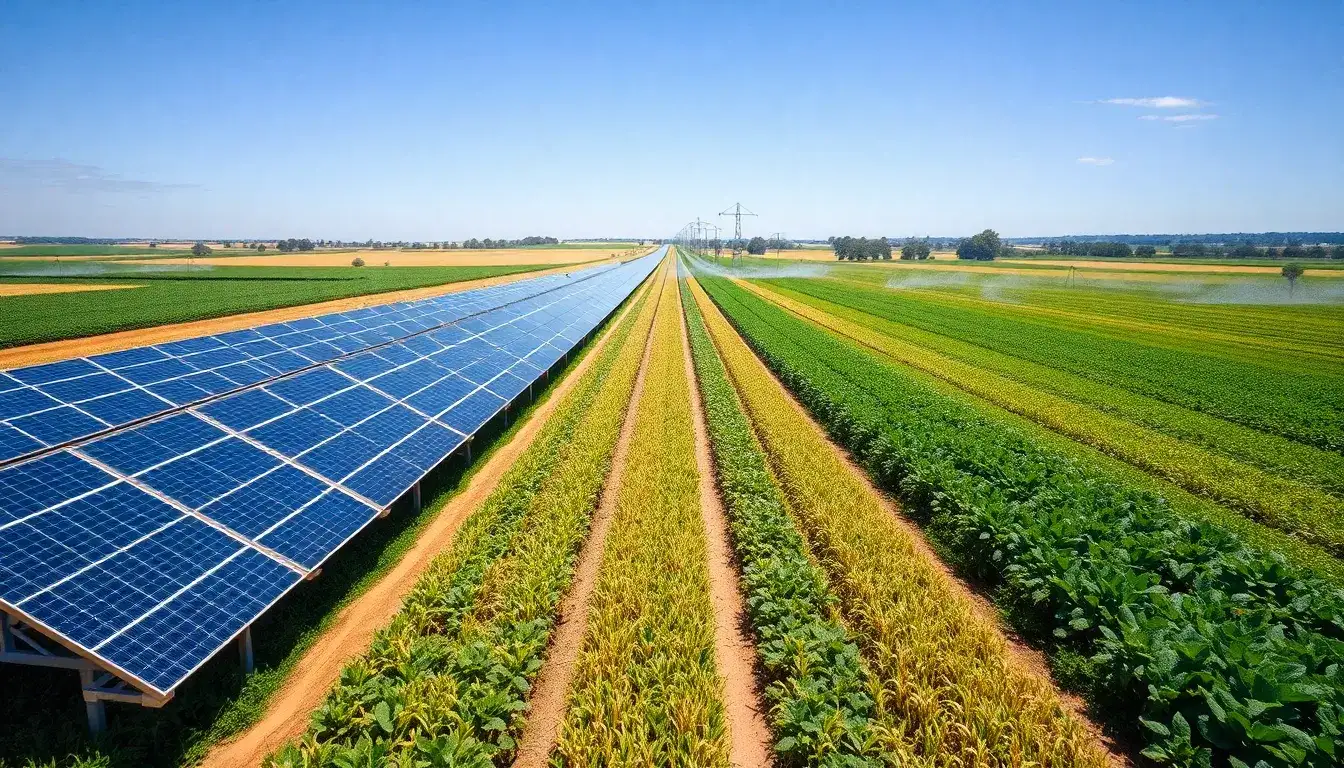
- Consistent and Reliable Water Supply: These systems provide a steady, predictable source of water, unlike rain-fed or unreliable grid/diesel-powered irrigation methods. This allows crops to receive water exactly when needed, fostering optimal growth conditions and healthier plants.
- Increased Crop Yields: Farmers using solar-powered pumps have reported yield increases of around 50%, with some cases showing about 500 kg to 1 metric ton more per hectare per cropping cycle. Consistent irrigation supports better crop planning and allows cultivation of larger areas, including previously rain-dependent land.
- Cost Reduction and Sustainability: Solar irrigation eliminates ongoing fuel costs associated with diesel pumps, reduces greenhouse gas emissions, and lowers operational expenses, which enables farmers to invest more in their crops and expand productive land use.
- Better Water Management: Integration with sensors and smart management allows water to be applied only when plants require it. This precision irrigation reduces water waste and improves plant health, which further enhances yields.
- Expanded Cultivable Area: Because solar-powered irrigation does not rely on grid electricity and can operate in remote areas, farmers can bring more land under cultivation and diversify crops, contributing to higher overall food production.
- Improved Food Security and Quality: The increase in both quantity and quality of produce due to reliable water access and better plant care has broader benefits for nutrition and food availability in farming communities.
In summary, solar-powered irrigation systems enhance crop yields by ensuring dependable water access, reducing costs, promoting sustainable farming practices, improving water-use efficiency, and enabling expansion of farmland. These benefits collectively lead to higher productivity, better crop quality, and improved livelihoods for farmers.
Original article by NenPower, If reposted, please credit the source: https://nenpower.com/blog/how-do-solar-powered-irrigation-systems-impact-crop-yields/

