

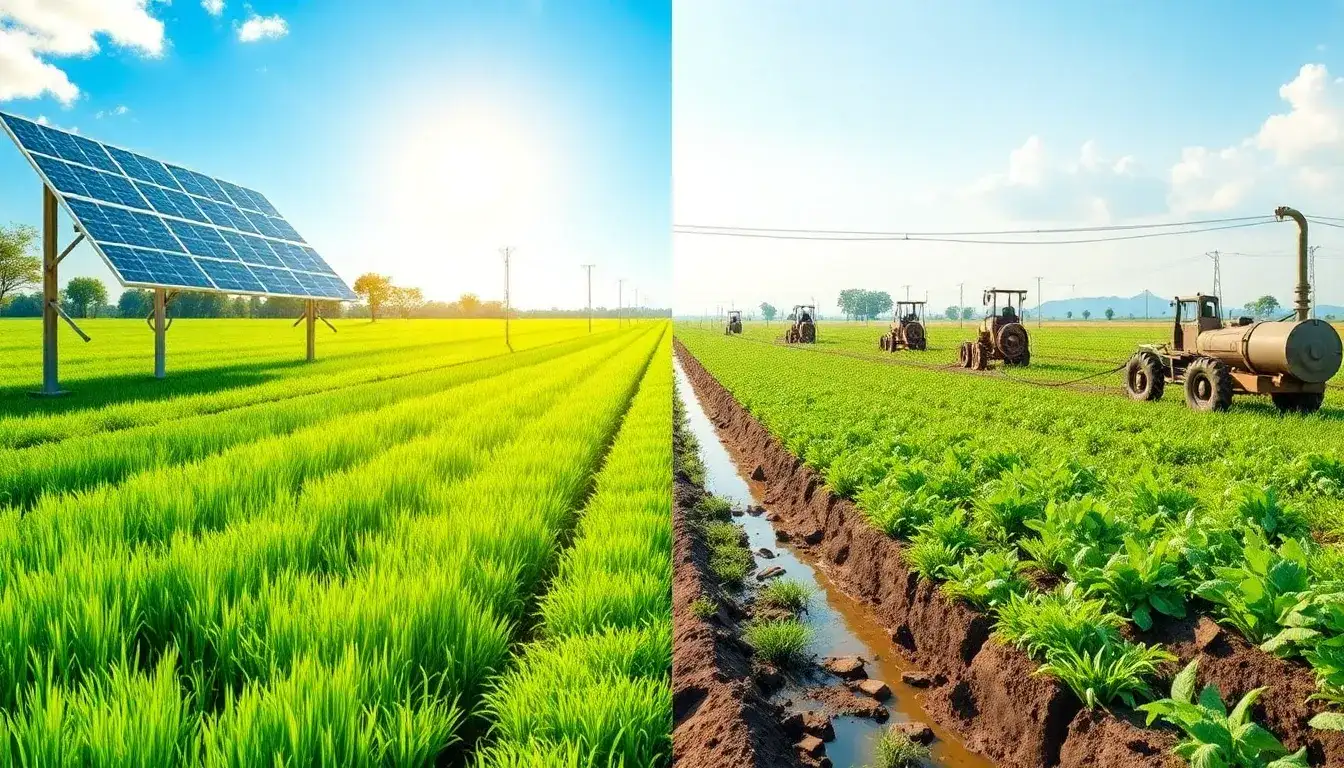
Solar-powered irrigation systems generally have a higher initial investment compared to traditional irrigation methods, but they offer substantial cost savings over time due to lower operational expenses.
Initial Costs
- Solar irrigation systems typically cost between $5,000 and $25,000 upfront, depending on farm size and water needs. This includes photovoltaic panels ($2,000–$10,000), pumps ($1,000–$3,000), controllers ($500–$1,500), and installation costs.
- Traditional irrigation setups, such as diesel pumps, have a lower initial cost ranging from $500 to $5,000.
- Solar irrigation system costs can be partially offset by subsidies, tax credits, and grants that reduce upfront expenditures by 30-50%.
Operational and Maintenance Costs
- Solar-powered systems have virtually zero energy costs since they use sunlight, reducing fuel or electricity expenses entirely.
- Diesel or electric irrigation systems incur ongoing fuel costs ($1,500–$6,000 per year for diesel pumps) and electricity bills ($1,000–$3,000 annually for grid-powered pumps).
- Maintenance for solar pumps is generally lower ($100–$300 annually) than for diesel systems ($300–$1,000 annually).
- Solar panels typically last 25+ years, much longer than diesel pump engines, which last about 5–10 years.
Long-Term Cost Comparison
| Cost Aspect | Solar-Powered Irrigation | Diesel-Powered Irrigation |
|---|---|---|
| Initial System Cost | $5,000 – $25,000 | $500 – $5,000 |
| Energy Costs | $0 (solar energy is free) | $1,500 – $6,000 annually |
| Maintenance Costs | $100 – $300 annually | $300 – $1,000 annually |
| Lifespan | 25+ years | 5-10 years |
| Total 5-Year Cost | Approximately $2,500 – $11,500 | $10,000 – $18,000 |
| Total 10-Year Cost | Approximately $3,000 – $13,000 | $20,000 – $30,000 |
| Total 20-Year Cost | Approximately $4,000 – $16,000 | $40,000 – $60,000 |
Solar-powered irrigation systems become more cost-effective than traditional diesel or electric irrigation methods generally after 3 to 5 years due to savings on energy and maintenance.
Additional Benefits Impacting Cost
- Solar irrigation reduces dependence on fossil fuels and volatile fuel prices, providing financial stability for farmers.
- These systems improve water-use efficiency by 30-50%, reducing water waste and potentially reducing irrigation-related costs further.
Summary
While solar-powered irrigation systems require a higher upfront investment, their zero fuel costs, lower maintenance expenses, longer lifespan, and water efficiency translate into significant long-term savings compared to traditional irrigation methods such as diesel or grid-powered pumps. Over a 10- to 20-year horizon, solar irrigation can be substantially more economical and sustainable.
Original article by NenPower, If reposted, please credit the source: https://nenpower.com/blog/how-do-solar-powered-irrigation-systems-compare-to-traditional-irrigation-methods-in-terms-of-cost/

