

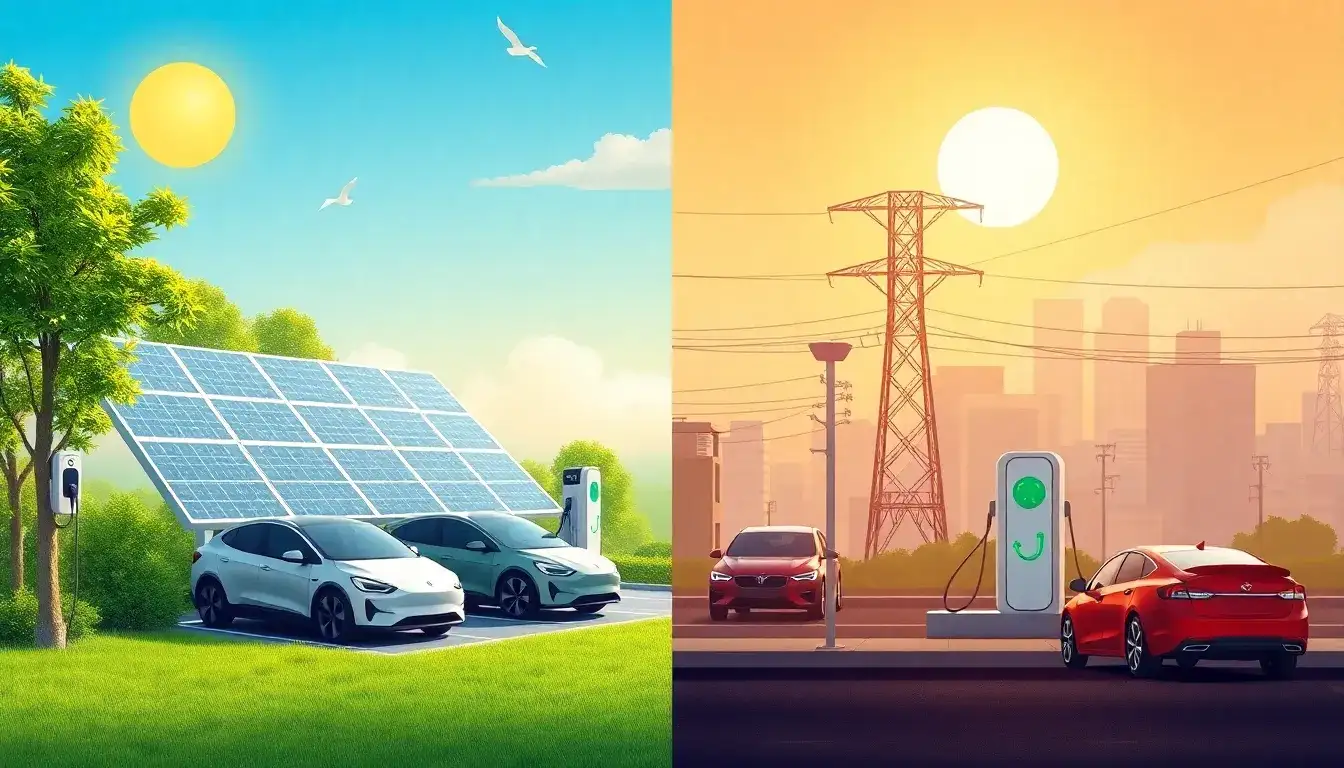
Solar-powered EV charging stations and grid-connected ones differ significantly in their environmental impact, primarily based on energy sources and associated emissions:
1. Carbon Emissions
Solar-powered stations use renewable energy, resulting in near-zero operational emissions. EVs charged this way produce minimal lifecycle emissions (e.g., 2,727 lbs CO₂ annually for solar-powered EVs vs. 12,594 lbs for gas vehicles). Grid-connected stations depend on the local energy mix; regions relying on fossil fuels contribute indirectly to higher greenhouse gas emissions.
2. Energy Resilience
Solar stations reduce reliance on the grid and provide blackout-resistant charging, whereas grid stations are vulnerable to outages and fossil fuel price volatility.
3. Lifecycle Considerations
While manufacturing solar panels and batteries has an environmental footprint, their long-term operation offsets this impact through reduced fossil fuel dependency. Grid stations avoid material-related impacts but perpetuate fossil fuel extraction and combustion unless paired with renewables.
4. Land Use and Ecosystem Impact
Both require land, but solar stations often integrate with existing infrastructure (e.g., parking lots). Poorly sited installations of either type risk habitat disruption. Grid-connected stations indirectly contribute to land degradation through fossil fuel extraction.
Key Advantage
Solar-powered stations minimize emissions across the entire energy supply chain, whereas grid stations’ impact varies by region and energy mix.
Original article by NenPower, If reposted, please credit the source: https://nenpower.com/blog/how-do-solar-powered-ev-charging-stations-compare-to-grid-connected-ones-in-terms-of-environmental-impact/

