

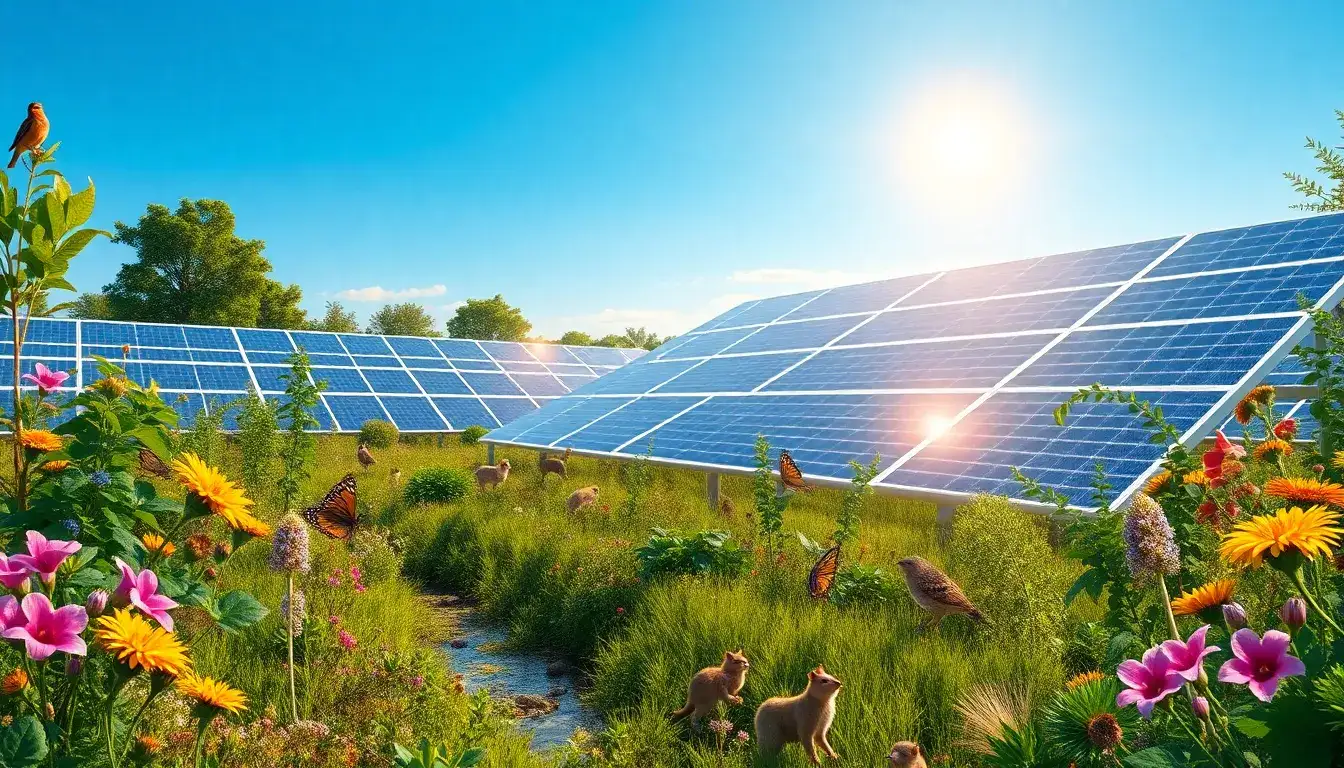
Solar parks can significantly enhance local ecosystems through careful design and management practices that prioritize biodiversity. Key contributions include:
Promoting native plant growth
Raised solar panels create microclimates with partial shade and weather protection, enabling native grasses and wildflowers to thrive beneath them. This restoration of native vegetation stabilizes soil, reduces erosion, and improves water retention. Some solar farms achieve up to 90% greater plant diversity compared to agricultural lands.
Supporting wildlife habitats
Pollinator-friendly designs using wildflowers attract bees, butterflies, and other insects, tripling insect populations at managed sites. Solar parks also shelter ground-nesting birds like killdeer and small mammals such as rabbits through panel-shaded areas. When integrated with wildlife corridors, these installations allow safe animal movement.
Restoring degraded landscapes
Developers often prioritize former industrial sites, disused peatlands, or low-value commercial forests to minimize ecosystem disruption. Meadow plants and perennials improve soil quality over time, while practices like sheep grazing beneath panels provide dual agricultural benefits.
Sustainable land management
Pollinator habitats require minimal mowing, reducing maintenance costs and pesticide use. Proper stormwater planning prevents contamination of groundwater and aquatic ecosystems. Preliminary environmental surveys ensure protections for endangered species through design modifications.
Original article by NenPower, If reposted, please credit the source: https://nenpower.com/blog/how-do-solar-parks-contribute-to-local-ecosystems/

