

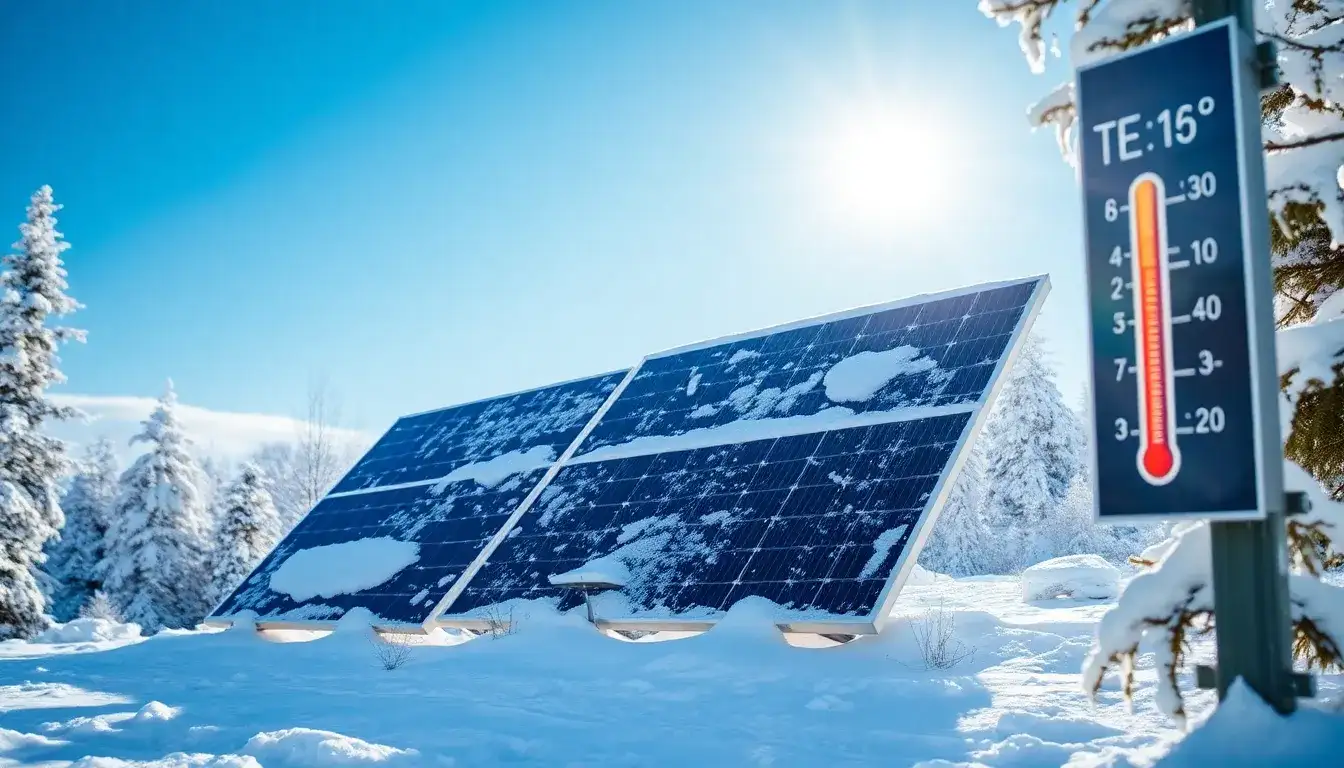
Solar panels perform well in extremely cold temperatures, often more efficiently than in hot weather, due to the physics of photovoltaic (PV) cells and how temperature affects their operation.
How Cold Temperatures Affect Solar Panel Performance
- Increased Efficiency in Cold Weather: Solar panels convert sunlight (photons) into electricity, not heat. Cooler temperatures help solar cells maintain higher voltages, which increases overall efficiency. Studies show solar panels start losing efficiency above about 77°F, so cold weather actually improves their energy production capability.
- Optimal Conditions: The ideal scenario for solar panels is bright, cold, clear days. Snow on the ground can reflect additional sunlight onto panels (the albedo effect), further boosting output.
- Temperature and Voltage Relationship: PV modules are tested at 25°C (77°F). As temperature rises above this, voltage output decreases linearly, reducing power output. Cold temperatures enhance voltage, thus increasing energy generation.
Impact of Snow and Winter Conditions
- Snow Cover: Light snow dusting does not severely affect performance as sunlight can penetrate thin snow layers, and wind or the panel’s tilt helps snow slide off. The dark surface of panels absorbs sunlight, warming up and melting snow more quickly.
- Heavy Snowfall: Thick snow accumulation can block sunlight completely, temporarily reducing or halting electricity generation until cleared. Panels mounted at typical tilt angles (30-45 degrees) help reduce snow buildup.
- Durability: Solar panels installed in snowy regions are often designed to handle heavy snow loads and are installed securely to withstand harsh winter conditions.
Other Winter Factors
- Daylight Hours & Cloud Cover: Although cold weather improves efficiency, shorter winter days and increased cloudiness reduce total energy production compared to summer. Nonetheless, solar panels continue to generate electricity even during overcast or rainy days, using diffuse sunlight.
- Wind Chill Effect: Wind can cool panels further, improving performance by carrying away heat, and often coincides with clearer skies which enhances sunlight availability.
Practical Evidence
- Solar panels are widely and successfully used in very cold climates, including northern US states like Massachusetts and New York, Alaska, and even Antarctica’s McMurdo Station.
- Winter can be a good time to install panels as cooler temperatures make installation easier and maintenance low, with snow guards available to manage snow sliding off panels safely.
Summary
Solar panels maintain good performance in extremely cold temperatures and often perform better than under hot conditions due to improved electrical efficiency at lower temperatures. Snow and winter conditions can reduce output mostly due to shading or physical coverage, but panels’ design and installation angles help mitigate these effects. The main limiting factor in winter is fewer daylight hours rather than temperature itself.
This makes solar panels a viable and efficient energy source even in cold and snowy climates.
Original article by NenPower, If reposted, please credit the source: https://nenpower.com/blog/how-do-solar-panels-perform-in-extremely-cold-temperatures/

