

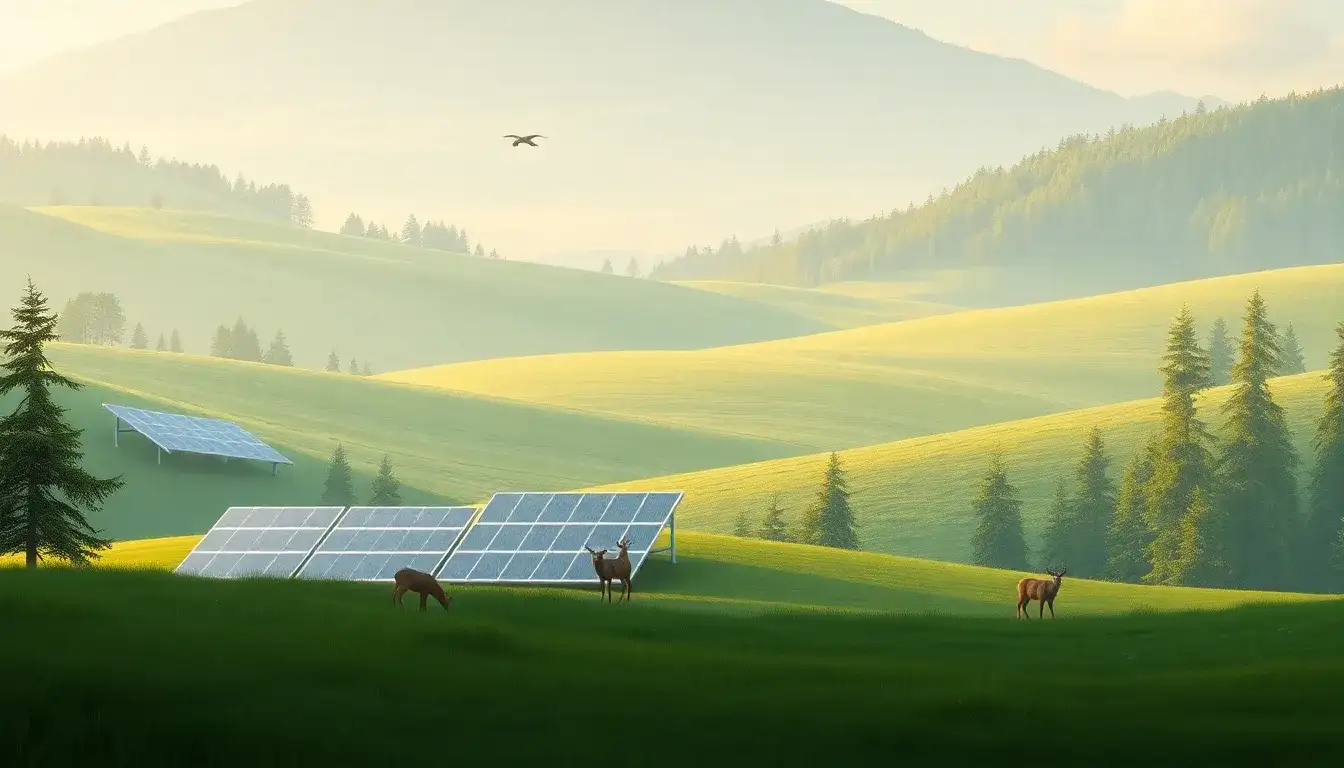
To minimize visual disturbance to wildlife, solar panels should be oriented and installed with careful consideration of their reflective properties, angles, and potential impacts on local species:
- Reduce Reflective Surfaces and Solar Glare: Orienting solar panels to minimize reflection helps lessen light pollution and visual disruption for wildlife, particularly nocturnal species such as bats and night-flying insects. By adjusting tilt angles and alignment, glare can be reduced, lowering confusion or disturbance in animal behavior.
- Tilted Angles and Raised Platforms: Installing solar panels with appropriate tilt angles not only optimizes energy capture but also reduces collision risks with wildlife. Raised platforms can allow animals to move underneath, reducing habitat fragmentation and the barrier effect of the panel arrays.
- Integration with Wildlife Habitat Features: Incorporating vegetation or other habitat features around and beneath solar arrays helps promote coexistence and reduce visual and ecological disturbance. This can also encourage biodiversity within the solar facility area.
- Avoiding Barriers to Movement: Proper panel placement and orientation can prevent creating barriers that inhibit animal movement and access to food, water, or shelter, thus minimizing habitat fragmentation caused by the solar installation.
In summary, designing solar arrays with attention to panel orientation, tilt, reflectivity, and integration with natural habitats can significantly reduce visual and ecological impacts on wildlife while maintaining efficient energy generation.
Original article by NenPower, If reposted, please credit the source: https://nenpower.com/blog/how-do-solar-panels-be-oriented-to-minimize-visual-disturbance-to-wildlife/

