

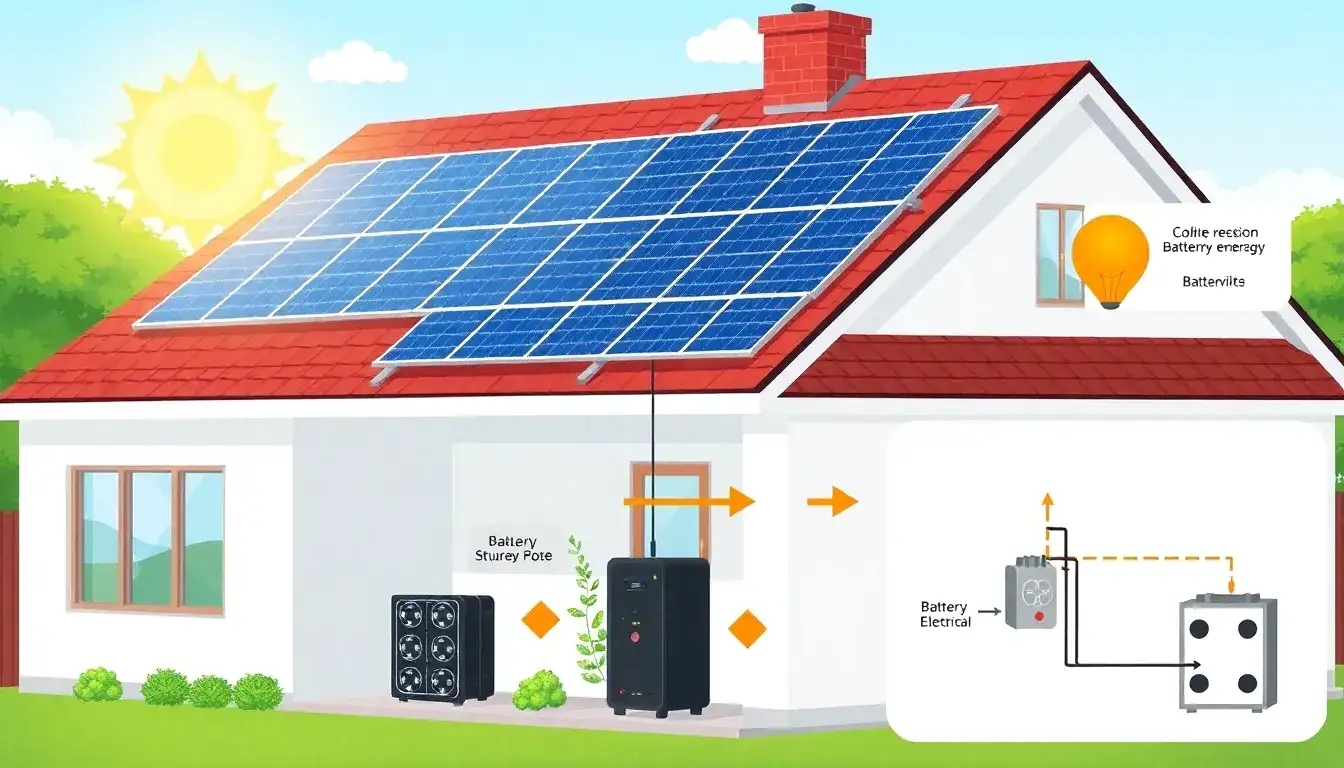
Overview of Solar Panels and Batteries in Residential Energy Storage
Solar panels and batteries work together in a residential energy storage system to optimize energy independence and efficiency. Here’s a step-by-step explanation of how they integrate:
Components and Functionality
- Solar Panels:
– Solar panels generate electricity from sunlight by converting solar radiation into direct current (DC) electricity.
– The DC power is then directed to an inverter for conversion into alternating current (AC) electricity, which is usable in homes. - Inverter:
– An inverter converts the DC electricity from the solar panels into AC electricity, compatible with household appliances.
– In some systems, the inverter may also manage the charging and discharging of the battery. - Battery Storage:
– Excess energy generated by the solar panels during the day is stored in batteries for later use.
– When the sun is not shining or during power outages, the stored energy can power essential household loads.
System Modes and Operations
- Normal Operation:
– During the day, solar panels generate electricity to power the home and charge the battery.
– At night or during periods of low solar generation, the stored energy in the battery is used instead of drawing from the grid. - Backup Power:
– In the event of a power outage, a solar-plus-storage system can provide backup power if configured with islanding capabilities.
– This means the system can disconnect from the grid and continue to operate using stored energy. - Peak and Off-Peak Management:
– If the local utility charges more for electricity during peak hours, the system can use stored energy during these times instead, reducing utility bills.
– During off-peak hours, the system can recharge or sell excess energy back to the grid.
Benefits and Considerations
- Increased Energy Independence: Reduces dependence on the grid and provides power during outages.
- Cost Savings: Can save money by using stored energy instead of buying from the grid during peak hours.
- Environmental Benefits: Encourages the use of renewable energy sources.
- Cost: While there are upfront costs, long-term savings and incentives can make the investment worthwhile.
Installation and Cost Considerations
- Installing Solar and Battery Together: Often cheaper than adding a battery later, and eligible for tax credits.
- Cost Range: A typical battery system can cost between $7,000 to $22,000, depending on size and incentives available.
In summary, solar panels and batteries in a residential energy storage system work together to provide a reliable, efficient, and cost-effective way to manage household energy needs.
Original article by NenPower, If reposted, please credit the source: https://nenpower.com/blog/how-do-solar-panels-and-batteries-work-together-in-a-residential-energy-storage-system/

