

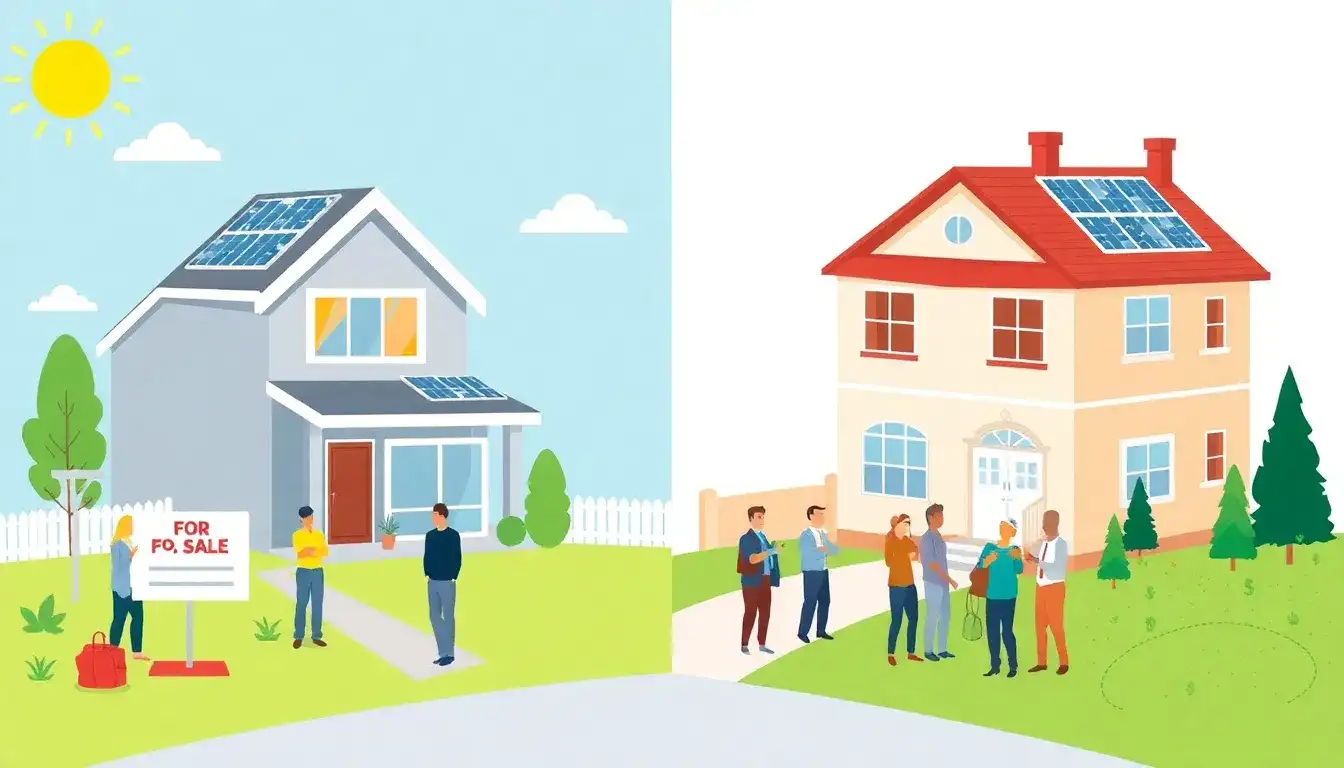
Solar leases have a nuanced impact on the resale value of a home. Unlike owned solar panels, which generally increase home value and attract buyers, leased solar panels can complicate the sales process and may not provide the same direct value boost.
Key points about how solar leases affect home resale value:
- Leased solar panels don’t directly increase home value: Since the panels are not owned by the homeowner but leased from a solar company, the system itself does not add to the property’s value in the same way owned panels do. The homebuyer essentially inherits the lease agreement with ongoing payments, which might deter some buyers or complicate mortgage financing.
- Selling a home with leased solar panels is more complex: When selling a home with a lease, the seller must either:
- Pay off the remainder of the lease early to own the system outright before selling, which can improve resale value and simplify the sale but requires a potentially significant upfront payment.
- Transfer the lease to the new homeowner, which can be straightforward but some buyers may hesitate to assume future financial obligations. However, current data shows many buyers are willing to take over solar leases, and studies have found about 77% of solar leases are successfully transferred upon sale.
- Leases may slow or complicate the sale but typically don’t prevent it: While some buyers may be wary of inheriting a solar lease, this hurdle is decreasing as solar leasing becomes more common and accepted. A 2024 study found that while around 20% of sellers reported that leases scared off buyers, most leases do transfer successfully.
- Owned solar panels increase home value and can lead to higher sale prices: Homes with owned solar installations tend to sell for a premium—on average about 4.1% more than comparable homes without solar, according to multiple studies. Buyers value the long-term savings on electricity bills and the energy independence that owned solar systems provide.
- Decision factors for sellers with leased solar panels: Sellers must weigh the cost and feasibility of buying out their lease early versus the convenience of transferring it. Buying out the panels can increase the pool of potential buyers and simplify the sale, but might involve high fees that outweigh immediate financial benefits. Transferring the lease avoids upfront costs but requires cooperation from the buyer and the solar provider.
Summary:
Solar leases do not typically increase a home’s resale value because the panels are not owned and the lease payments transfer to the new owner, which can complicate sales. However, many buyers are willing to assume leases, so leased solar panels usually do not stop a home from selling. For homeowners seeking to maximize resale value and simplify the sale, buying out the lease to own the panels can be beneficial if the cost is justified by added home value. Owned solar panels are more straightforward and consistently linked to higher resale prices and faster sales.
In essence, solar leases add complexity to home sales and have a variable impact on resale value, whereas owned solar systems generally enhance both value and marketability.
Original article by NenPower, If reposted, please credit the source: https://nenpower.com/blog/how-do-solar-leases-impact-the-resale-value-of-a-home/

