

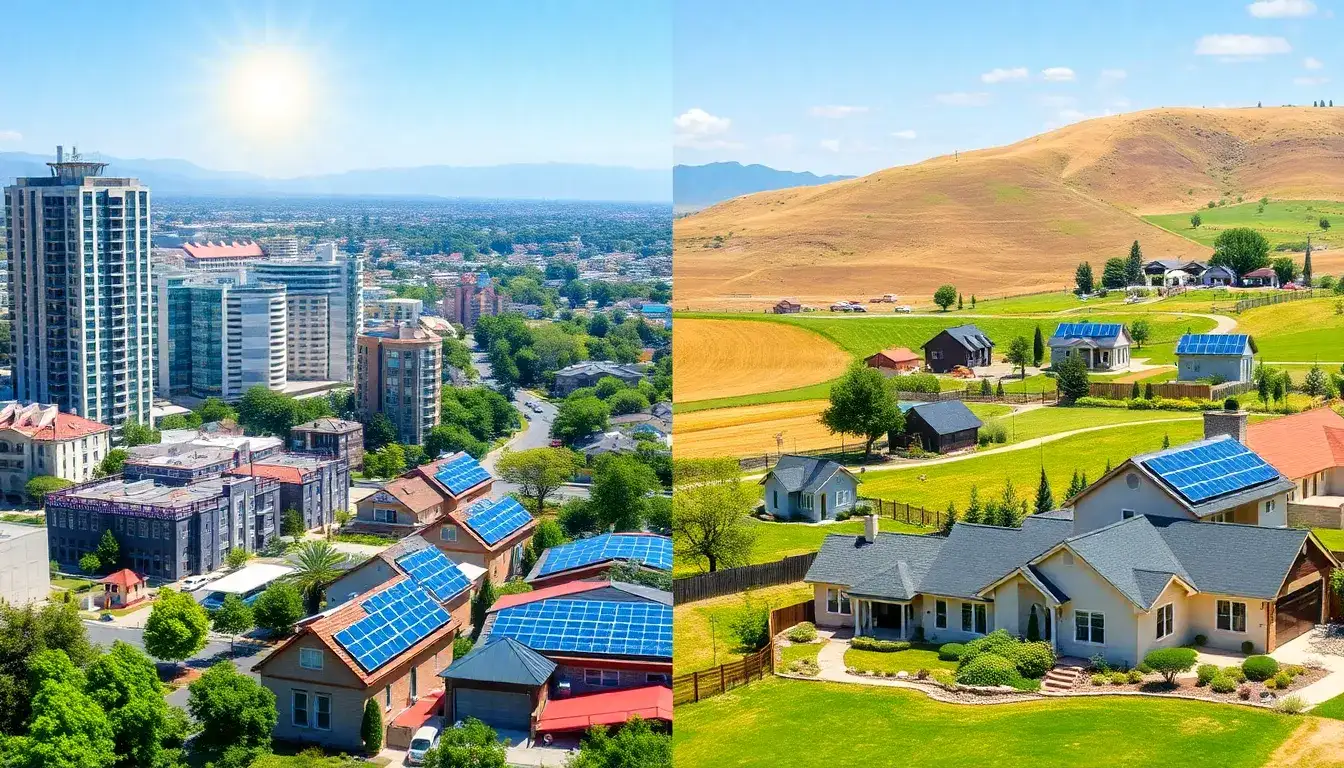
The impact of solar installations on property values varies significantly between urban and rural areas, depending on several factors such as the type of solar installation and local market conditions.
Urban Areas
- Rooftop Solar Installations: In urban areas, rooftop solar installations are often seen as a desirable feature, increasing property values by generally 4% to 5.4%, depending on local demographics and energy policies. This increase reflects the perceived environmental benefits and energy cost savings associated with solar energy.
- Utility-Scale Solar Farms: Generally, large-scale solar farms are less common in urban areas, so their impact is less pronounced. However, when present, these installations might not significantly affect urban property values, as they are typically less visible and less impactful on local aesthetics compared to rural settings.
Rural Areas
- Utility-Scale Solar Farms: The installation of utility-scale solar farms in rural areas can lead to a reduction in property values due to changes in land use and aesthetics. Studies indicate that properties within proximity to large-scale solar farms may experience a decline in value, often estimated between 1.5% and 6.9%. This effect is more pronounced when solar farms replace agricultural land, affecting the rural character and open space valued by residents.
- Rooftop Solar Installations: While less prevalent in the discussion, rooftop solar installations on individual homes in rural areas may still enhance property values by offering energy savings and modernizing the property, similar to urban settings, though the premium might be less due to lower energy costs and less environmental consciousness in some rural communities.
Key Differences
- Aesthetics and Land Use: In rural areas, large-scale solar farms can significantly alter the landscape, potentially decreasing property values due to visual impacts and changes in land use. In contrast, urban rooftop solar installations are generally seen as a positive feature, enhancing property values.
- Economic Factors: Rural areas may experience increased land values due to solar leasing, but this can also lead to higher land rental costs for farmers, affecting local agricultural economies.
- Market Perception: Urban buyers often value environmental features like solar panels, while rural residents might be more concerned with preserving the natural or agricultural landscape.
In summary, the impact of solar installations on property values is generally positive in urban areas for rooftop installations but can be negative in rural areas when large-scale solar farms displace agricultural land or alter local aesthetics.
Original article by NenPower, If reposted, please credit the source: https://nenpower.com/blog/how-do-solar-installations-impact-property-values-in-urban-vs-rural-areas/

