

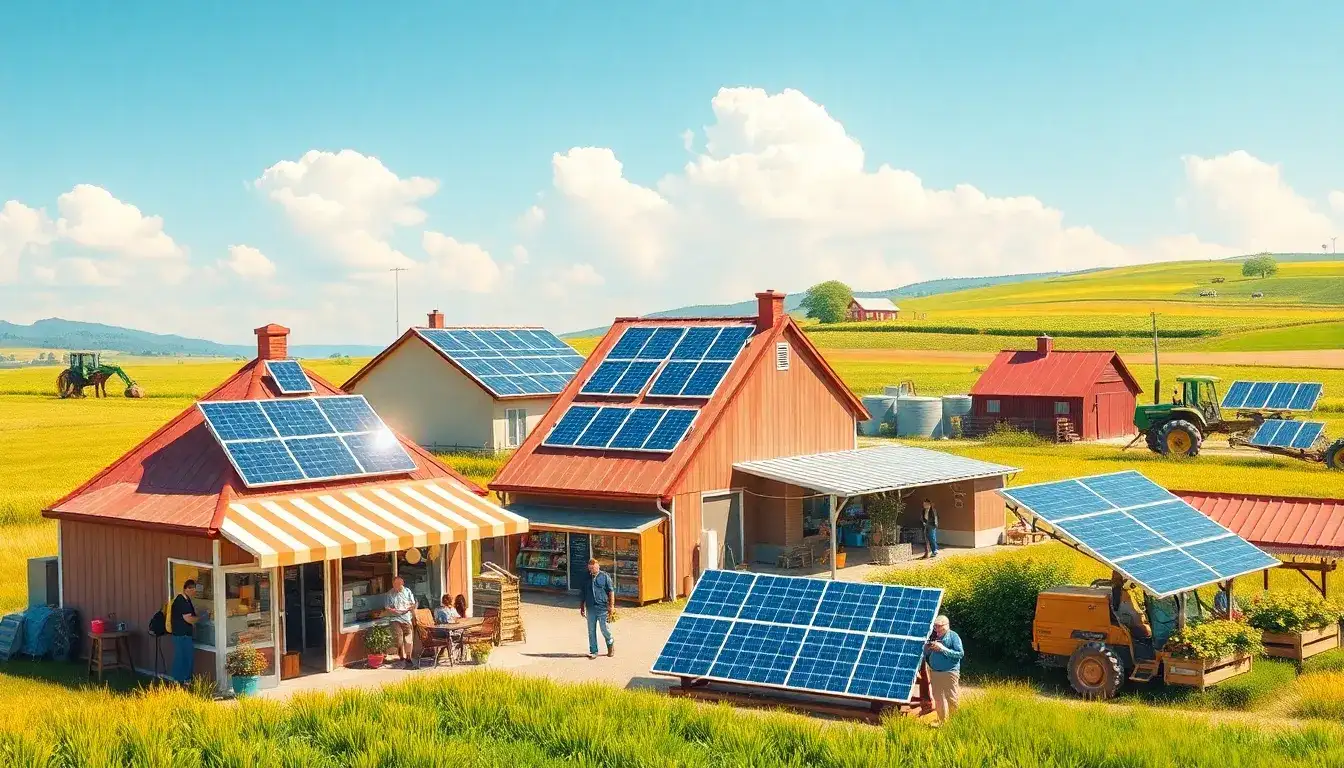
Solar installations have a multifaceted impact on local businesses in rural communities, offering economic, environmental, and operational benefits, while also presenting some challenges.
Economic Benefits
- Significant Cost Savings on Energy: Solar power helps rural and agricultural businesses save thousands of dollars annually by reducing reliance on traditional utility power and shielding them from rising and volatile electricity rates. This creates predictable energy costs, which is crucial for business stability.
- Tax Incentives and Financial Support: Businesses can take advantage of the 30% Federal Investment Tax Credit (ITC) and equipment depreciation benefits, substantially lowering the net cost of installing solar systems. The USDA’s Rural Energy for America Program (REAP) further supports rural small businesses and agricultural producers by providing grants and guaranteed loans covering up to 85% of project costs.
- Job Creation and Economic Growth: Solar installation projects generate local employment, particularly during construction, with job multipliers estimated at around 0.55 jobs per megawatt installed. This contributes to community economic growth and stability in rural areas.
- Revenue Opportunities: Some farms and rural businesses can generate additional income by selling excess solar power back to local utilities, turning solar installations into revenue streams beyond just cost savings.
Operational and Environmental Benefits
- Energy Independence and Sustainability: Solar provides rural businesses energy independence, reducing their exposure to utility rate increases and supply fluctuations. It also enhances their sustainability image, which can appeal to environmentally conscious customers and meet growing ESG (Environmental, Social, and Governance) demands.
- Community Solar Options: Community solar projects in rural areas enable multiple businesses and residents to share solar-generated power benefits, lowering individual costs and fostering collective ownership and responsibility.
Challenges and Considerations
- Grid Infrastructure Limitations: Rural areas often face challenges integrating solar power into existing electrical grids due to limited infrastructure, which can complicate new solar project implementation.
- Initial Investment and Maintenance: Despite the incentives available, upfront capital and ongoing maintenance costs may be barriers for small rural businesses and farms, though financing solutions and grants help mitigate this.
- Environmental and Land Use Concerns: Solar facility construction requires land clearing and grading, which can cause soil compaction and alter rural landscapes. These environmental and traditional land use impacts have caused concern among some rural landowners, particularly family farms.
In summary, solar installations can substantially benefit rural local businesses by cutting energy costs, providing tax incentives, creating jobs, and supporting sustainable operations. These advantages help boost rural economies but must be balanced with infrastructure, financial, and environmental considerations unique to rural settings. Overall, solar is increasingly a strategic business and community asset in rural areas.
Original article by NenPower, If reposted, please credit the source: https://nenpower.com/blog/how-do-solar-installations-impact-local-businesses-in-rural-communities/

