

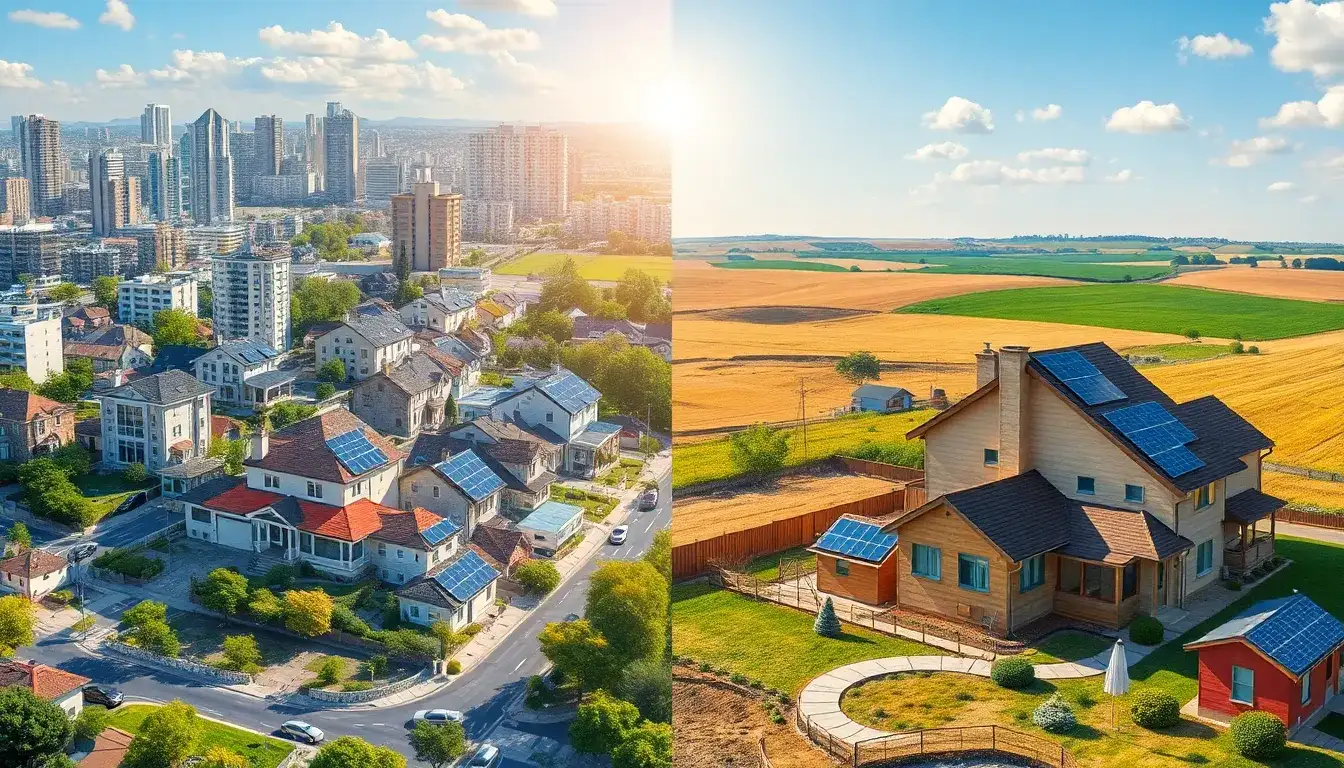
Solar installations generally increase the resale value of homes, but the impact differs between urban and rural areas due to factors like energy costs, environmental awareness, and local incentives.
Urban Areas:
- Stronger Solar Premiums: Urban markets typically show higher premiums for homes with solar installations. This is partly due to higher energy costs and greater environmental awareness among urban buyers.
- Higher Buyer Interest: States with strong solar-friendly policies often have higher buyer interest, contributing to stronger value appreciation.
- Market Demand: In urban settings, the appeal of energy efficiency and sustainability tends to be more pronounced, potentially leading to faster sales.
Rural Areas:
- Lower Premiums: Rural areas often see lower premiums for solar installations. This can be attributed to lower energy costs and less emphasis on environmental considerations compared to urban centers.
- Off-Grid Appeal: However, the appeal of solar in rural areas can also stem from the potential for off-grid energy solutions, which can be attractive for buyers seeking more autonomy and reliability in energy supply.
General Factors Influencing Resale Value:
- Ownership Status: Owned solar systems typically add more value than leased systems.
- System Age and Condition: Newer systems may retain more value than older ones.
- Local Incentives and Policies: Availability of incentives and supportive policies can significantly boost value.
- Energy Costs: Higher local energy costs can make solar installations more appealing and valuable.
Overall, while solar installations enhance resale value in both urban and rural settings, the extent of this enhancement varies based on local market conditions, buyer preferences, and environmental consciousness.
Original article by NenPower, If reposted, please credit the source: https://nenpower.com/blog/how-do-solar-installations-affect-the-resale-value-of-homes-in-urban-vs-rural-areas/

