

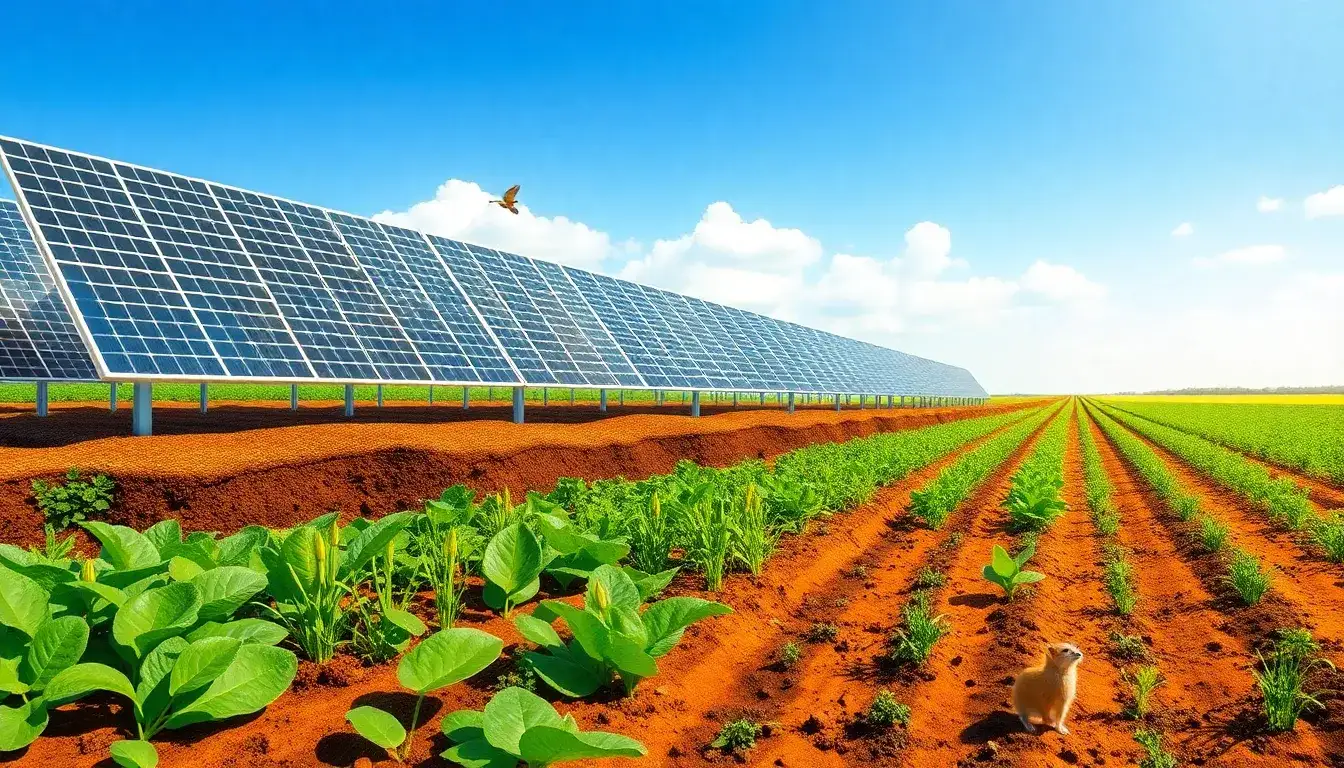
Solar installations can have both positive and negative impacts on soil health and fertility, depending on how they are managed.
Negative Impacts
- Soil Compaction: The installation process, particularly the use of heavy machinery, can lead to soil compaction. This reduces the spaces between soil particles, affecting air and water movement, which can stunt root growth and increase erosion.
- Erosion and Habitat Loss: The construction of solar farms can cause erosion and loss of natural habitats, which can negatively affect soil health and ecosystem services.
- Soil Pollution Concerns: Research has also focused on assessing potential soil pollution from heavy metals associated with solar panels, although findings indicate minimal risks.
Positive Impacts
- Improved Soil Quality: Solar farms can provide a break for land that has been intensively farmed, allowing soil to recover from decades of agricultural use.
- Enhanced Biodiversity: Proper management, such as planting pollinator-friendly flora under the panels, can enhance soil fertility by increasing carbon and nitrogen levels. This can improve ecosystem services, including better stormwater management and higher crop yields.
- Agricultural Benefits: Integrating grazing with solar panels, particularly with small livestock like sheep, can further enhance soil health by promoting biodiversity and organic matter restoration.
In summary, while solar installations can have negative effects on soil health due to construction practices, they can also provide crucial breaks for intensively farmed land and enhance biodiversity when properly managed.
Original article by NenPower, If reposted, please credit the source: https://nenpower.com/blog/how-do-solar-installations-affect-soil-health-and-fertility/

