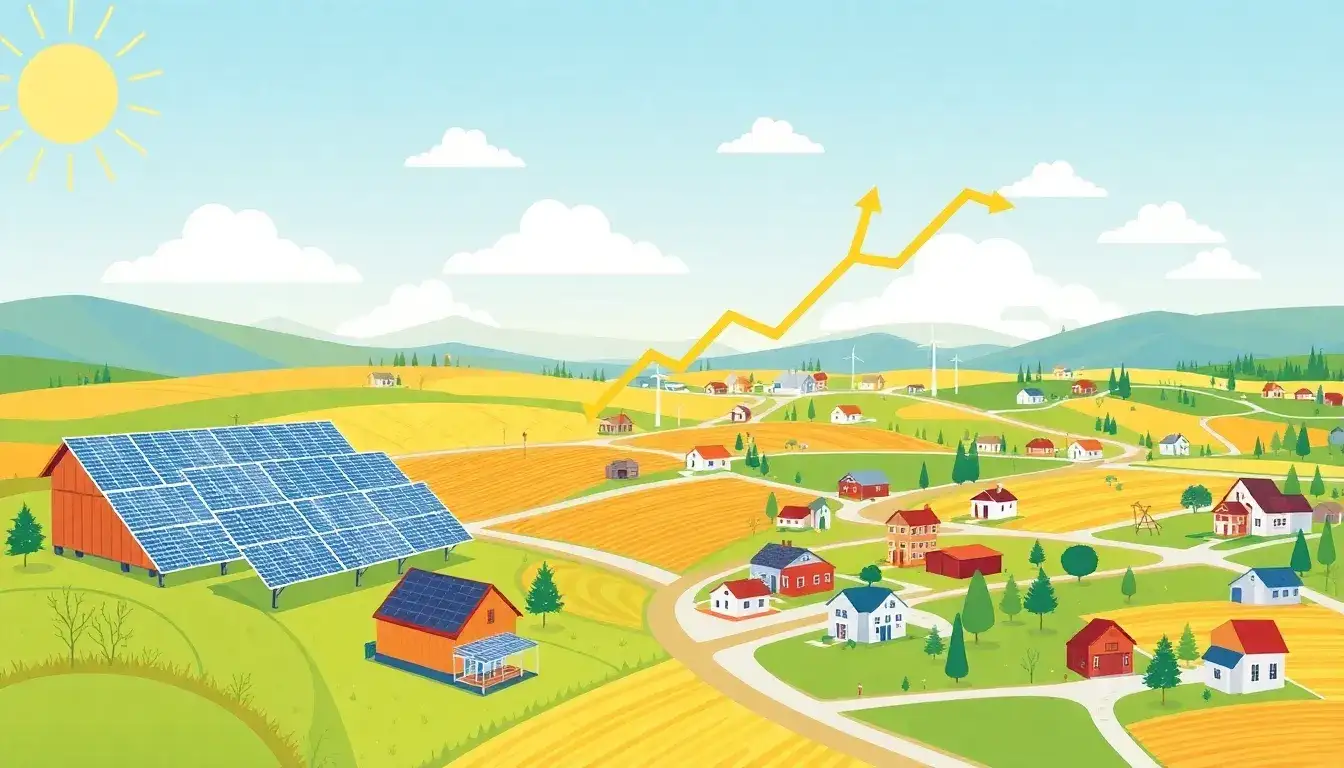
Solar installations have a significant positive impact on local tax revenues in rural communities, contributing new revenue streams that support public services and infrastructure improvements.
How Solar Installations Affect Local Tax Revenues in Rural Communities
- Increased Property Tax Revenues: Utility-scale solar projects substantially increase property tax revenues in rural counties. For example, in North Carolina, counties saw an average increase of 1682% in property tax revenue after solar PV systems were installed, reflecting the significant valuation added by these projects to county tax rolls.
- Production Taxes and Other Local Taxes: Some states impose production taxes specifically on renewable energy generation. For instance, Minnesota’s wind energy production tax generates millions of dollars in revenue for local counties, which can also apply to solar projects. These revenues assist local governments in funding emergency services and community infrastructure, which is particularly impactful in sparsely populated rural areas.
- Economic Benefits Beyond Taxes: Besides tax revenue, solar developments provide economic stimulus through direct payments to landowners who host solar sites, employment opportunities during construction and operation, and increased local spending. These factors can indirectly enhance the tax base by supporting local economies.
- Farmers and Landowners Benefit Financially: Installing solar on farmland offers a complementary income stream for farmers, helping to stabilize farm revenues. The land remains productive or can be returned to agricultural use later, which supports the continuity of rural land use and the local tax base. Additionally, federal incentives such as the 30% solar tax credit improve the financial viability for rural landowners.
Summary Table
| Aspect | Impact on Local Tax Revenues and Communities |
|---|---|
| Property Taxes | Large increases (e.g., 1682% in NC), boosting local budgets |
| Production Taxes | Steady revenue stream from energy production taxes |
| Direct Payments to Landowners | Provides income that supports rural economies |
| Employment & Local Spending | Job creation and increased local economic activity |
| Farm Income Stability | Helps farmers maintain land and stabilize income |
In summary, solar installations generate substantial new property and production tax revenues that help fund essential services and infrastructure in rural communities. They also provide economic benefits that stabilize and enhance local economies, making solar development a valuable asset for rural tax bases and overall economic vitality.
Original article by NenPower, If reposted, please credit the source: https://nenpower.com/blog/how-do-solar-installations-affect-local-tax-revenues-in-rural-communities/