

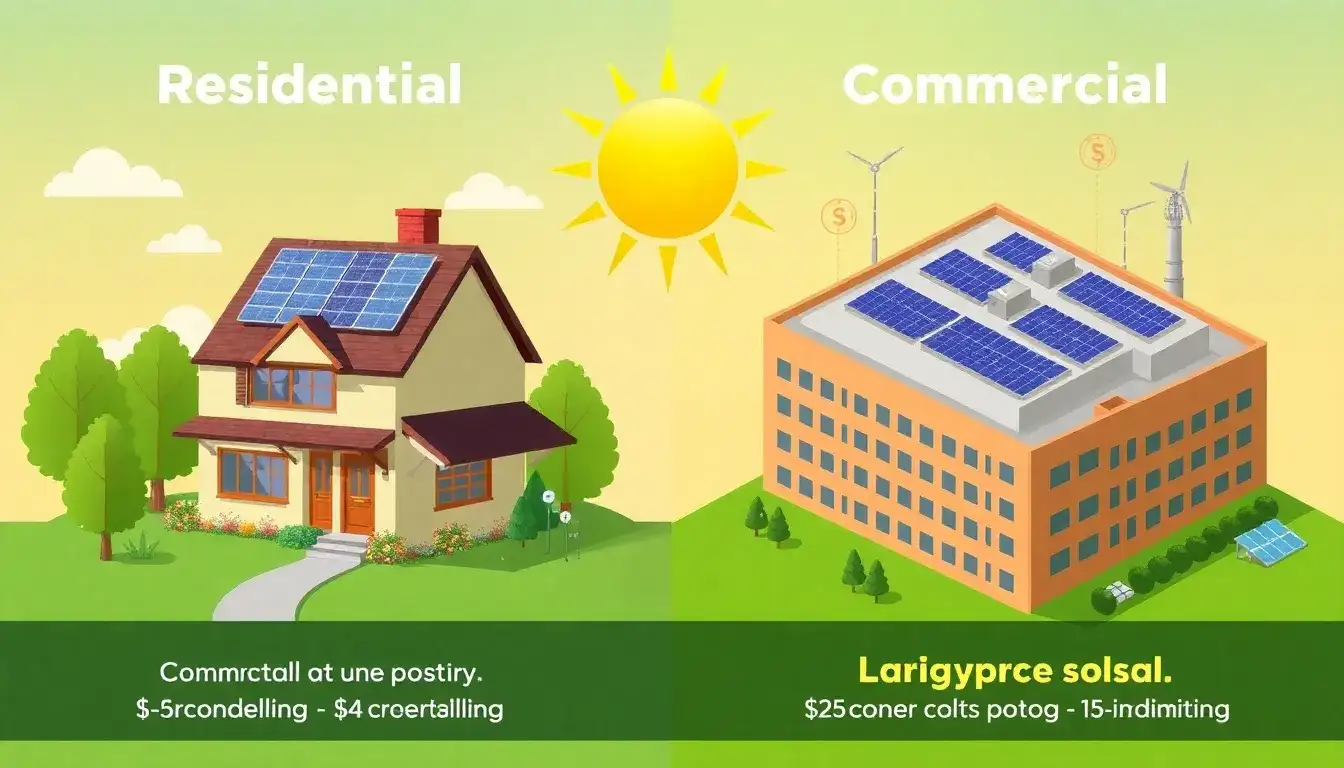
Solar incentives vary significantly between residential and commercial properties, primarily due to differences in system size, energy needs, and tax structures. Here’s a breakdown of these differences:
Residential Solar Incentives
- Federal Tax Credit: Historically, residential solar systems were eligible for a federal tax credit that covered a significant portion of the installation cost. However, this incentive has diminished over time. As of 2022, the residential solar tax credit was phased out.
- State and Local Incentives: Many states offer additional incentives such as rebates, net metering, and property tax exemptions. These can vary widely depending on the state.
- Simpler Installation: Residential installations are typically less complex and quicker to complete compared to commercial setups.
Commercial Solar Incentives
- Federal Investment Tax Credit (ITC): Commercial properties can claim a federal tax credit that covers a percentage of the solar system’s total cost. Through 2032, the ITC offers up to 30% of the cost. There are additional 10% adders for certain conditions such as using domestic content or locating the system in energy communities.
- Accelerated Depreciation: Commercial solar systems can benefit from accelerated depreciation, allowing businesses to reduce their taxable income by depreciating the system over a shorter period.
- Larger System Capacity: Commercial solar systems are designed to handle higher energy demands. They can choose between the ITC and a production tax credit (PTC) for larger systems.
- Complex Regulations: Commercial installations often involve more complex regulatory compliance, including zoning, environmental assessments, and land-use permissions.
In summary, while residential solar incentives focus on simpler installations with state-local incentives, commercial solar benefits often include larger federal tax credits and faster depreciation, which significantly reduce tax liabilities and facilitate larger-scale energy production.
Original article by NenPower, If reposted, please credit the source: https://nenpower.com/blog/how-do-solar-incentives-vary-between-residential-and-commercial-properties/

