

Solar Incentives
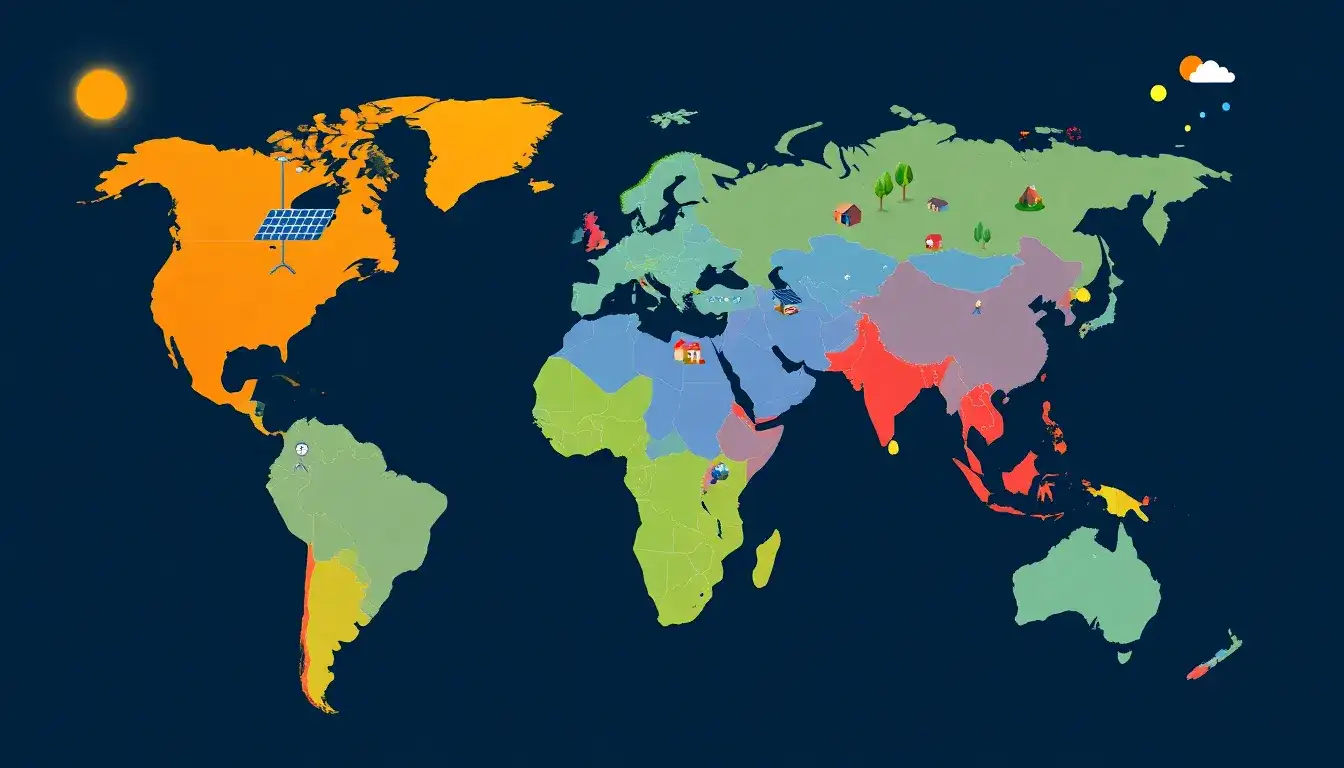
Solar incentives vary significantly across different regions due to differences in government policies, climate conditions, and market demand. Here’s a breakdown of how solar incentives vary in various areas:
United States
- Federal Solar Investment Tax Credit (ITC): Available nationwide, the ITC offers a 30% tax credit on solar installations until the end of 2032. This is a consistent incentive across all states.
- State Incentives:
- Top Solar Incentive States: States like California, New York, Massachusetts, Maryland, and Illinois offer robust incentives including tax credits, net metering, and specific rebate programs.
- Variability: Each state has unique incentives. For example:
- South Carolina offers a state tax credit in addition to federal incentives, providing a total potential savings of over $19,000 for homeowners.
- Maryland offers net metering, SRECs, and clean energy grants, while exempting solar installations from sales and property taxes.
- Illinois has the Adjustable Block Program, offering RECs to solar producers.
- Connecticut provides sales and property tax exemptions and has replaced net metering with the Residential Energy Solutions program.
International Regions
- Germany:
- Offers a feed-in tariff (FIT) scheme allowing households to sell excess energy to the grid at a set rate per kWh.
- Provides tax incentives for energy-efficient renovations.
- Australia:
- Offers the Small-scale Renewable Energy Scheme to offset upfront costs of solar installations.
- Some states provide additional incentives like low-interest loans and grants for renewable energy projects.
- India:
- Aims for significant renewable energy growth by 2030, with successful initiatives in states like Gujarat that promote residential rooftop solar installations.
- China:
- Leads in renewable power production and continues to offer financial incentives for rooftop solar installations, including feed-in tariffs.
Local and Utility-Based Incentives
Many local governments and utility companies offer specific rebates or programs that differ significantly from state to state. For instance, Xcel Energy in Colorado offers upfront rebates for solar capacity installed.
Overall, while there are consistent federal incentives in the U.S., state and local incentives vary widely, reflecting regional policies and energy needs. Similarly, international regions tailor their incentives to suit their unique economic and environmental conditions.
Original article by NenPower, If reposted, please credit the source: https://nenpower.com/blog/how-do-solar-incentives-vary-across-different-regions/

