

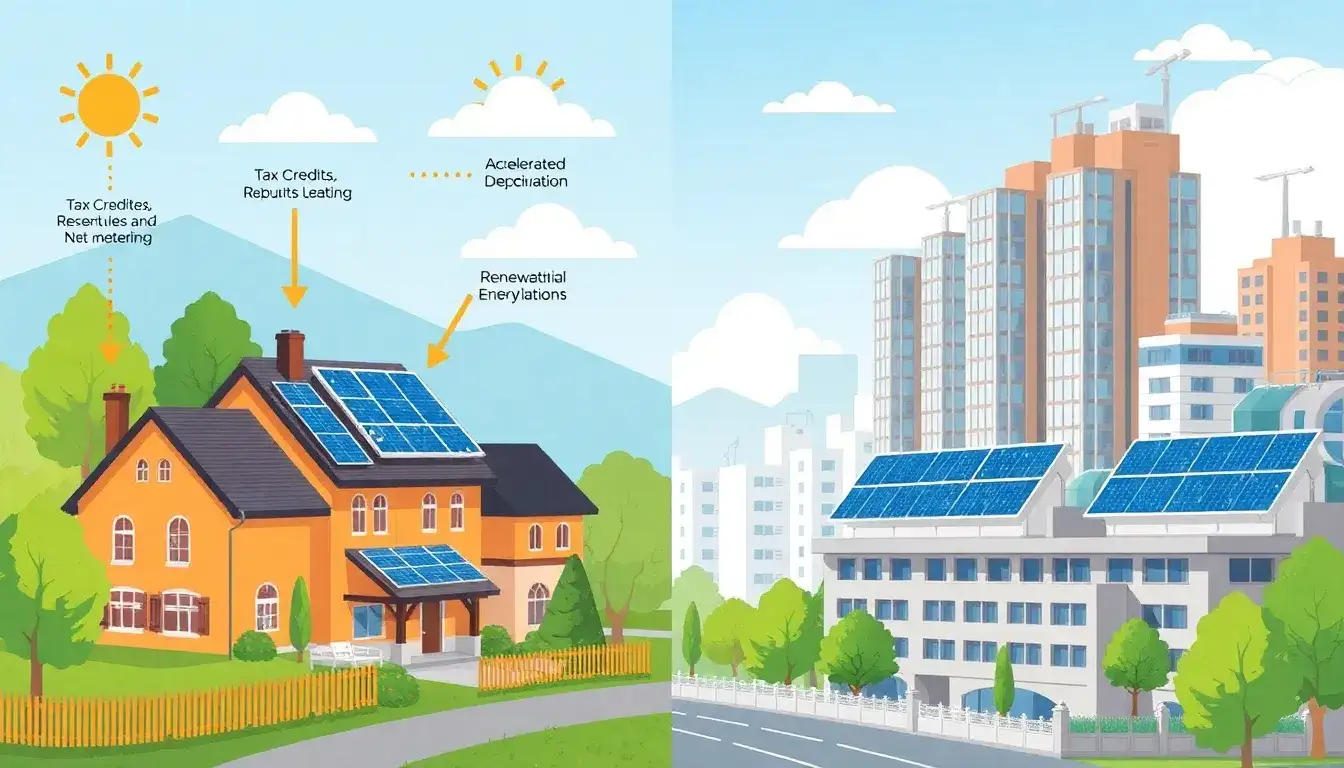
Solar incentives for residential and commercial properties differ in several ways, primarily due to the scale and complexity of the installations.
Differences in Solar Incentives
- Type and Scale of Incentives:
- Residential Incentives: Residential solar incentives often include personal tax credits. For example, homeowners in the U.S. can take advantage of the Solar Investment Tax Credit (ITC), which allows them to claim a percentage of the solar panel installation cost against their income tax. However, these incentives have been declining over time.
- Commercial Incentives: Commercial properties can benefit from more substantial tax credits and larger-scale rebates due to the higher energy output and initial investment required. Commercial solar installations qualify for the same ITC, but on a larger scale, which can significantly offset initial costs.
- Complexity and Planning:
- Residential Installations: Residential solar installations are typically less complex and quicker to set up. They require minimal planning and are designed to fit standard home roofs.
- Commercial Installations: Commercial solar systems are more complex and require extensive planning due to their larger size and higher energy output. They often involve more sophisticated equipment and require careful consideration of electrical infrastructure.
- Efficiency and Cost:
- Residential Solar Panels: Residential panels have lower efficiency (around 18.1%) and are generally less expensive to purchase and install.
- Commercial Solar Panels: Commercial panels often have higher efficiency (around 19.6%) and are more costly, but they provide greater long-term savings due to their increased energy production.
- Financing Options: Both types of installations can benefit from financing options, but commercial projects may access more comprehensive incentives, tax breaks, and specialized financing tools designed for businesses.
In summary, while both residential and commercial solar installations offer incentives, commercial properties can tap into more substantial financial benefits due to the scale of their installations and the potential for larger energy savings.
Original article by NenPower, If reposted, please credit the source: https://nenpower.com/blog/how-do-solar-incentives-differ-for-residential-and-commercial-properties/

