

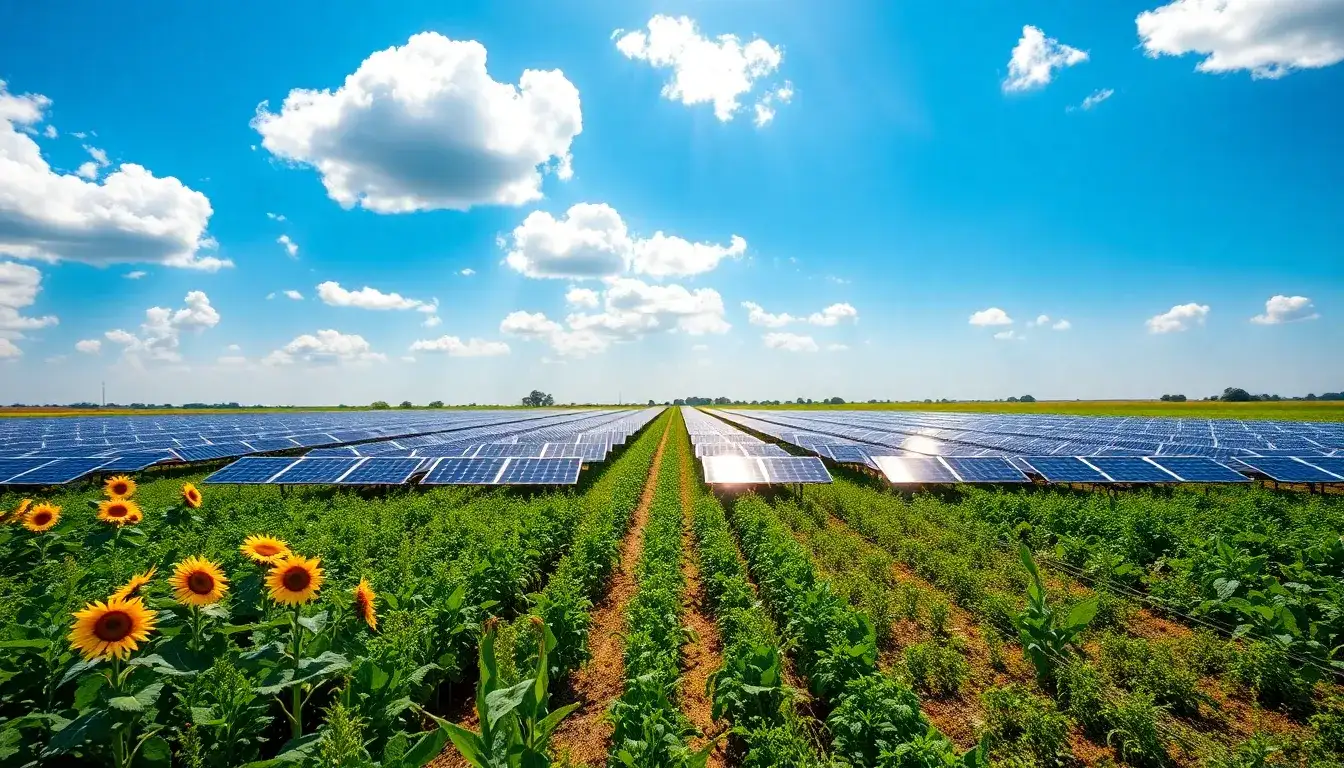
Influence of Solar Farms on Agricultural Land Values
The impact of solar farms on agricultural land values is a complex issue with various factors to consider. Here’s a breakdown of the current research and findings:
Direct Effects on Land Values
- Studies suggest minimal direct impact: Recent research, such as a study involving 451 North Carolina solar farms, indicates that utility-scale solar farms do not significantly affect the sales prices of nearby agricultural lands.
- Utility-scale solar farms: These large installations can use substantial rural land, which could otherwise be used for agriculture, potentially leading to a shift in land use without directly altering agricultural land values.
Indirect Effects and Considerations
- Increased land prices due to concentration: In areas where multiple solar projects are planned, there may be a significant concentration of solar installations. This can lead to increased land prices due to reduced land availability and potential displacement of farm operations.
- Signaling future development potential: The presence of solar farms can indirectly affect land values by signaling the suitability of an area for future renewable energy projects. This can be positively valued, especially if proximity to electric transmission lines is enhanced.
- Loss of active farmland: In regions with high concentrations of solar projects, substantial portions of active farmland may be converted, potentially straining the economic viability of remaining agricultural operations.
Economic Benefits and Risks
- Income streams for landowners: Leasing land to solar farms can provide additional income streams for landowners, potentially stabilizing or increasing land values through these financial benefits.
- Risks associated with solar leases: There are risks involved in leasing agricultural land for solar projects, such as the potential for reduced land use flexibility and long-term contractual commitments.
In summary, while solar farms generally do not directly affect agricultural land values negatively, they can influence values indirectly through the concentration of projects, signaling potential for future development, and altering land use patterns.
Original article by NenPower, If reposted, please credit the source: https://nenpower.com/blog/how-do-solar-farms-influence-agricultural-land-values/

