

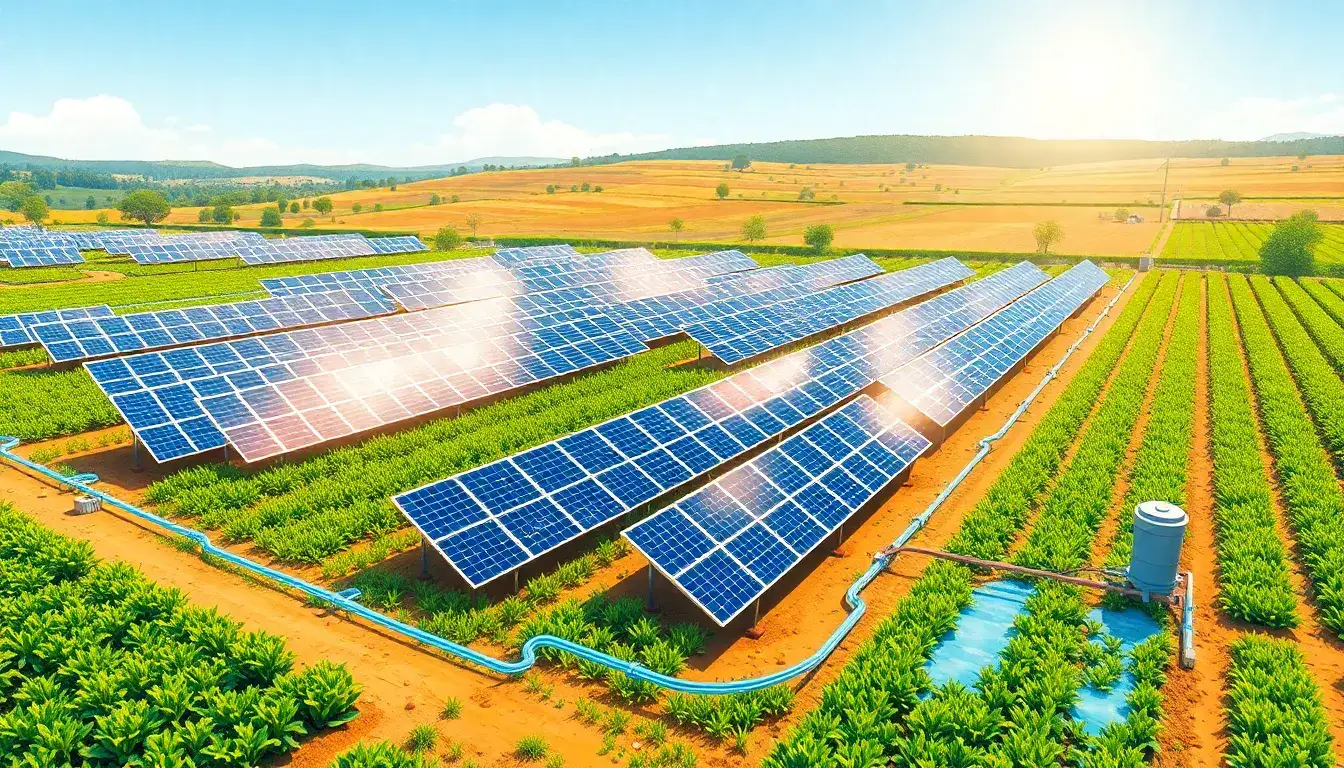
Solar farms impact water usage and conservation positively in several key ways:
Reduced Water Consumption Compared to Traditional Power
- Solar power generation requires minimal water, mainly for occasional cleaning of panels, unlike traditional coal, natural gas, or nuclear power plants that rely heavily on water for cooling and processing. These conventional plants consume millions of gallons of water daily, often contaminating it. Solar farms bypass these water-intensive processes entirely, significantly reducing water use in electricity generation.
Floating Solar Farms and Evaporation Reduction
- An innovative type of solar farm, known as “floating solar” or “floatovoltaics,” is installed on reservoirs and large water bodies. These panels both generate electricity and reduce evaporation of the underlying water. For example, a vineyard in Napa installed floating panels on its irrigation reservoir, reducing water evaporation by 70%, conserving a substantial amount of freshwater.
Support for Water-Efficient Agriculture
- Solar-powered irrigation systems allow farmers to pump water from wells, rivers, or lakes without fossil-fuel-based electricity or diesel generators. Automated solar irrigation delivers precise water amounts, minimizing water waste and optimizing crop growth. This improves water conservation efforts in agriculture, which is a major water consumer globally.
Protection of Water Quality
- Unlike fossil-fuel power plants that may discharge heated water back into natural ecosystems, causing thermal pollution harmful to aquatic life, solar farms generate clean energy without water pollution or thermal discharge, thus protecting local water quality.
Contribution to Overall Water Conservation
- By reducing reliance on water-intensive energy sources, solar farms help preserve local and regional water supplies, an increasingly critical benefit given global climate change and water scarcity concerns. Rooftop solar installations alone can save tens of thousands of gallons of water per household annually by replacing conventional power use.
In summary, solar farms conserve water by drastically cutting water use in energy generation, reducing evaporation via floating installations, enabling more efficient agricultural water use, and protecting water quality. These benefits make solar energy a sustainable solution for both energy and water resource management.
Original article by NenPower, If reposted, please credit the source: https://nenpower.com/blog/how-do-solar-farms-impact-water-usage-and-conservation/

