

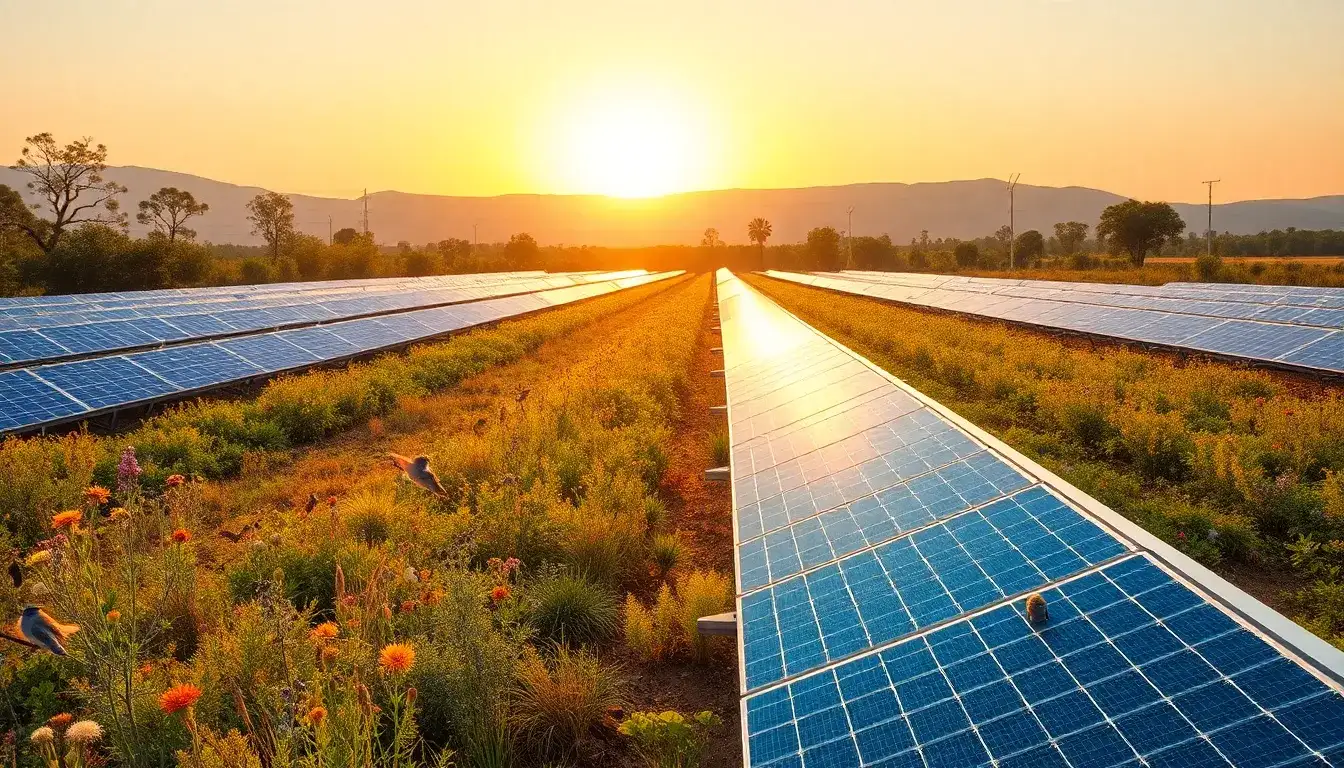
Solar farms have complex impacts on local wildlife and biodiversity, which can be both negative and positive depending on their design, location, and management practices.
Negative Impacts on Wildlife and Biodiversity
- Habitat Loss and Fragmentation: Large-scale solar farms require significant land clearing and leveling, which can destroy natural habitats and fragment ecosystems. This leads to displacement of wildlife populations and disrupts migration, breeding, and foraging behaviors of various species, such as birds and desert tortoises.
- Disturbance from Construction and Operation: Noise, vibrations, and increased human activity during construction can stress wildlife and alter their movement patterns. Solar infrastructure itself, including panels and support structures, can act as physical barriers, limiting animal movement and access to resources.
- Pollution Effects: Use of pesticides, herbicides, or other chemicals for maintenance can harm local wildlife and ecosystems, further degrading habitat quality.
- Disruption of Food Chains: Solar panels may attract insects, which in turn attract predators, potentially disrupting natural food chains in the area.
Positive Impacts and Opportunities for Biodiversity Enhancement
- Habitat Restoration and Pollinator Support: Thoughtfully designed solar farms can actually enhance local biodiversity. For example, solar arrays elevated above native grasses and plants allow vegetation to recover and provide habitat for beneficial insects like pollinators, including bees. Studies have shown that insect abundance, particularly pollinators, can triple around such solar farms within a few years.
- Reduced Maintenance and Financial Benefits: Solar-pollinator habitats often require less mowing and maintenance, which can reduce costs and environmental disturbance over time, supporting sustainable habitat management under and around solar arrays.
- Potential for Creating New Habitats: With proper ecological design, solar farms can transform otherwise degraded or underutilized lands into biodiversity-friendly sites, offering opportunities to restore native plant communities and support diverse wildlife.
Summary
| Impact Aspect | Negative Effects | Positive Effects |
|---|---|---|
| Habitat | Loss and fragmentation of native ecosystems | Restoration of native plants under panels |
| Wildlife Behavior | Disruption of migration, breeding, foraging | Support for pollinators and beneficial insects |
| Maintenance Practices | Chemical use harming wildlife | Reduced mowing with pollinator-friendly design |
| Ecosystem Dynamics | Disrupted food chains due to insect attraction | Increased insect abundance and biodiversity |
In conclusion, while solar farms can pose risks to local wildlife through habitat loss and disturbance, adopting pollinator-friendly designs and native vegetation planting can mitigate harm and even enhance biodiversity. The ecological impact largely depends on careful site selection, design, and ongoing management aimed at balancing clean energy production with wildlife conservation.
Original article by NenPower, If reposted, please credit the source: https://nenpower.com/blog/how-do-solar-farms-impact-local-wildlife-and-biodiversity/

