

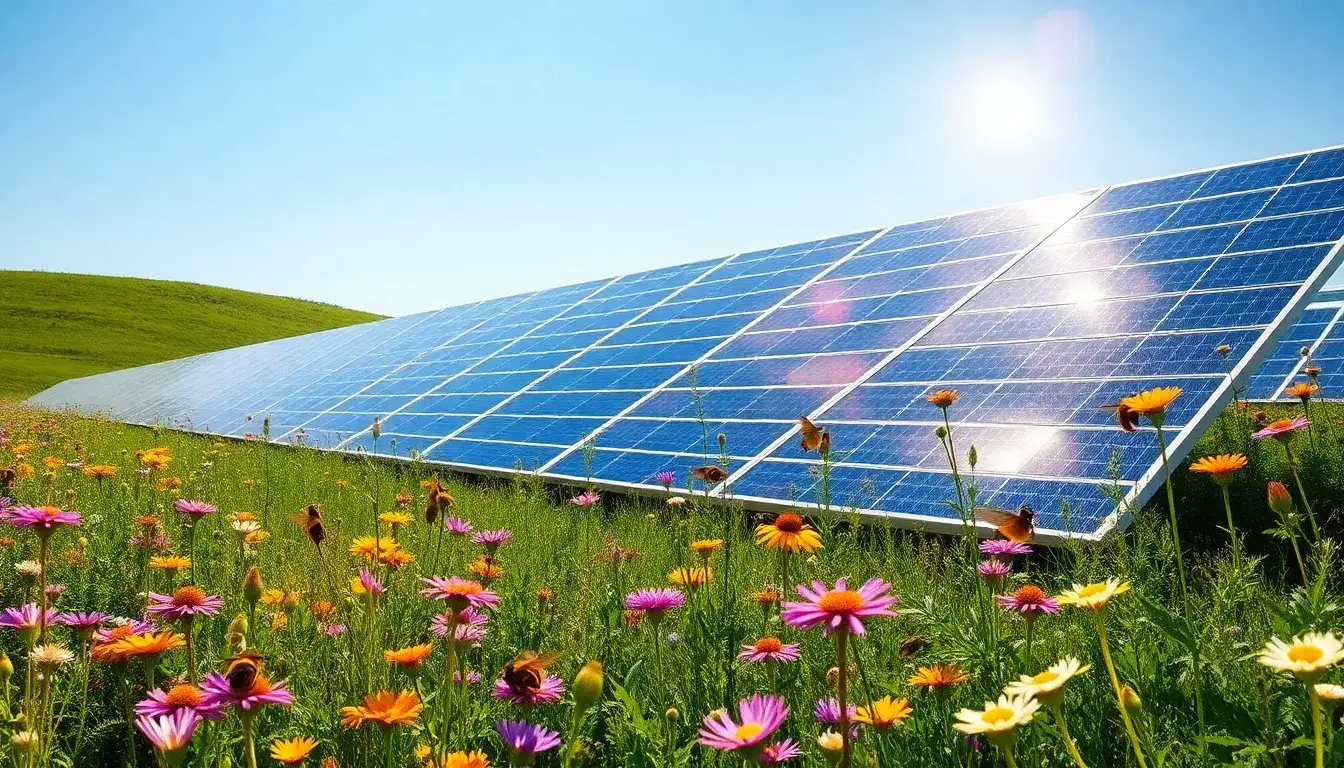
Solar farms can significantly benefit local pollinator populations when managed with biodiversity in mind. Here’s a breakdown of their impacts:
Habitat Creation and Biodiversity
Solar farms provide opportunities to establish pollinator-friendly habitats by replacing turf grass or bare soil with native wildflowers, grasses, and flowering plants. Studies show these habitats can quadruple bumblebee populations compared to traditional turf grass, while also supporting butterflies, beetles, and other beneficial insects.
Monitoring and Management Practices
Effective management, such as reducing mowing and herbicide use, lowers maintenance costs while fostering plant diversity. Regular transect surveys (100 m observational routes) track pollinator abundance and species richness, guiding habitat improvements. Long-term monitoring at sites planted with native vegetation revealed tripled insect abundance and a 20-fold increase in native bee populations over four years.
Agricultural and Ecological Benefits
Pollinators from solar farms often visit adjacent crop fields, enhancing pollination services for crops like soybeans. Large-scale solar developments (e.g., 1,000–4,500 acres) could rival or exceed the pollinator habitat provided by federal conservation programs.
Economic Considerations
Reduced mowing and herbicide use on pollinator-friendly solar farms lower operational costs. Additionally, these habitats may support honey production and other ecosystem services.
By prioritizing native vegetation and ecological monitoring, solar farms can become key refuges for pollinators while supporting sustainable energy and agriculture.
Original article by NenPower, If reposted, please credit the source: https://nenpower.com/blog/how-do-solar-farms-impact-local-pollinator-populations/

