

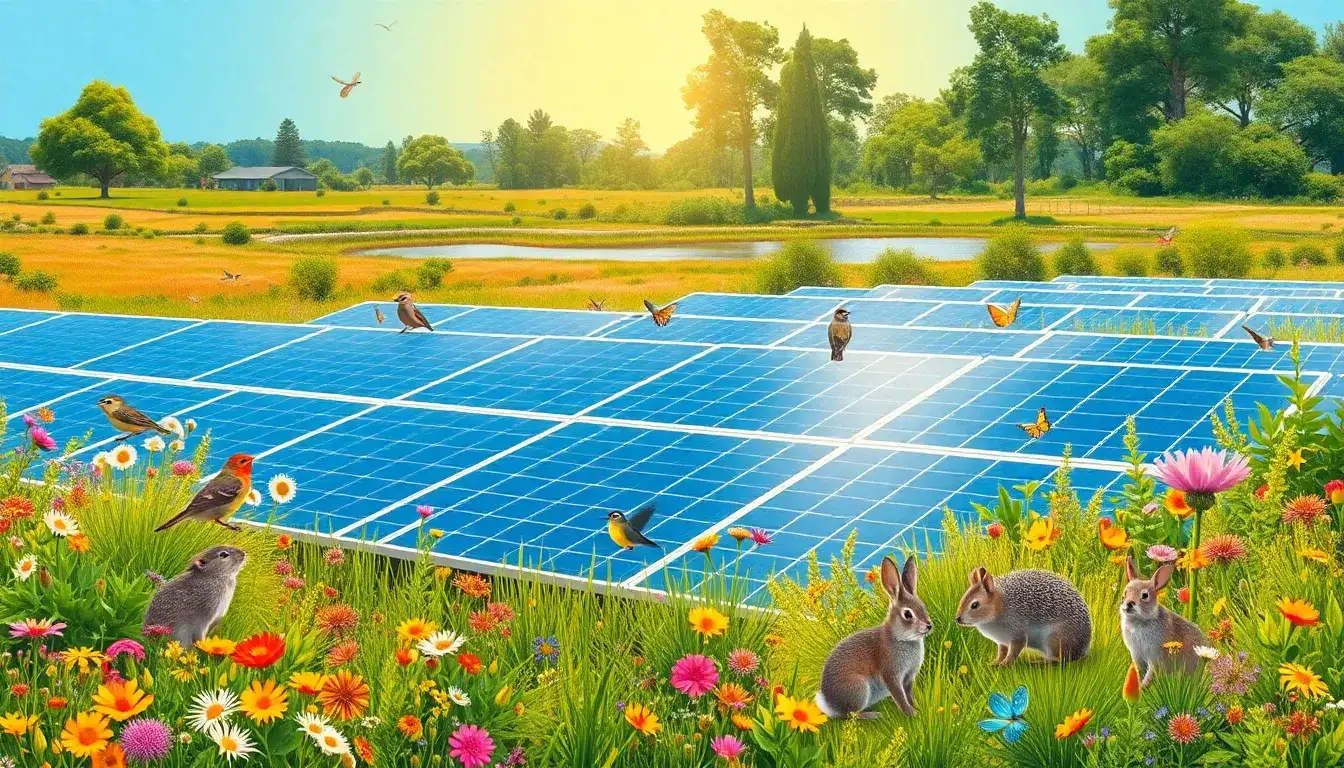
Solar farms contribute positively to biodiversity in several ways, transforming what might be assumed as industrial land use into habitats that support a variety of wildlife and ecological functions.
How Solar Farms Enhance Biodiversity
1. Habitat Creation for Pollinators and Insects
Solar farms planted with native grasses and wildflowers foster habitats that support insect pollinators, such as native bees. Research has shown that these sites can triple insect abundance and increase native bee numbers by up to 20-fold within five years. This boost in pollinator populations not only helps conserve biodiversity but also benefits nearby agricultural land by improving crop pollination services.
2. Supporting Local Flora and Fauna through Habitat Restoration
Areas under and around solar panels often become permanent grasslands, which, unlike intensively managed agricultural fields, do not require fertilizers or pesticides. This allows soil health to improve naturally and encourages the growth of species-rich grassland ecosystems. Studies, such as one at Keele University, have observed that solar farm grounds quickly recover after installation, supporting richer biodiversity than the previously ploughed fields.
3. Microclimate Effects
The shade provided by solar panels creates small microclimates with cooler soil temperatures, which can influence local biodiversity positively by supporting species that prefer such conditions.
4. Opportunities for Diverse Habitats
Large solar farm sites often allow for the addition of native hedgerows, field margins, natural ponds, and shrubbery on soil bunds formed during construction. These varied habitats attract a wide array of species beyond insects, including small mammals, amphibians, reptiles, and birds, enhancing overall ecological complexity.
5. Land Use Benefits Compared to Intensive Agriculture
Solar power projects generally have fewer negative biodiversity impacts than intensive land uses. Although some minor habitat loss occurs due to infrastructure, the land area covered by panels and infrastructure is often less than half, allowing significant areas for habitat development. Properly managed solar farms can become nature reserves during their operational lifetime, contributing to nature restoration and biodiversity net gain.
Summary Table of Biodiversity Benefits of Solar Farms
| Biodiversity Benefit | Description |
|---|---|
| Increased pollinator populations | Habitat provision increases native bee and insect abundance, aiding crop pollination. |
| Enhanced native plant diversity | Establishes species-rich grasslands improving soil health and floral diversity. |
| Creation of microclimates | Solar panels create shaded, cooler soil zones supporting diverse species. |
| Habitat heterogeneity | Addition of hedgerows, ponds, and shrubbery supports mammals, amphibians, birds, and reptiles. |
| Positive land use alternative | Less intensive than agriculture; can function as nature reserves during operational phases. |
In conclusion, well-planned and managed solar farms serve as important biodiversity havens. They support pollinators and other wildlife, promote richer ecosystems than intensive farmland, and contribute positively to ecological restoration and agricultural productivity.
Original article by NenPower, If reposted, please credit the source: https://nenpower.com/blog/how-do-solar-farms-contribute-to-biodiversity-in-their-areas/

