

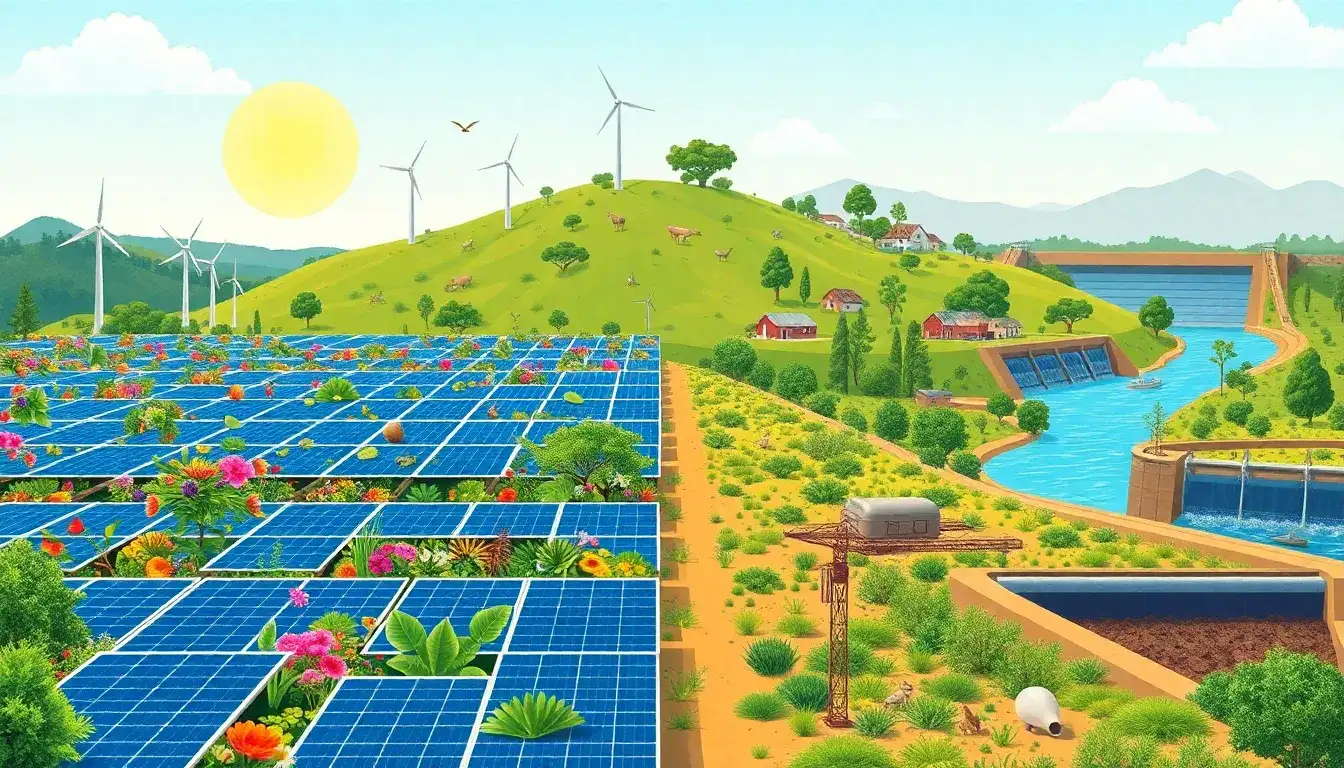
Solar farms can provide notable biodiversity benefits compared to some other renewable energy sources, particularly when managed with ecological sensitivity. Key points of comparison include:
Biodiversity Benefits of Solar Farms
- Habitat Creation for Pollinators: Solar farms that incorporate habitat-friendly designs, such as wildflower meadows under and around solar panels, can significantly boost populations of pollinators like bumblebees and butterflies. These habitats enhance pollination services to nearby agricultural land, potentially improving crop yields.
- Native Vegetation and Microclimates: Solar arrays create shaded microclimates that can reduce soil temperatures, allowing native prairie plants and other vegetation to thrive under the panels. This enhances soil health and supports diverse invertebrates and bird species.
- Increase in Plant and Animal Diversity: Studies report higher diversity and abundance of certain plants, insects, and birds on solar farms compared to conventional farmland, especially when the land is managed as wildflower meadows rather than turf grass or pasture.
- Presence of Species of Conservation Concern: Wildlife surveys on some solar farms have observed species listed as red or amber conservation concerns, along with mammals like brown hares, indicating that these sites can serve important refuges for vulnerable species.
Comparison to Other Renewable Energy Sources
- Unlike wind or hydroelectric power, which can negatively impact bird and aquatic biodiversity respectively, solar farms—when properly managed—can actively enhance terrestrial biodiversity through habitat provision.
- Biomass energy may also support biodiversity depending on land use, but solar farms uniquely facilitate dual-use landscapes combining renewable energy production and ecological habitat without resource extraction or water use.
- Overall, solar farms that implement biodiversity-friendly practices can transform previously low-diversity agricultural or degraded lands into biodiversity hotspots, thus aligning climate mitigation with conservation goals.
Summary: Solar farms, particularly those managed with ecological enhancement strategies like wildflower seeding and native plant restoration, offer substantial biodiversity benefits by supporting pollinators, plants, birds, and other wildlife. These benefits can surpass those of some other renewable energy options that have less potential for habitat enhancement or pose greater direct risks to wildlife.
Original article by NenPower, If reposted, please credit the source: https://nenpower.com/blog/how-do-solar-farms-compare-to-other-renewable-energy-sources-in-terms-of-biodiversity-benefits/

